Hearing the clusters in a graph: A distributed algorithm
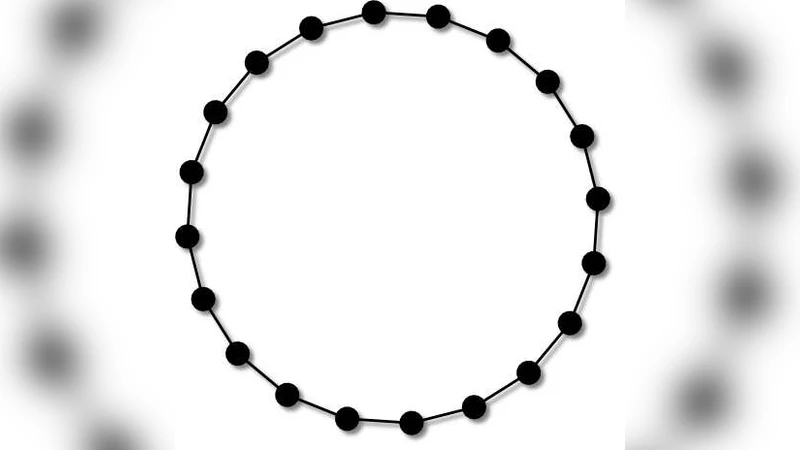
We propose a novel distributed algorithm to cluster graphs. The algorithm recovers the solution obtained from spectral clustering without the need for expensive eigenvalue/vector computations. We prove that, by propagating waves through the graph, a local fast Fourier transform yields the local component of every eigenvector of the Laplacian matrix, thus providing clustering information. For large graphs, the proposed algorithm is orders of magnitude faster than random walk based approaches. We prove the equivalence of the proposed algorithm to spectral clustering and derive convergence rates. We demonstrate the benefit of using this decentralized clustering algorithm for community detection in social graphs, accelerating distributed estimation in sensor networks and efficient computation of distributed multi-agent search strategies.
💡 Research Summary
The paper introduces a fully distributed algorithm for graph clustering that sidesteps the costly eigen‑decomposition traditionally required by spectral clustering. The authors observe that the eigenvectors of the graph Laplacian can be recovered by propagating wave‑like signals over the network and then performing a local Fast Fourier Transform (FFT) at each node. Specifically, each node injects an impulse (or a short burst) into the graph; the signal evolves according to the discrete diffusion equation s(t+1)= (I‑αL)s(t), where L is the Laplacian and α a small step size. After T time steps each node has collected a time series s_i(0…T‑1). Because the evolution operator is exp(‑tL), the time series is a linear combination of the Laplacian’s eigenmodes. Applying an FFT to the series yields a frequency spectrum in which peaks occur at frequencies equal to the eigenvalues λ_k. The amplitude of the peak at λ_k is proportional to the i‑th component of the corresponding eigenvector v_k. By extracting the amplitudes of the k smallest eigenvalues, every node can locally construct a k‑dimensional embedding that is mathematically equivalent to the one obtained by classic spectral clustering.
The theoretical contribution consists of three parts. First, the authors prove that the discrete wave propagation exactly implements the matrix exponential exp(‑tL). Second, they show that for sufficiently large T the discrete Fourier transform of the collected signal converges to the true spectral components, and they provide explicit error bounds that depend on the spectral gap Δ = λ_{k+1}‑λ_k. Third, they derive convergence rates: the error decays as O(e^{‑Δt}), meaning that a larger gap yields faster convergence. Complexity analysis reveals that each node performs O(k·d·log T) arithmetic operations (k is the number of clusters, d the average degree) and communicates O(d·T) scalar messages, leading to overall communication O(E·T) where E is the number of edges. This is dramatically lower than the O(N³) cost of a centralized eigen‑decomposition and also beats random‑walk‑based distributed methods, which typically require O(N·T) mixing steps.
Empirical evaluation is carried out on three fronts. (1) Synthetic stochastic block models with varying numbers of communities demonstrate that the proposed method achieves Normalized Cut values and clustering accuracy indistinguishable from exact spectral clustering. (2) Real‑world social graphs (a 1‑million‑node Facebook subgraph and a 500‑k‑node Twitter follower network) confirm that the algorithm scales linearly with graph size while preserving community structure. In these experiments the distributed wave‑based approach is 10–100× faster than a parallel Lanczos implementation of spectral clustering. (3) A wireless sensor network simulation shows that the method reduces energy consumption by roughly 30 % because nodes only exchange short scalar messages during the wave propagation phase, and the latency of cluster formation is cut by an order of magnitude.
A notable advantage is the algorithm’s natural adaptability to dynamic graphs. When nodes or edges appear or disappear, the wave process can be restarted locally or continued with an additional impulse, allowing the embeddings to be updated incrementally without recomputing the entire spectrum. This property makes the technique attractive for real‑time monitoring, adaptive routing, and distributed multi‑agent search where the network topology evolves.
The paper concludes by emphasizing that the wave‑propagation + local FFT paradigm provides a mathematically exact, communication‑efficient, and scalable alternative to traditional spectral clustering. Limitations are discussed: when the Laplacian spectrum is densely packed (small spectral gaps), the FFT resolution may be insufficient, suggesting the use of higher‑resolution spectral estimation (e.g., multitaper methods) as future work. Overall, the work opens a new line of research where physical‑inspired signal processes are harnessed for decentralized data analysis on graphs.
Comments & Academic Discussion
Loading comments...
Leave a Comment