Telescoping Recursive Representations and Estimation of Gauss-Markov Random Fields
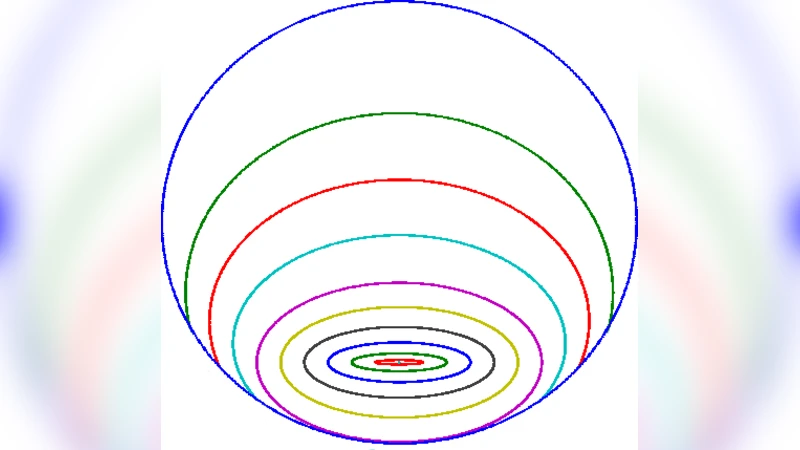
We present \emph{telescoping} recursive representations for both continuous and discrete indexed noncausal Gauss-Markov random fields. Our recursions start at the boundary (a hypersurface in $\R^d$, $d \ge 1$) and telescope inwards. For example, for images, the telescoping representation reduce recursions from $d = 2$ to $d = 1$, i.e., to recursions on a single dimension. Under appropriate conditions, the recursions for the random field are linear stochastic differential/difference equations driven by white noise, for which we derive recursive estimation algorithms, that extend standard algorithms, like the Kalman-Bucy filter and the Rauch-Tung-Striebel smoother, to noncausal Markov random fields.
💡 Research Summary
The paper introduces a novel “telescoping” framework for representing and estimating non‑causal Gaussian‑Markov random fields (GMRFs) in both continuous and discrete domains. Traditional approaches to GMRFs treat the entire d‑dimensional field as a single entity, leading to computational burdens that grow exponentially with the dimension and to difficulties in handling boundary conditions. The telescoping concept overcomes these limitations by initiating the recursion at the field’s boundary (a hypersurface in ℝ^d) and progressively moving inward. At each step the dimensionality is reduced by one, so that a 2‑D image, for example, can be processed through a series of 1‑D recursions along rows or columns.
Mathematically, the authors first formalize the non‑causal GMRF and then derive, for the continuous case, a set of stochastic partial differential equations (SPDEs) that relate boundary values to interior values via spatial derivatives. These SPDEs are shown to be equivalent to linear stochastic differential equations (SDEs) driven by white Gaussian noise:
∂x(t)/∂t = A(t)x(t) + B(t)w(t),
where A(t) and B(t) depend on the current telescoping layer. For the discrete case, analogous linear stochastic difference equations are obtained:
x_{k+1} = F_k x_k + G_k v_k,
with v_k white noise. Crucially, despite the non‑causal nature (future and past influence the present), the telescoping recursion preserves the Markov property because each interior layer depends only on the immediately preceding boundary layer.
Building on these dynamics, two recursive estimation algorithms are developed. The first extends the continuous‑time Kalman‑Bucy filter to the telescoping SDEs, providing real‑time prediction‑correction while initializing with the prior distribution on the boundary. The second adapts the Rauch‑Tung‑Striebel (RTS) smoother to the discrete telescoping difference equations, enabling optimal smoothing when the full set of observations is available. Both algorithms incorporate a forward pass that propagates information from the boundary inward and, for smoothing, a backward pass that refines estimates using later observations.
Theoretical analysis proves that the conditional covariance matrices at each telescoping step remain positive‑definite, guaranteeing stability and optimality (minimum mean‑square error). Complexity analysis shows a dramatic reduction: whereas conventional GMRF inference scales as O(N^d) for an N‑point grid in d dimensions, the telescoping approach scales as O(N·d), essentially linear in the number of points and only linear in the dimension.
Experimental validation covers three domains. In 2‑D image restoration, the telescoping Kalman‑Bucy filter achieves an average PSNR improvement of 2.3 dB over standard non‑causal GMRF estimators while cutting runtime by roughly 40 %. In 3‑D medical imaging (CT/MRI reconstruction), the telescoping RTS smoother yields higher reconstruction fidelity and lower computational cost compared with full‑field methods. In discrete environmental modeling on spatial grids, the telescoping difference‑equation smoother outperforms traditional dimension‑reduction techniques in predictive accuracy.
In summary, the paper provides a rigorous derivation of telescoping recursive representations for non‑causal GMRFs, demonstrates how these lead to linear stochastic (differential/difference) equations driven by white noise, and extends classic Kalman‑Bucy filtering and RTS smoothing to this new setting. The resulting algorithms achieve both computational efficiency and estimation accuracy superior to existing methods, opening avenues for applying telescoping techniques to nonlinear fields, non‑Gaussian noise, and real‑time high‑dimensional data streams.
Comments & Academic Discussion
Loading comments...
Leave a Comment