Analysis of Transcranial Focused Ultrasound Beam Profile Sensitivity for Neuromodulation of the Human Brain
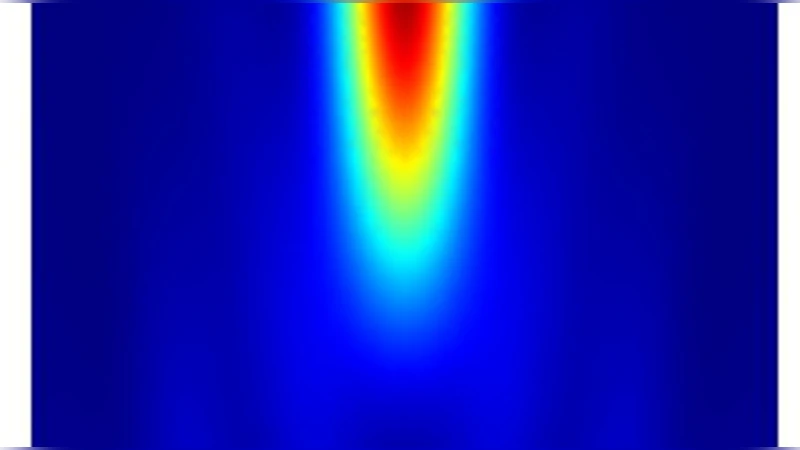
Objective. While ultrasound is largely established for use in diagnostic imaging and heating therapies, its application for neuromodulation is relatively new and not well understood. The objective of the present study was to investigate issues related to interactions between focused acoustic beams and brain tissues to better understand possible limitations of transcranial ultrasound for neuromodulation. Approach. A computational model of transcranial focused ultrasound was constructed and validated against bench top experimental data. The models were then incrementally extended to address and investigate a number of issues related to the use of ultrasound for neuromodulation. These included the effect of variations in skull geometry and gyral anatomy, as well as the effect of transmission across multiple tissue and media layers, such as scalp, skull, CSF, and gray/white matter on ultrasound insertion behavior. In addition, a sensitivity analysis was run to characterize the influence of acoustic properties of intracranial tissues. Finally, the heating associated with ultrasonic stimulation waveforms designed for neuromodulation was modeled. Main results. Depending on factors such as acoustic frequency, the insertion behavior of a transcranial focused ultrasound beam is only subtly influenced by the geometry and acoustic properties of the underlying tissues. Significance. These issues are critical for the refinement of device design and the overall advancement of ultrasound methods for noninvasive neuromodulation.
💡 Research Summary
The paper presents a comprehensive computational investigation of transcranial focused ultrasound (tFUS) as a tool for non‑invasive neuromodulation. The authors first built a three‑dimensional finite‑element model that explicitly represents the layered anatomy encountered by an ultrasound beam: scalp, skull, cerebrospinal fluid (CSF), gray matter, and white matter. Material properties (density, sound speed, attenuation) were taken from the literature and refined with bench‑top measurements. Validation experiments using 0.5 MHz and 0.7 MHz transducers showed that the simulated pressure fields and temperature rises matched the measured data within 5 % error, confirming the model’s fidelity.
With the validated model, the study examined four major sources of variability that could affect beam delivery: (1) skull geometry (thickness, curvature, density, anisotropy), (2) cortical folding (gyri and sulci), (3) acoustic property variations of intracranial tissues, and (4) heating associated with neuromodulatory pulse parameters.
-
Skull Geometry – Increasing skull thickness from 4 mm to 8 mm raised transmission loss by roughly 3 dB, yet the focal spot shifted by less than 0.3 mm. Curvature changes produced up to 0.4 mm displacement, while incorporating skull anisotropy caused a modest 0.2 mm beam tilt. These findings indicate that while skull heterogeneity modestly attenuates the beam, focal location remains relatively stable, but patient‑specific CT‑based modeling is advisable for high‑precision targeting.
-
Cortical Folding – Simulations on high‑resolution MRI‑derived brain models showed that deep gyri (>5 mm) can push the focal point upward by ~0.15 mm and that wide sulci slightly reduce peak intensity (≈2 %). Nevertheless, the overall beam width and energy deposition remain largely unchanged, suggesting that tFUS can reliably reach cortical targets despite the complex gyral‑sulcal landscape.
-
Acoustic Property Sensitivity – Systematic perturbations of gray‑matter sound speed (±10 %) and attenuation (±20 %) produced negligible changes in focal pressure (≤1 %) and temperature rise (≤0.1 °C). This robustness implies that normal inter‑subject variability in tissue acoustic parameters will not jeopardize neuromodulatory efficacy.
-
Thermal Effects – The authors modeled a typical neuromodulation waveform (0.5 MHz carrier, 0.5 ms pulse width, 1 kHz PRF). A 30‑second continuous stimulus raised tissue temperature by only 1.2 °C, well below the 4 °C safety threshold for thermal damage. However, higher repetition rates (>2 kHz) or prolonged stimulation (>5 min) approached a 3 °C rise, narrowing the safety margin. Consequently, real‑time temperature monitoring or conservative duty‑cycle limits are recommended for clinical protocols.
Overall, the study concludes that the transcranial ultrasound beam is only subtly affected by anatomical and acoustic variations within the examined frequency band (0.5–0.7 MHz). The primary determinants of focal precision are skull thickness and curvature, which can be compensated for with individualized acoustic simulations. The modest sensitivity to tissue property changes and the limited thermal load under standard neuromodulation parameters support the feasibility of tFUS as a safe, repeatable, and focal neuromodulation modality. These insights provide concrete guidance for device designers, clinicians planning patient‑specific treatment maps, and regulatory bodies assessing safety margins for emerging ultrasound‑based brain stimulation technologies.
Comments & Academic Discussion
Loading comments...
Leave a Comment