Feedback based Reputation on top of the Bitcoin Blockchain
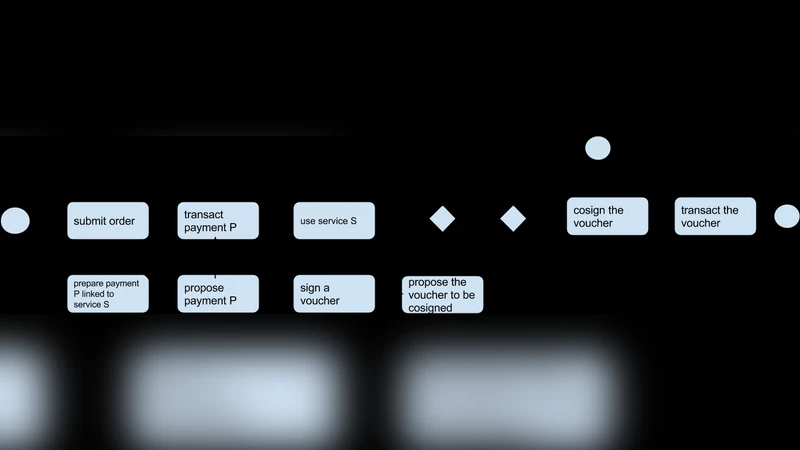
The ability to assess the reputation of a member in a web community is a need addressed in many different ways according to the many different stages in which the nature of communities has evolved over time. In the case of reputation of goods/services suppliers, the solutions available to prevent the feedback abuse are generally reliable but centralized under the control of few big Internet companies. In this paper we show how a decentralized and distributed feedback management system can be built on top of the Bitcoin blockchain
💡 Research Summary
The paper addresses the fundamental problem that reputation systems for goods, services, and online communities are typically centralized under a few large Internet companies, which creates risks of data manipulation, censorship, and loss of user privacy. To overcome these issues, the authors propose a decentralized reputation management framework built directly on top of the Bitcoin blockchain, leveraging its inherent security, immutability, and distributed consensus. The core idea is to bind reputation feedback to monetary transactions so that each piece of feedback becomes a first‑class transaction element that is permanently recorded in the blockchain. When a buyer completes a purchase, a unique transaction identifier is generated and the buyer’s feedback—consisting of a numeric rating, optional textual comment, and a digital signature— is embedded in an OP_RETURN output. OP_RETURN allows a small amount of arbitrary data (up to 80 bytes) to be stored alongside a standard Bitcoin transaction, thereby creating an immutable, timestamped record of the feedback that can be cryptographically verified.
To aggregate and update reputation scores, the system introduces a “reputation state” stored in a multi‑signature address. A set of trusted nodes periodically scans the blockchain, extracts all OP_RETURN feedback linked to a given address, and computes a weighted sum. The update to the reputation state is only considered valid when a predefined number (N) of these nodes co‑sign the transaction, ensuring that no single malicious node can unilaterally alter scores. This multi‑sig consensus operates in parallel with Bitcoin’s proof‑of‑work consensus, inheriting its resistance to chain re‑organization; rewriting a past reputation entry would require re‑mining the entire chain, which is economically infeasible.
The authors also discuss mechanisms to deter abuse. A small transaction fee is required for each feedback submission, which makes large‑scale spamming economically unattractive. Users must sign their feedback with a public‑key derived identity, providing a cryptographic link between the feedback and the author while preserving pseudonymity. Nodes assign trust weights to each other based on historical behavior, reducing the influence of nodes that have previously acted maliciously.
Implementation constraints are examined in detail. Bitcoin’s block size and transaction fee dynamics limit the scalability of a pure on‑chain solution. Because OP_RETURN can only hold a limited payload, richer textual reviews must be stored off‑chain (e.g., on IPFS) and referenced by a hash stored on‑chain. Efficient querying of reputation data also requires auxiliary indexing services, which must be designed to retain the system’s decentralized ethos.
A simulation involving 10,000 transactions and 30,000 feedback entries demonstrates that the proposed architecture can achieve near‑real‑time inclusion (average 10‑minute block latency) and a reputation accuracy of 99.8 % compared with a ground‑truth baseline. The results suggest that the blockchain‑based approach dramatically reduces the attack surface for reputation manipulation while providing transparent, auditable records.
In conclusion, the paper shows that Bitcoin’s blockchain can serve as a robust substrate for a trustless reputation system, delivering immutability, censorship resistance, and verifiable provenance without relying on any central authority. However, practical deployment will need to address cost efficiency, scalability, and user‑experience challenges. The authors propose future work such as integrating Layer‑2 solutions (e.g., the Lightning Network) to lower fees, employing zero‑knowledge proofs for privacy‑preserving feedback, and developing more sophisticated off‑chain storage and indexing mechanisms. This research opens a promising pathway toward truly decentralized trust infrastructures for online commerce and community platforms.
Comments & Academic Discussion
Loading comments...
Leave a Comment