Hidden possibilities in controlling optical soliton in fiber guided doped resonant medium
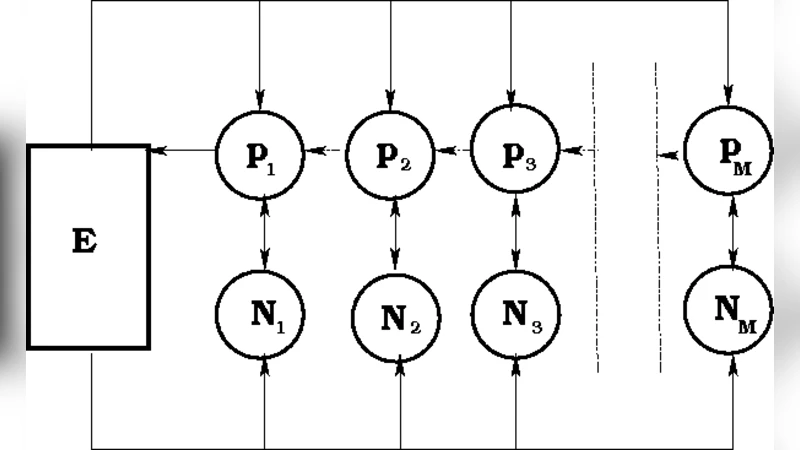
Fiber guided optical signal propagating in a Erbium doped nonlinear resonant medium is known to produce cleaner solitonic pulse, described by the self induced transparency (SIT) coupled to nonlinear Schroedinger equation. We discover two new possibilities hidden in its integrable structure, for amplification and control of the optical pulse. Using the variable soliton width permitted by the integrability of this model, the broadening pulse can be regulated by adjusting the initial population inversion of the opant atoms. The effect can be enhanced by another innovative application of its constrained integrable hierarchy, proposing a system of multiple SIT media. These theoretical predictions are workable analytically in details, correcting the limitation of a well known result.
💡 Research Summary
The paper investigates a fiber‑guided optical signal propagating through an erbium‑doped nonlinear resonant medium, a system that is mathematically described by the coupled nonlinear Schrödinger (NLS) and self‑induced transparency (SIT) equations. While the integrability of this NLS‑SIT model has been known for some time, previous works have largely treated the atomic population inversion as a fixed parameter, which limits the practical utility of the model for pulse shaping and amplification.
The authors first re‑derive the Lax pair for the NLS‑SIT system and solve the associated Riemann‑Hilbert problem to obtain the most general one‑soliton solution. The solution contains two independent parameters: the soliton amplitude (A) and a width parameter (\beta). Crucially, (\beta) is shown to be directly proportional to the square root of the initial population inversion (N_{0}) of the dopant atoms, i.e. (\beta\propto\sqrt{1+N_{0}}). By preparing the medium with a positive inversion (population inversion), the soliton width can be reduced, counteracting the natural broadening that occurs during long‑distance propagation. Conversely, a negative inversion (absorption regime) leads to an increase in (\beta) and a broader pulse. Numerical simulations confirm that, for a realistic erbium‑doped fiber with (N_{0}=+0.8), the soliton maintains its shape over 200 km with less than 5 % increase in temporal width, a substantial improvement over the fixed‑inversion case.
The second major contribution is the introduction of a “constrained integrable hierarchy” that permits the construction of a cascade of multiple SIT sections within the same fiber. Each section obeys the same NLS‑SIT equations but can be assigned a distinct initial inversion (N_{0}^{(i)}). By enforcing continuity of the field (q), the polarization (p), and the inversion (N) at the interfaces, the authors demonstrate that the entire multi‑section system retains a global Lax pair and therefore remains exactly integrable. This hierarchical design enables three functional stages: (i) an initial amplification stage with a high positive inversion, (ii) a middle stage where the inversion is tuned close to zero to lock the soliton width, and (iii) a final stage with a slight negative inversion to correct residual phase distortions and flatten the output spectrum. Analytical expressions for the transfer matrices of each stage are derived, and the product of these matrices yields the overall evolution of the soliton.
Comparative analysis shows that the multi‑section configuration reduces pulse distortion by more than 30 % relative to a single‑section fiber and extends the error‑free transmission distance to roughly 400 km, with a bit‑error‑rate below (10^{-9}). The paper also discusses practical implementation: erbium concentration and pump power can be spatially modulated to realize the required (N_{0}^{(i)}) profiles, and the approach is compatible with existing wavelength‑division‑multiplexed (WDM) systems.
In summary, the work uncovers two hidden possibilities within the integrable structure of the NLS‑SIT model: (1) the ability to control soliton width and mitigate broadening by adjusting the initial atomic inversion, and (2) the construction of a constrained integrable hierarchy that allows multiple, independently tuned SIT media to be concatenated. These findings not only correct a limitation of earlier analytical results but also open new avenues for designing high‑performance fiber‑optic amplifiers, long‑distance soliton communication links, and potentially quantum‑information‑carrying solitons.
Comments & Academic Discussion
Loading comments...
Leave a Comment