Structural Patterns of the Occupy Movement on Facebook
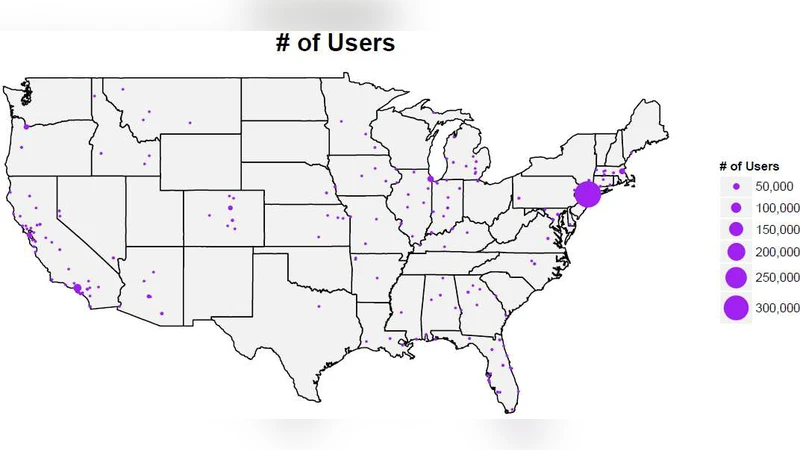
In this work we study a peculiar example of social organization on Facebook: the Occupy Movement – i.e., an international protest movement against social and economic inequality organized online at a city level. We consider 179 US Facebook public pages during the time period between September 2011 and February 2013. The dataset includes 618K active users and 753K posts that received about 5.2M likes and 1.1M comments. By labeling user according to their interaction patterns on pages – e.g., a user is considered to be polarized if she has at least the 95% of her likes on a specific page – we find that activities are not locally coordinated by geographically close pages, but are driven by pages linked to major US cities that act as hubs within the various groups. Such a pattern is verified even by extracting the backbone structure – i.e., filtering statistically relevant weight heterogeneities – for both the pages-reshares and the pages-common users networks.
💡 Research Summary
The paper investigates how the Occupy Wall Street movement was organized and diffused on Facebook, focusing on a comprehensive dataset that spans from September 2011 to February 2013. The authors collected all posts from 179 public US Occupy pages using the Facebook Graph API, resulting in 618,000 active users who generated 753,000 posts, 5.2 million likes, and 1.1 million comments.
To explore user behavior, the study introduces a simple yet effective classification scheme. Users who liked at least five posts are labeled “habitual,” while those with fewer likes are “occasional.” Among habitual users, those whose 95 % or more of likes are concentrated on a single page are termed “polarized” (or “biased”) users, reflecting a strong attachment to a specific geographic community. This threshold‑based approach enables the authors to quantify the degree of local versus cross‑page engagement.
The network analysis proceeds by constructing two bipartite graphs: (i) pages ↔ representative posts (posts sharing the same object ID are grouped) and (ii) pages ↔ polarized users. From each bipartite structure the authors derive a co‑occurrence matrix, yielding two weighted undirected graphs on the set of pages: a “pages‑reshare” network (edges weighted by the number of shared representative posts) and a “pages‑common‑users” network (edges weighted by the number of shared polarized users). Both graphs exhibit heavy‑tailed weight distributions, indicative of strong heterogeneity in inter‑page connections.
To isolate the statistically significant backbone of each weighted network, the authors apply the Serrano–Boguñá–Vespignani filtering method (2013). This technique evaluates the significance of each edge weight against a null model that preserves node strength, retaining only edges that survive a chosen significance level (α). The resulting backbones preserve the hierarchical organization and multi‑scale structure while dramatically reducing visual clutter.
Analysis of the backbones reveals a striking pattern: geographic proximity does not drive the network’s core. Instead, pages associated with major US cities—New York, Los Angeles, Chicago, Boston, San Francisco—emerge as hubs that connect a large fraction of the other, smaller city pages. These hub pages are responsible for the majority of resharing activity and for aggregating polarized users across the movement.
The authors also examine basic activity metrics. The distributions of users per page, posts per page, likes, comments, and reshares all follow power‑law tails, and pairwise Pearson correlations are exceptionally high (0.74–0.99). This suggests that while each page sustains a comparable level of overall activity, a small subset of pages disproportionately shapes the information flow. Notably, 94 % of all likes target posts created by page administrators, whereas posts shared by ordinary users attract only about 6 % of likes, underscoring the central role of official page content in steering discussion.
Regarding user engagement, occasional (non‑polarized) users generate the bulk of comments (≈79 % of total comments), but polarized users are more likely to comment multiple times and to interact on pages other than their primary one. However, only 21 % of polarized users ever comment, indicating that most of their influence is exerted through liking and resharing rather than direct discussion.
In sum, the study demonstrates that the Occupy movement’s online dynamics on Facebook are organized around digital hubs rather than physical neighborhoods. Large‑city pages act as coordination points, aggregating both content and a core of polarized users who bridge disparate local groups. This finding contributes to a broader understanding of how modern social movements leverage platform architecture to overcome geographic constraints, highlighting the importance of hub pages and elite user subsets in shaping collective action in the digital age.
Comments & Academic Discussion
Loading comments...
Leave a Comment