Integrable non-equilibrium steady state density operators for boundary driven XXZ spin chains: observables and full counting statistics
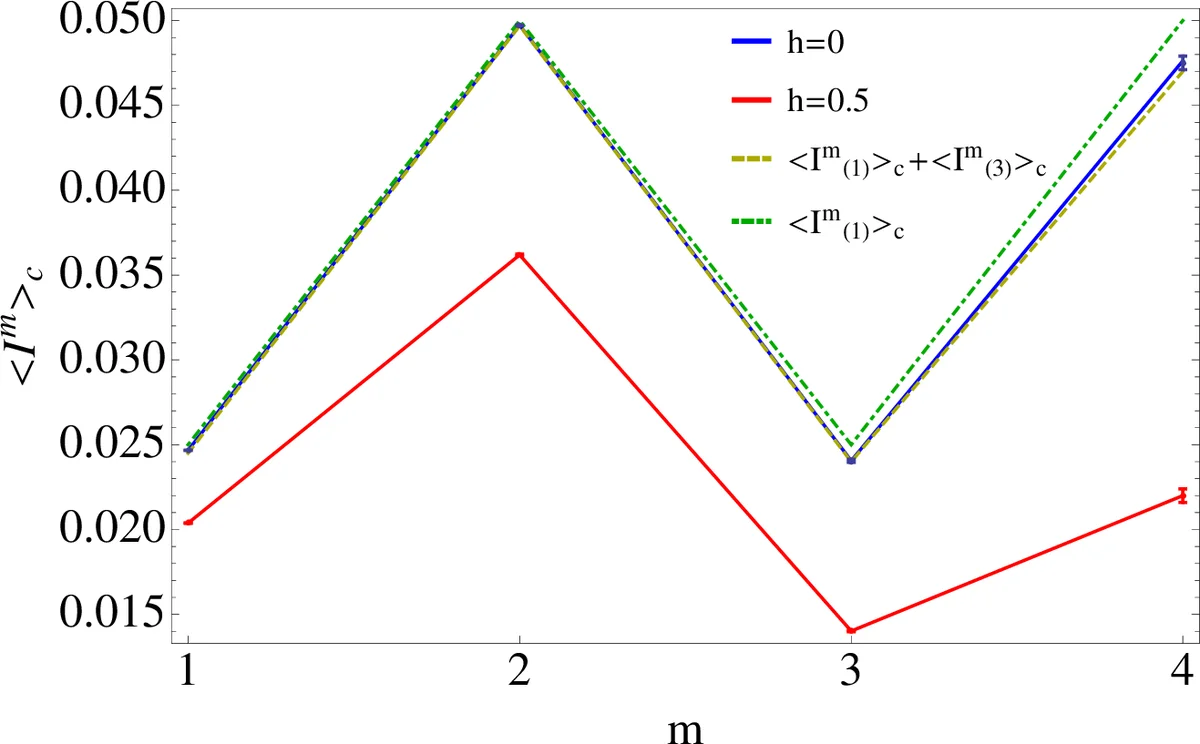
We will review some known exact solutions for the steady state of the open quantum Heisenberg $XXZ$ spin chain coupled to a pair of baths [Phys. Rev. Lett. 107, 137201 (2011).]. The dynamics is modelled by the Lindblad master equation. We also review how to calculate some relevant physical observables and provide the statistics of spin current assuming the spin chain is weakly coupled to the baths [Phys. Rev. Lett. 112, 067201 (2014).].
💡 Research Summary
The paper provides a comprehensive analytical treatment of the non‑equilibrium steady state (NESS) of an open Heisenberg XXZ spin‑½ chain driven at its boundaries by Lindblad reservoirs. Starting from the full system‑plus‑bath Hamiltonian, the authors invoke the Born‑Markov and rotating‑wave approximations to obtain a Lindblad master equation for the reduced density matrix of the chain. They focus on the maximally driven case where the left boundary injects spin‑up excitations (L₁ = √ε σ⁺₁) and the right boundary removes spin‑down excitations (L_n = √ε σ⁻_n).
A key technical ingredient is the use of quantum group symmetry U_q(sl₂) and the associated Lax operator L(φ,s). The Sutherland relation between the local Hamiltonian density and the Lax operators allows the authors to convert the steady‑state condition into a set of algebraic boundary equations. Solving these yields a purely imaginary auxiliary spin parameter s and a spectral parameter φ = 0, uniquely fixing the Cholesky‑type ansatz ρ_∞ = S S† with S built from a product of Lax operators acting on the auxiliary space.
With the exact NESS in hand, expectation values of local observables are obtained via a matrix‑product representation. Defining auxiliary transfer matrices T, V and a current operator W (partial traces over the physical space), the authors derive a simple relation W = −2i
Comments & Academic Discussion
Loading comments...
Leave a Comment