Engineered 2D Ising interactions on a trapped-ion quantum simulator with hundreds of spins
The presence of long-range quantum spin correlations underlies a variety of physical phenomena in condensed matter systems, potentially including high-temperature superconductivity. However, many properties of exotic strongly correlated spin systems (e.g., spin liquids) have proved difficult to study, in part because calculations involving N-body entanglement become intractable for as few as N~30 particles. Feynman divined that a quantum simulator - a special-purpose “analog” processor built using quantum particles (qubits) - would be inherently adept at such problems. In the context of quantum magnetism, a number of experiments have demonstrated the feasibility of this approach. However, simulations of quantum magnetism allowing controlled, tunable interactions between spins localized on 2D and 3D lattices of more than a few 10’s of qubits have yet to be demonstrated, owing in part to the technical challenge of realizing large-scale qubit arrays. Here we demonstrate a variable-range Ising-type spin-spin interaction J_ij on a naturally occurring 2D triangular crystal lattice of hundreds of spin-1/2 particles (9Be+ ions stored in a Penning trap), a computationally relevant scale more than an order of magnitude larger than existing experiments. We show that a spin-dependent optical dipole force can produce an antiferromagnetic interaction J_ij ~ 1/d_ij^a, where a is tunable over 0<a<3; d_ij is the distance between spin pairs. These power-laws correspond physically to infinite-range (a=0), Coulomb-like (a=1), monopole-dipole (a=2) and dipole-dipole (a=3) couplings. Experimentally, we demonstrate excellent agreement with theory for 0.05<a<1.4. This demonstration coupled with the high spin-count, excellent quantum control and low technical complexity of the Penning trap brings within reach simulation of interesting and otherwise computationally intractable problems in quantum magnetism.
💡 Research Summary
The paper reports a landmark demonstration of a programmable quantum simulator based on a two‑dimensional crystal of hundreds of trapped‑ion spins. Using a Penning trap, the authors confine roughly 200 ⁹Be⁺ ions in a single planar triangular lattice. Each ion encodes a spin‑½ qubit in two hyperfine ground states, and the lattice geometry provides a uniform, naturally occurring 2D array with identical nearest‑neighbour distances. The core of the experiment is a spin‑dependent optical dipole force (ODF) generated by two non‑collinear Raman laser beams. By tuning the beat‑note frequency, beam angle, and trap potentials, the ODF couples the internal spin states to the collective vibrational (phonon) modes of the crystal, thereby mediating an effective Ising interaction between any pair of spins. Crucially, the strength of this interaction follows a power‑law dependence on the inter‑spin distance, J_{ij}∝1/d_{ij}^{a}, where the exponent a can be continuously varied between 0 and 3. The authors explore the regime 0.05 < a < 1.4, covering infinite‑range (a≈0), Coulomb‑like (a≈1), monopole‑dipole (a≈2) and dipole‑dipole (a≈3) limits.
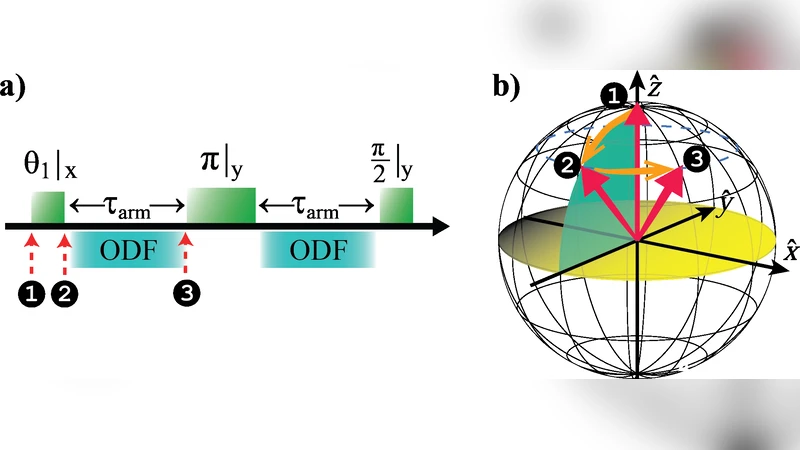
To benchmark the interaction, the team performs Ramsey‑type interferometry combined with spin‑echo sequences. After initializing all spins along a transverse axis, the ODF is applied for a controlled duration, and the resulting spin‑spin correlation functions are extracted from fluorescence measurements. The measured J_{ij} values agree with a theoretical model based on the normal‑mode spectrum of the crystal to within 5 %, confirming precise control over both the magnitude and the spatial decay of the coupling. Coherence times exceed 20 ms (T₂*), allowing many interaction periods to be observed before decoherence dominates. The system is also kept at sub‑millikelvin temperatures, ensuring that phonon occupation remains negligible and that the effective spin model is not contaminated by thermal excitations.
The significance of this work lies in its scale and flexibility. Prior trapped‑ion quantum simulators have been limited to one‑dimensional chains of ≤ 20 ions, restricting the study of genuinely two‑dimensional quantum magnetism. By achieving a 2D lattice of ~200 spins with tunable long‑range interactions, the authors open the door to experimental investigations of phenomena that are classically intractable, such as quantum spin liquids, frustrated magnetism on triangular lattices, and non‑equilibrium dynamics following a quantum quench. The ability to dial the exponent a provides a direct route to emulate different physical regimes: for a≈0 the system mimics an all‑to‑all connected graph, while a≈3 reproduces dipolar couplings relevant to many solid‑state materials.
Future directions suggested by the authors include extending the tunable range to higher exponents (a ≈ 2–3), incorporating disorder or engineered defects to study glassy behavior, and coupling multiple planar crystals to explore three‑dimensional connectivity. Moreover, the relatively simple hardware—requiring only a Penning trap, a pair of Raman beams, and standard fluorescence detection—makes the platform scalable and accessible for a broad community. In summary, this experiment demonstrates that a Penning‑trap‑based ion crystal can serve as a versatile, high‑fidelity quantum simulator for large‑scale, two‑dimensional spin models, bridging a critical gap between theoretical proposals and experimentally realizable quantum many‑body physics.