Knowledge Integration and Diffusion: Measures and Mapping of Diversity and Coherence
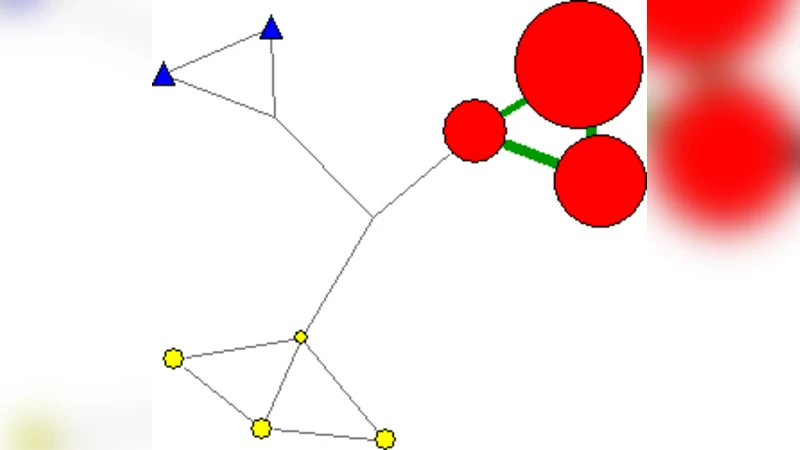
I present a framework based on the concepts of diversity and coherence for the analysis of knowledge integration and diffusion. Visualisations that help understand insights gained are also introduced. The key novelty offered by this framework compared to previous approaches is the inclusion of cognitive distance (or proximity) between the categories that characterise the body of knowledge under study. I briefly discuss the different methods to map the cognitive dimension.
💡 Research Summary
The paper introduces a comprehensive framework for analyzing knowledge integration and diffusion by jointly considering two fundamental constructs: diversity and coherence (referred to as coherence in the text). While traditional bibliometric and scientometric studies have often measured diversity simply by counting categories, weighting them by frequency, or applying entropy‑based indices, these approaches ignore the cognitive distances that exist between categories. The authors therefore extend the Rao‑Stirling diversity index to incorporate a distance matrix d ij that quantifies how far apart any two knowledge categories i and j are in a cognitive sense. The extended measure takes the form Diversity = Σi Σj p i p j d ij, where p i denotes the proportion of knowledge elements (e.g., patents, papers) belonging to category i. Cognitive distance can be derived from several sources: hierarchical classification systems such as the International Patent Classification (IPC) or Web of Science subject categories, text‑based similarity measures obtained from topic modeling (e.g., LDA) or TF‑IDF vectors, and structural distances extracted from co‑citation or co‑assignment networks.
Coherence, on the other hand, captures the extent to which the knowledge elements are mutually connected and functionally integrated. The authors propose a composite coherence metric that blends weighted network degree (or strength), clustering coefficient, and the inverse of cognitive distance (1/d ij). High coherence therefore signals dense inter‑category linkages and short cognitive gaps, whereas low coherence indicates a fragmented or siloed knowledge landscape.
To make the two dimensions simultaneously observable, the paper presents a two‑dimensional “diversity‑coherence map.” On the horizontal axis the distance‑weighted diversity is plotted; on the vertical axis the coherence score appears. Points are sized by total citation or patent citation counts and colored by growth rate, allowing stakeholders to instantly see whether a field is “high‑diversity, low‑coherence” (suggesting a dispersed, nascent area) or “high‑diversity, high‑coherence” (indicating a mature, interdisciplinary hub).
The framework is illustrated with two empirical case studies. The first examines a corpus of biotechnology patents; the second analyses a set of artificial‑intelligence (AI) journal articles. In the biotechnology case, early years show a high diversity but low coherence pattern, reflecting many disparate sub‑domains with weak inter‑linkages. Over time, coherence rises as standards, shared platforms, and cross‑licensing increase, moving the field toward an integrated configuration. The AI case, by contrast, already displays both high diversity and high coherence, suggesting that multiple sub‑fields (e.g., machine learning, computer vision, natural language processing) are actively cross‑pollinating.
The authors also discuss three practical methods for constructing the cognitive distance matrix: (1) hierarchical classification‑based distances (e.g., counting levels between IPC or WoS categories), (2) text‑based cosine distances derived from vector representations of documents, and (3) network‑based structural distances such as shortest‑path lengths in co‑citation graphs. Each method has trade‑offs in terms of data availability, granularity, and computational cost, and the paper recommends selecting or combining approaches based on the specific research question.
In conclusion, the proposed diversity‑coherence framework, enriched by explicit cognitive distance, offers a more nuanced and actionable view of knowledge dynamics than traditional count‑or entropy‑based metrics. It enables policymakers, research managers, and analysts to diagnose the developmental stage of emerging technologies, to identify where strategic interventions (e.g., fostering collaborations, supporting standardization) might boost coherence, and to monitor the evolution of interdisciplinary integration over time. The visual mapping tool further enhances interpretability, making the approach suitable for both academic investigations and real‑world technology‑policy decision‑making.
Comments & Academic Discussion
Loading comments...
Leave a Comment