Information-Theoretic Methods for Identifying Relationships among Climate Variables
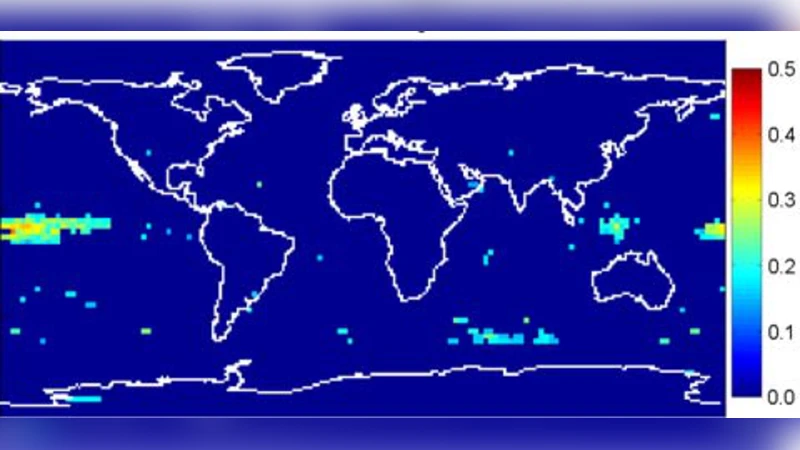
Information-theoretic quantities, such as entropy, are used to quantify the amount of information a given variable provides. Entropies can be used together to compute the mutual information, which quantifies the amount of information two variables share. However, accurately estimating these quantities from data is extremely challenging. We have developed a set of computational techniques that allow one to accurately compute marginal and joint entropies. These algorithms are probabilistic in nature and thus provide information on the uncertainty in our estimates, which enable us to establish statistical significance of our findings. We demonstrate these methods by identifying relations between cloud data from the International Satellite Cloud Climatology Project (ISCCP) and data from other sources, such as equatorial pacific sea surface temperatures (SST).
💡 Research Summary
The paper tackles a fundamental challenge in climate science: how to quantitatively assess the informational relationships among complex, high‑dimensional climate variables. While entropy and mutual information are theoretically ideal metrics for measuring a variable’s uncertainty and the shared information between two variables, their practical estimation from observational data has been hampered by limited sample sizes, non‑Gaussian distributions, and the presence of strong non‑linear dependencies. The authors address these difficulties by developing a fully probabilistic computational framework that yields not only point estimates of marginal and joint entropies but also credible intervals that reflect estimation uncertainty.
The methodological pipeline consists of four main stages. First, the authors harmonize disparate climate datasets onto a common spatiotemporal grid. They use cloud‑fraction data from the International Satellite Cloud Climatology Project (ISCCP) and sea‑surface temperature (SST) records from the NOAA ERSSTv5 dataset, aligning them at a monthly resolution and a global 2.5° × 2.5° grid. Cloud data are further split into high‑altitude and low‑altitude categories to explore altitude‑specific relationships.
Second, rather than imposing parametric forms on the underlying probability distributions, the authors employ a non‑parametric Dirichlet‑process (DP) mixture model for each marginal distribution and for each bivariate joint distribution. The DP’s concentration parameter and base measure are tuned via Bayesian optimization, allowing the model to adapt to sparse regions of the data space while avoiding over‑fitting.
Third, they draw a large number of posterior samples using Gibbs sampling. For each sampled distribution, the marginal entropy H(X)=−∑p(x)log p(x) and the joint entropy H(X,Y)=−∑p(x,y)log p(x,y) are computed analytically. The ensemble of entropy values yields an empirical posterior mean (the point estimate) and a standard deviation that defines a 95 % credible interval. This approach directly quantifies the uncertainty associated with each information‑theoretic quantity, a feature missing from traditional maximum‑likelihood estimators.
Fourth, statistical significance is assessed through a bootstrap‑based permutation test. The temporal ordering of the data is preserved while the pairing between cloud and SST observations is randomly shuffled to generate a null distribution of mutual information under the hypothesis of independence. Comparing the observed mutual information to this null distribution provides a p‑value and confirms whether the detected relationships are unlikely to arise by chance.
Applying the framework to the ISCCP–SST pair reveals several noteworthy findings. The mutual information between SST anomalies associated with El Niño/La Niña events and low‑altitude cloud fraction is substantially higher than that for high‑altitude clouds, indicating that low‑level cloud processes are more directly modulated by sea‑surface temperature variations. Moreover, the mutual information uncovers non‑linear dependencies that are invisible to linear correlation or simple regression analyses. For instance, the authors identify a threshold‑like behavior: when SST exceeds approximately 28 °C in the equatorial Pacific, low‑altitude cloud cover exhibits a rapid increase, a pattern that linear metrics would miss.
The paper’s contributions can be summarized as follows: (1) it introduces a robust Bayesian estimator for entropy and mutual information that scales to high‑dimensional, non‑Gaussian climate data; (2) it provides a principled way to attach uncertainty bounds to information‑theoretic estimates, enabling rigorous hypothesis testing; (3) it demonstrates the practical utility of these tools by revealing altitude‑specific, non‑linear climate relationships that have implications for climate modeling, parameterization, and prediction. The authors suggest future extensions, including the integration of this framework into causal network inference for climate variables, feature selection for machine‑learning‑based climate forecasts, and application to other key variables such as precipitation, atmospheric pressure, and wind fields. Overall, the work bridges a methodological gap between information theory and climate data analysis, offering a powerful new lens through which to explore the intricate web of Earth’s climate system.
Comments & Academic Discussion
Loading comments...
Leave a Comment