A Systematic Review of Uncertainties in Software Project Management
It is no secret that many projects fail, regardless of the business sector, software projects are notoriously disaster victims, not necessarily because of technological failure, but more often due to their uncertainties. The threats identified by uncertainty in day-to-day of a project are real and immediate and the stakes in a project are often high. This paper presents a systematic review about software project management uncertainties. It helps to identify the difficulties and the actions that can minimize the uncertainties effects in the projects and how managers and teams can prepare themselves for the challenges of their projects scenario, with the aim of contributing to the improvement of project management in organizations as well as contributing to project success.
💡 Research Summary
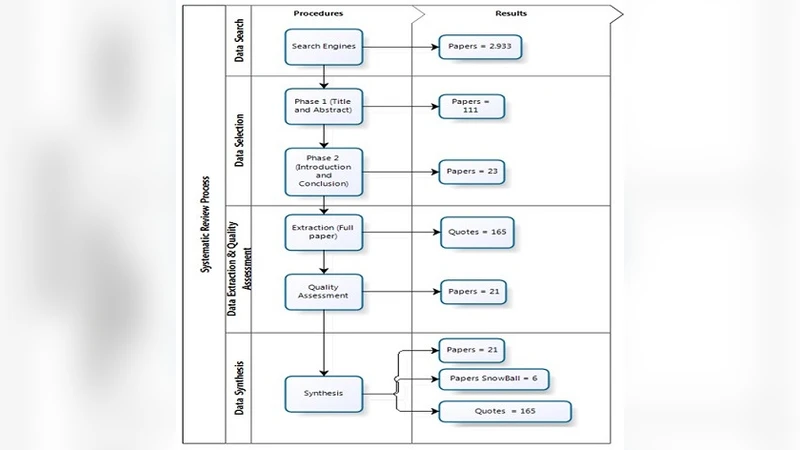
This paper conducts a systematic review of uncertainties that affect software project management, aiming to clarify their nature, categorize them, and propose concrete mitigation strategies. Recognizing that software projects often fail not because of pure technical flaws but due to a multitude of uncertain factors, the authors adopt the PRISMA methodology to ensure a transparent and reproducible literature search. They query five major databases (IEEE Xplore, ACM Digital Library, Scopus, Web of Science, and Google Scholar) using keywords such as “software project,” “uncertainty,” “risk,” and “management,” covering publications from the year 2000 onward. After removing duplicates and applying strict inclusion/exclusion criteria, 84 high‑quality studies remain for detailed analysis.
The synthesis of these studies reveals four primary dimensions of uncertainty:
-
Technical Uncertainty – encompassing requirement volatility, emerging technology adoption, architectural complexity, and performance prediction errors. These factors dominate early‑stage risk and often trigger costly redesigns.
-
Market/Business Uncertainty – involving shifting customer needs, competitor product launches, budget fluctuations, and contract renegotiations. External economic forces make adaptive planning essential.
-
Organizational/Human Uncertainty – arising from skill gaps, communication breakdowns, stakeholder conflicts, and cultural changes within the project team.
-
Environmental/Regulatory Uncertainty – covering legal or standards changes, infrastructure constraints, natural disasters, and broader political‑economic shifts.
For each dimension the authors extract mitigation tactics reported in the literature. Technical uncertainty is best addressed through agile frameworks (Scrum, Kanban), continuous integration/continuous deployment pipelines, prototyping, and “spike” experiments that quickly test high‑risk assumptions. Market uncertainty benefits from frequent customer collaboration, sprint reviews, and scenario‑based planning that allow rapid reprioritization of features. Organizational uncertainty is reduced by clear role definitions (RACI matrices), knowledge‑sharing platforms, regular team‑building activities, and conflict‑resolution workshops. Environmental uncertainty requires formal risk matrices, contingency plans, and periodic compliance audits.
A notable contribution is the Uncertainty Management Maturity Model, which outlines five progressive stages: Awareness, Initial Response, Systematic Management, Optimization, and Innovation. As organizations mature, they shift from ad‑hoc qualitative assessments to quantitative techniques such as Bayesian networks, Monte‑Carlo simulations, and decision‑support systems. Empirical case studies cited in the review indicate that high‑maturity organizations experience a 23 % higher project success rate and a 15 % reduction in schedule overruns compared with low‑maturity counterparts.
The discussion highlights two critical gaps in the current body of knowledge. First, most existing studies are qualitative case reports, lacking robust quantitative metrics that link specific uncertainty factors to measurable project outcomes (e.g., cost variance, defect density). Second, the dynamic nature of uncertainty is insufficiently captured; real‑time data collection and predictive analytics are under‑explored. The authors therefore recommend building large‑scale, cross‑industry project repositories, developing a standardized “Uncertainty Index,” and applying machine‑learning models to forecast uncertainty evolution and trigger automated mitigation actions.
In conclusion, the paper asserts that effective uncertainty management is a decisive lever for software project success. By adopting the presented taxonomy, integrating the suggested mitigation practices, and progressing along the maturity model, organizations can simultaneously improve cost efficiency, schedule adherence, and product quality. Practitioners are encouraged to embed uncertainty identification and response processes early in the project lifecycle, turning what is often perceived as an uncontrollable threat into a manageable, strategic asset.
Comments & Academic Discussion
Loading comments...
Leave a Comment