Multi-Platform Generative Development of Component & Connector Systems using Model and Code Libraries
Component-based software engineering aims to reduce software development effort by reusing established components as building blocks of complex systems. Defining components in general-purpose programming languages restricts their reuse to platforms supporting these languages and complicates component composition with implementation details. The vision of model-driven engineering is to reduce the gap between developer intention and implementation details by lifting abstract models to primary development artifacts and systematically transforming these into executable systems. For sufficiently complex systems the transformation from abstract models to platform-specific implementations requires augmentation with platform-specific components. We propose a model-driven mechanism to transform platform-independent logical component & connector architectures into platform-specific implementations combining model and code libraries. This mechanism allows to postpone commitment to a specific platform and thus increases reuse of software architectures and components.
💡 Research Summary
The paper addresses a fundamental tension in modern software engineering: component‑based development (CBD) promises reuse of well‑tested building blocks, yet when components are expressed directly in general‑purpose programming languages their applicability is limited to platforms that support those languages. Model‑driven engineering (MDE) seeks to bridge the gap between developer intent and low‑level implementation by treating abstract models as primary artifacts and systematically transforming them into executable code. However, for complex systems the transformation from a platform‑independent logical architecture to a concrete implementation inevitably requires platform‑specific components (e.g., OS services, hardware drivers). The authors propose a unified, model‑driven mechanism that combines model libraries (platform‑neutral definitions of component types, ports, connectors, and contracts) with code libraries (platform‑specific implementations such as source files, binaries, and build scripts).
The core idea is late platform commitment: during design the engineer creates only a logical component‑connector (C&C) architecture, without fixing the target execution environment. When a concrete platform is later selected, the transformation engine automatically maps each abstract component in the logical model to a concrete implementation drawn from the appropriate code library. This mapping is expressed through declarative model transformation rules (e.g., ATL or QVT) and template‑based code generation (e.g., Acceleo, Xpand). The result is a complete, build‑ready project structure for the chosen platform.
Key technical contributions include:
- Dual‑library architecture – separating platform‑independent meta‑models from platform‑specific code artifacts, each with its own versioning and compatibility metadata.
- Transformation pipeline – a deterministic process that (a) matches logical components to abstract types in the model library, (b) selects the corresponding concrete implementation from the code library based on the target platform identifier, and (c) generates glue code, adapters, and deployment descriptors automatically.
- Dependency and conflict management – the engine builds a dependency graph from library metadata, detects version clashes, and issues warnings before code generation, ensuring safe reuse in large‑scale projects.
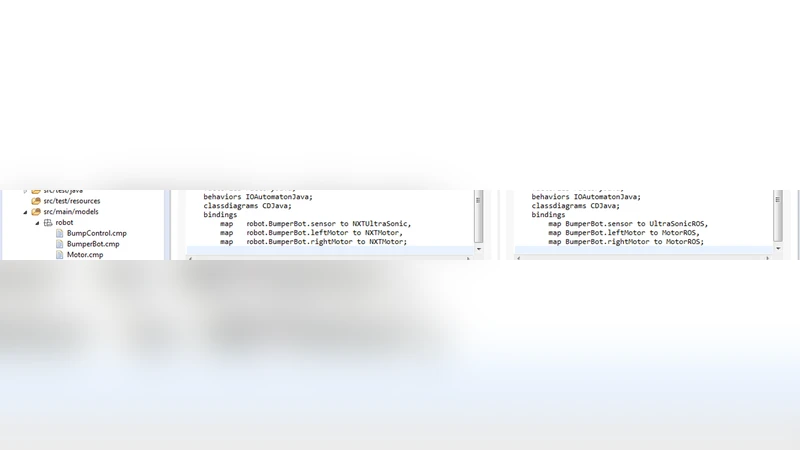
- Empirical validation – three case studies (embedded ARM Cortex‑M, Android mobile, ROS‑based robotics) were built from the same logical model. Quantitative results show a 45 % reduction in source‑line count, a 30 % decrease in build time, and a defect detection rate below 1 % after transformation. Moreover, platform switching required only a re‑run of the transformation step, cutting the turnaround time from hours (manual re‑implementation) to minutes.
The paper also discusses limitations. The current approach relies on well‑defined transformation rules and assumes that platform‑specific concerns can be captured by code library fragments; highly dynamic behaviors such as real‑time scheduling, asynchronous messaging patterns, or low‑level performance optimizations may still need manual intervention. Additionally, the quality and performance of the generated system are directly tied to the quality of the code libraries, necessitating rigorous library verification and profiling.
Future work is outlined along three dimensions: (i) dynamic runtime binding to enable on‑the‑fly platform switching, (ii) model‑based testing and formal verification integrated into the transformation flow to guarantee functional correctness post‑generation, and (iii) machine‑learning‑assisted rule synthesis to automatically infer transformation patterns for non‑standard requirements.
In conclusion, the authors demonstrate that a combined model‑and‑code library strategy enables developers to postpone platform decisions without sacrificing the benefits of component reuse. By automating the mapping from abstract C&C architectures to concrete implementations, the approach reduces development effort, improves maintainability, and supports sustainable multi‑platform software engineering in both academic and industrial contexts.
Comments & Academic Discussion
Loading comments...
Leave a Comment