A queueing model with independent arrivals, and its fluid and diffusion limits
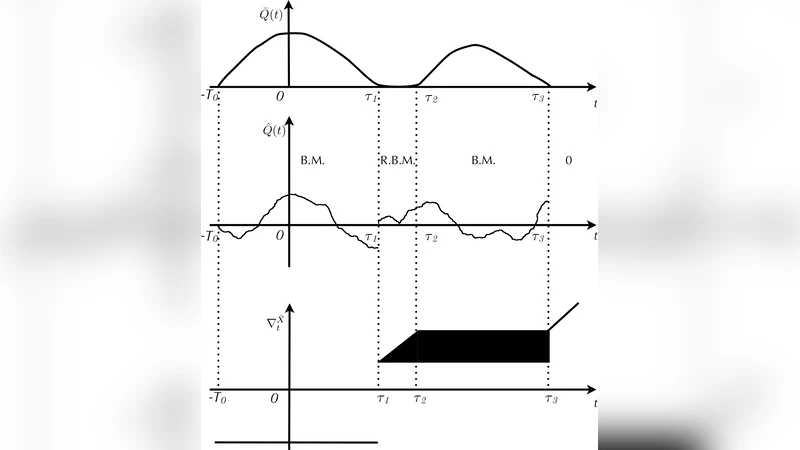
We introduce the {\Delta}(i)/GI/1 queue, a new queueing model. In this model, customers from a given population independently sample a time to arrive from some given distribution F. Thus, the arrival times are an ordered statistics, and the inter-arrival times are differences of consecutive ordered statistics. They are served by a single server which provides service according to a general distribution G, with independent service times. The exact model is analytically intractable. Thus, we develop fluid and diffusion limits for the various stochastic processes, and performance metrics. The fluid limit of the queue length is observed to be a reflected process, while the diffusion limit is observed to be a function of a Brownian motion and a Brownian bridge process, and is given by a ’netput’ process and a directional derivative of the Skorokhod reflected fluid netput in the direction of a diffusion refinement of the netput process. We also observe what may be interpreted as a transient Little’s law. Sample path analysis reveals various operating regimes where the diffusion limit switches between a free diffusion, a reflected diffusion process and the zero process, with possible discontinuities during regime switches. The weak convergence is established in the M1 topology, and it is also shown that this is not possible in the J1 topology.
💡 Research Summary
The paper introduces a novel single‑server queueing model, denoted Δ(i)/GI/1, in which each customer in a fixed population independently draws an arrival time from a prescribed distribution F. Consequently, the arrival epochs are the order statistics of F, and inter‑arrival intervals are the spacings between successive order statistics. Service times are i.i.d. with a general distribution G, independent of arrivals. Because the joint law of the ordered arrival times is analytically intractable, the authors resort to asymptotic analysis, deriving both fluid (law of large numbers) and diffusion (central limit) limits for the key stochastic processes and performance measures.
Fluid limit. Scaling the system size by a factor N and accelerating time proportionally, the cumulative arrival process converges to the deterministic function F(t) (the cdf of F), while the cumulative service process converges to μ t, where μ = 1/E
Comments & Academic Discussion
Loading comments...
Leave a Comment