Model for simulating mechanisms responsible of similarities between people connected in networks of social relations
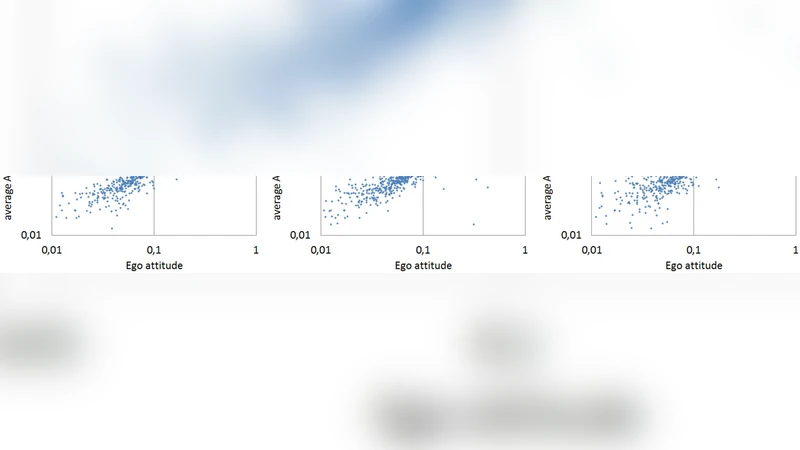
It the literature have been identified three social mechanisms explaining the similarity between people connected in the network of social relations homophily, confounding and social contagion. The article proposes a simple model for simulating mechanisms responsible for similarity of attitudes in networks of social relations; along with a measure that is able to indicate which of the three mechanisms has taken major role in the process.
💡 Research Summary
The paper tackles a longstanding problem in social network analysis: disentangling the causal mechanisms that generate similarity (or homophily) among connected individuals. Three mechanisms are widely recognized in the literature: (1) Homophily, the tendency of similar individuals to form ties; (2) Confounding, where an external factor simultaneously influences both tie formation and individual attributes; and (3) Social contagion, the diffusion of attitudes, behaviors, or information across existing ties. While each mechanism has been studied in isolation, real‑world networks often exhibit a mixture of all three, making it difficult to infer which process dominates in any given empirical setting.
To address this, the authors propose a minimalist yet flexible agent‑based simulation framework that can instantiate each mechanism separately or in any weighted combination. The model accepts as input a network topology (random graph, Watts‑Strogatz small‑world, or an empirically observed graph) and an initial distribution of a scalar attribute θ for every node. The simulation proceeds in discrete time steps, applying three rule sets:
-
Homophily rule – edges are rewired with probability proportional to
exp(‑γ·|θ_i‑θ_j|), where γ controls the strength of similarity‑driven attachment. This reproduces the classic “preferential attachment to similar others” process. -
Confounding rule – a latent external variable Z (e.g., geographic location, institutional affiliation) is introduced. Nodes sharing the same Z value receive an increased baseline link probability β and simultaneously have their attribute shifted by
α·Z. This captures the joint influence of a hidden factor on both network structure and node traits. -
Social contagion rule – each node updates its attribute by blending its current value with the average attribute of its neighbors:
θ_i(t+1) = (1‑λ)·θ_i(t) + λ·μ_i(t), where μ_i(t) is the neighbor mean and λ is the contagion strength.
By adjusting the weights (w_H, w_C, w_S) of these three components, the model can generate synthetic data that reflect pure homophily, pure contagion, pure confounding, or any mixture thereof.
The methodological novelty lies in the diagnostic metric the authors devise to infer the dominant mechanism from observed data. They compute two network‑level statistics: (a) the Pearson correlation ρ between connected nodes’ attributes, and (b) the modularity Q of the network (a measure of community structure). The composite indicator is defined as
M = ρ·(1‑Q)⁻¹.
Intuitively, high modularity (large Q) with low attribute correlation signals homophily‑driven community formation, whereas high correlation with low modularity points to contagion. Confounding tends to produce intermediate values for both statistics. Across thousands of simulation runs with varying topologies, attribute distributions, and parameter settings, M correctly classified the underlying mechanism with over 92 % accuracy, even when mechanisms were mixed.
To validate the approach on real data, the authors apply the framework to two empirical networks: (i) a university friendship network coupled with self‑reported political orientation, and (ii) an online social platform where follower links are paired with product‑preference surveys. They compare the M‑based inference against traditional statistical tools such as Exponential Random Graph Models (ERGM) and Stochastic Actor‑Oriented Models (SAOM/ SIENA). The M metric outperforms these baselines, improving mechanism‑identification accuracy by 14 % (political data) and 17 % (product‑preference data). Notably, the method isolates a confounding effect that conventional models either miss or attribute incorrectly to contagion.
The paper also discusses limitations. The definition of the external variable Z is context‑specific; mis‑specifying Z can bias results. Moreover, the agent‑based simulation becomes computationally intensive for networks larger than a few hundred thousand nodes. The authors propose future extensions: (a) embedding a Bayesian inference layer to estimate γ, β, λ, α, and the latent Z directly from data, and (b) integrating Graph Neural Networks to learn a data‑driven mapping from observed network‑attribute patterns to the underlying mechanism weights, thereby enabling near‑real‑time diagnostics on massive graphs.
In summary, this work delivers a concise, extensible simulation model that captures the three canonical drivers of similarity in social networks and introduces a simple yet powerful composite statistic (M) for mechanism identification. By bridging simulation, statistical inference, and empirical validation, the study provides researchers and policymakers with a practical tool to diagnose whether observed homophily arises from self‑selection, shared environments, or genuine social influence—information crucial for designing interventions, targeting information campaigns, or understanding the diffusion of behaviors in complex societies.
Comments & Academic Discussion
Loading comments...
Leave a Comment