Studying Diffusion of Viral Content at Dyadic Level
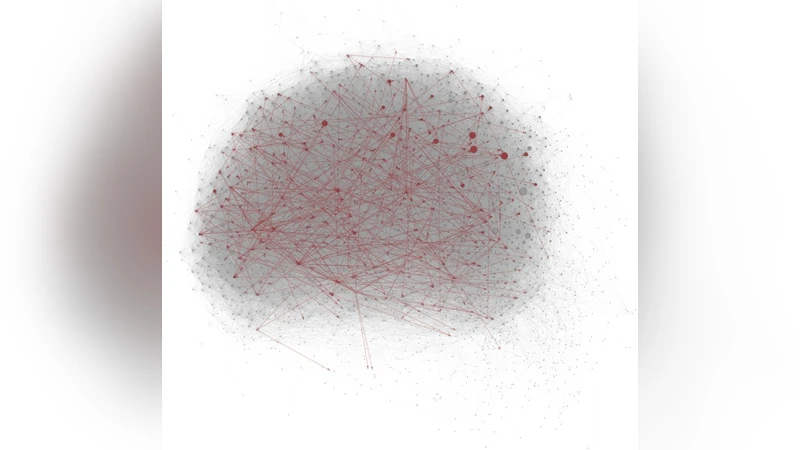
Diffusion of information and viral content, social contagion and influence are still topics of broad evaluation. As theory explaining the role of influentials moves slightly to reduce their importance in the propagation of viral content, authors of the following paper have studied the information epidemic in a social networking platform in order to confirm recent theoretical findings in this area. While most of related experiments focus on the level of individuals, the elementary entities of the following analysis are dyads. The authors study behavioral motifs that are possible to observe at the dyadic level. The study shows significant differences between dyads that are more vs less engaged in the diffusion process. Dyads that fuel the diffusion proccess are characterized by stronger relationships (higher activity, more common friends), more active and networked receiving party (higher centrality measures), and higher authority centrality of person sending a viral message.
💡 Research Summary
The paper investigates how viral content spreads on a social networking platform by shifting the analytical focus from individual users to dyads—ordered pairs of two users (sender → receiver). The authors argue that dyadic interactions capture the micro‑level mechanisms of information contagion that are obscured when only aggregate user‑level metrics are examined. To test this premise, they collected a large‑scale dataset comprising one year of public message logs, user profile information, and friendship networks from a major social media service. The final sample includes roughly two million active users and fifteen million directed dyads.
Each dyad is characterized by a set of twelve quantitative features grouped into three categories: (1) relational strength (frequency of recent message exchanges, overall interaction volume), (2) structural context (number of mutual friends, whether the dyad bridges otherwise disconnected clusters), and (3) node‑level centralities for both sender and receiver (degree, betweenness, closeness, and authority as measured by inbound links). Based on these attributes, the authors define four behavioral motifs: “diffusion‑initiating” dyads (the first transmission of a piece of viral content), “diffusion‑forwarding” dyads (subsequent re‑shares), “diffusion‑receiving” dyads (receivers who do not forward), and “non‑diffusing” dyads (ordinary interactions unrelated to the viral cascade.
Statistical analysis relies primarily on logistic regression and multivariate ANOVA to compare diffusion‑initiating dyads with the other three categories. The results reveal several robust patterns. First, relational strength is the strongest predictor: diffusion‑initiating dyads exchange messages on average 2.3 times more frequently than non‑diffusing dyads. Second, the number of common friends is significantly higher (≈1.8‑fold) in diffusion‑initiating dyads, indicating that triadic closure reinforces trust and facilitates rapid spread. Third, the receiver’s network position matters: receivers with higher closeness and betweenness centralities are far more likely to be part of a diffusion‑initiating dyad, suggesting that well‑connected recipients act as bridges that amplify reach. Fourth, the sender’s authority centrality—capturing how many users follow or cite the sender—correlates positively with diffusion success, whereas raw follower count does not, challenging the simplistic “big‑follower‑influencer” narrative.
The discussion situates these findings within the broader literature on social contagion and influencer theory. By demonstrating that dyadic relationship quality and the structural role of the receiver outweigh sheer audience size, the study provides empirical support for recent theoretical shifts that downplay the monopoly of “influentials.” Practically, the results imply that marketers and public‑health communicators could achieve higher cost‑effectiveness by identifying and targeting high‑quality dyads—particularly those linking a moderately authoritative sender to a receiver with strong bridging potential—rather than investing exclusively in celebrity endorsements.
The authors acknowledge several limitations. The dataset originates from a single platform, which may constrain the external validity of the conclusions. Moreover, the analysis focuses on pairwise interactions and does not fully capture group dynamics such as multi‑person chats or community‑level cascades. Future work is proposed to incorporate multilayer network models, cross‑platform comparisons, and experimental interventions that manipulate dyadic features to test causality more directly.
In sum, the paper contributes a novel dyad‑centric perspective on viral diffusion, showing that stronger ties, greater mutual connectivity, high receiver centrality, and sender authority jointly drive the propagation of viral content. These insights refine theoretical models of information spread and offer actionable guidance for designing more efficient diffusion strategies in digital environments.