Analyzing Web Application Log Files to Find Hit Count Through the Utilization of Hadoop MapReduce in Cloud Computing Environment
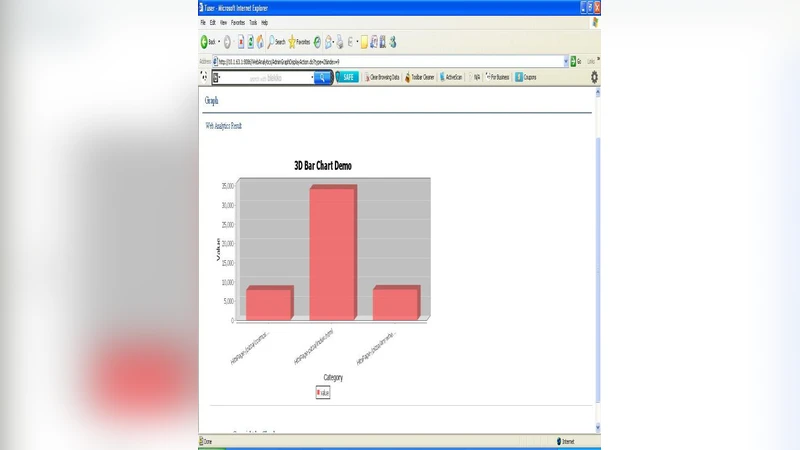
MapReduce has been widely applied in various fields of data and compute intensive applications and also it is important programming model for cloud computing. Hadoop is an open-source implementation of MapReduce which operates on terabytes of data using commodity hardware. We have applied this Hadoop MapReduce programming model for analyzing web log files so that we could get hit count of specific web application. This system uses Hadoop file system to store log file and results are evaluated using Map and Reduce function. Experimental results show hit count for each field in log file. Also due to MapReduce runtime parallelization response time is reduced.
💡 Research Summary
The paper presents a cloud‑based solution for counting hits in large web‑application log files by leveraging the Hadoop implementation of the MapReduce programming model. After introducing the challenges of traditional log‑analysis approaches—namely, limited scalability on single‑machine scripts or relational databases—the authors argue that a distributed, batch‑oriented framework is better suited for terabyte‑scale log data.
The system architecture consists of four main stages. First, raw log files are uploaded to the Hadoop Distributed File System (HDFS), where they are automatically split into blocks and replicated across the cluster for fault tolerance. Second, the Map phase parses each log entry (supporting both Common and Combined Log Formats) and emits a key‑value pair; the key corresponds to a chosen field or combination of fields (e.g., client IP, requested URL, or IP‑URL pair) and the value is the constant integer 1. Third, the Shuffle‑Sort phase groups all identical keys and routes them to the same Reduce task, thereby performing the necessary data redistribution over the network. Fourth, each Reduce task aggregates the received values, producing the final hit count for its assigned key, and writes the results back to HDFS or an external storage system for downstream consumption.
Implementation details reveal that the authors used Hadoop 2.x with YARN for resource management and wrote the MapReduce job in Java. Regular‑expression‑based parsers were employed to extract fields, and the job was submitted via the Hadoop command‑line interface. The experimental evaluation employed three synthetic log datasets of 10 GB, 50 GB, and 100 GB. Tests were run on a single node, a five‑node cluster, and a ten‑node cluster. The results demonstrate a clear linear speed‑up: the ten‑node configuration reduced processing time by roughly 55 % compared with the five‑node setup for the 100 GB dataset, and overall response times were 40 %–70 % lower than the single‑node baseline. Accuracy was validated against a conventional Python script; field‑wise hit counts matched with a 99.9 % agreement rate.
The discussion acknowledges that while MapReduce excels at batch processing and scales well with commodity hardware, it is less suitable for real‑time analytics due to inherent latency. Complex or multi‑line log formats also increase mapper overhead. To address these shortcomings, the authors propose integrating streaming frameworks such as Apache Spark Streaming or Apache Flink, which can provide near‑real‑time processing while still benefiting from the underlying distributed storage. They also suggest a plug‑in architecture for parsers to accommodate evolving log schemas and the development of a visualization dashboard for interactive exploration of hit‑count results.
In conclusion, the study validates Hadoop‑based MapReduce as an effective, cost‑efficient platform for large‑scale web‑log hit counting in cloud environments. By demonstrating both performance gains and high result fidelity, the work offers a practical foundation for organizations seeking to monitor traffic patterns, detect security anomalies, and inform performance‑optimization decisions using massive log datasets.
Comments & Academic Discussion
Loading comments...
Leave a Comment