Erich Regener and the maximum in ionisation of the atmosphere
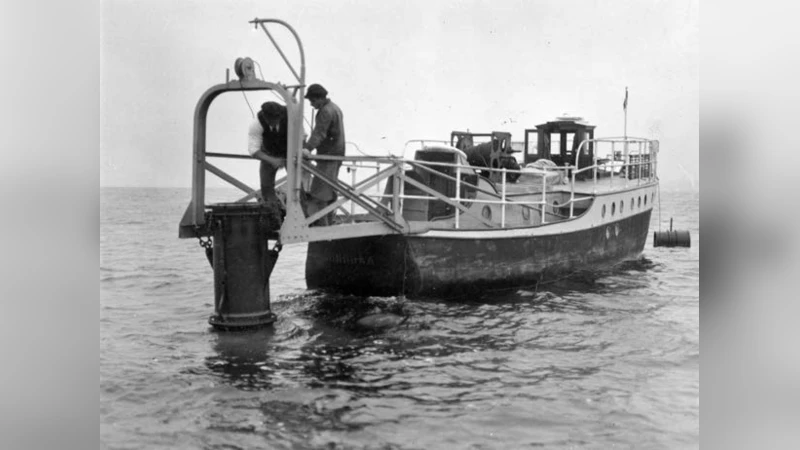
In the 1930s the German physicist Erich Regener (1881-1955) did important work on the measurement of the rate of production of ionisation deep under-water and in the atmosphere. He discovered, along with one of his students, Georg Pfotzer, the altitude at which the production of ionisation in the atmosphere reaches a maximum, often, but misleadingly, called the Pfotzer maximum. Regener was one of the first to estimate the energy density of cosmic rays, an estimate that was used by Baade and Zwicky to bolster their postulate that supernovae might be their source. Yet Regener’s name is less recognised by present-day cosmic ray physicists than it should be largely because in 1937 he was forced to take early retirement by the National Socialists as his wife had Jewish ancestors. In this paper we briefly review his work on cosmic rays and recommend an alternative naming of the ionisation maximum. The influence that Regener had on the field through his son, his son-in-law, his grandsons and his students and through his links with Rutherford’s group in Cambridge is discussed in an appendix. Regener was nominated for the Nobel Prize in Physics by Schroedinger in 1938. He died in 1955 at the age of 73.
💡 Research Summary
The paper provides a comprehensive historical and scientific reassessment of Erich Regener’s contributions to cosmic‑ray physics, focusing on his discovery of the altitude at which atmospheric ionisation reaches a maximum. In the early 1930s Regener pioneered quantitative measurements of ionisation deep underwater by deploying electrode arrays in lakes and the open sea, thereby establishing the attenuation length of penetrating radiation in water and furnishing baseline data for atmospheric studies. Building on this foundation, he turned to high‑altitude balloon experiments. Between 1932 and 1935 a series of balloons equipped with a current‑meter, temperature and pressure sensors, and a radio‑receiver were launched. The recorded current increased with altitude, peaked near 15 km, and then declined, revealing a distinct “ionisation maximum” in the middle atmosphere. While this feature has traditionally been called the “Pfotzer maximum” after Regener’s student Georg Pfotzer, the paper argues that Regener was the principal architect of the experiment, the chief analyst of the data, and the originator of the theoretical interpretation; Pfotzer’s role was largely supportive.
Using the measured ionisation profile, Regener derived an estimate of the cosmic‑ray energy density. By relating the observed ionisation rate Q to the product of particle flux Φ and average particle energy ε through a calibrated proportionality constant, he obtained an energy density of order 1 eV cm⁻³. This value was subsequently cited by Baade and Zwicky in 1934 to bolster their hypothesis that supernova explosions could supply the bulk of the cosmic‑ray energy budget, a cornerstone of modern high‑energy astrophysics.
The narrative then shifts to the political context that truncated Regener’s career. In 1937, because his wife possessed Jewish ancestry, the National Socialist regime forced Regener into early retirement and confiscated his laboratory equipment. Despite this setback, Regener’s scientific legacy persisted through his family—his son, son‑in‑law, and grandsons—all of whom pursued careers in physics and astronomy—and through his network of former students. Notably, Regener maintained a collaborative link with Ernest Rutherford’s group at Cambridge, which facilitated the exchange of techniques for high‑energy particle detection and contributed to the development of early nuclear physics instrumentation.
An appendix documents Regener’s broader influence: the continuation of his ionisation studies by his protégés, the adoption of his methods in subsequent balloon and satellite experiments, and the role his descendants played in post‑war European physics. The paper also notes that Regener was nominated for the Nobel Prize in Physics by Erwin Schrödinger in 1938, a nomination that never materialised due to the turbulent political climate.
Finally, the authors propose a renaming of the atmospheric ionisation maximum to acknowledge Regener’s central role. They suggest either “Regener‑Pfotzer maximum” or simply “Regener maximum” as a more historically accurate term. This change is presented not merely as a matter of credit but as a step toward scientific fairness, ensuring that future textbooks and research papers correctly attribute the discovery and that the story of Regener’s work continues to inspire new generations of cosmic‑ray researchers.