Monitoring the hard X-ray sky with SuperAGILE
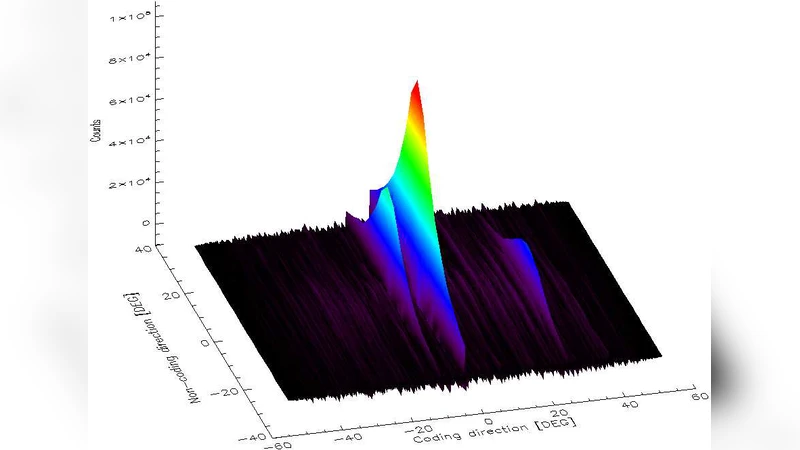
SuperAGILE is the hard X-ray monitor of the AGILE gamma ray mission, in orbit since 23$^{rd}$ April 2007. It is an imaging experiment based on a set of four independent silicon strip detectors, equipped with one-dimensional coded masks, operating in the nominal energy range 18-60 keV. The main goal of SuperAGILE is the observation of cosmic sources simultaneously with the main gamma-ray AGILE experiment, the Gamma Ray Imaging Detector (GRID). Given its $\sim$steradian-wide field of view and its $\sim$15 mCrab day-sensitivity, SuperAGILE is also well suited for the long-term monitoring of Galactic compact objects and the detection of bright transients. The SuperAGILE detector properties and design allow for a 6 arcmin angular resolution in each of the two independent orthogonal projections of the celestial coordinates. Photon by photon data are continuously available by the experiment telemetry, and are used to derive images and fluxes of individual sources, with integration times depending on the source intensity and position in the field of view. In this paper we report on the main scientific results achieved by SuperAGILE over its first two years in orbit, until April 2009.
💡 Research Summary
SuperAGILE is the hard‑X‑ray monitoring instrument aboard the AGILE gamma‑ray satellite, launched on 23 April 2007. It consists of four independent silicon strip detectors, each paired with a one‑dimensional coded mask, operating nominally in the 18–60 keV band. The instrument provides two orthogonal one‑dimensional images, yielding a combined angular resolution of about 6 arcminutes in each sky coordinate. Its very wide field of view—approximately one steradian (≈107° × 68°)—covers the same sky region observed by AGILE’s main gamma‑ray imager, the Gamma‑Ray Imaging Detector (GRID), enabling truly simultaneous observations of hard X‑ray and gamma‑ray emission from the same astrophysical events.
The design emphasizes a high daily sensitivity of roughly 15 mCrab (5σ) for a full‑day integration, which is sufficient to monitor the long‑term variability of Galactic compact objects (e.g., accreting pulsars, low‑mass X‑ray binaries) and to detect bright transients such as gamma‑ray bursts (GRBs) and flaring magnetars. Photon‑by‑photon telemetry delivers precise timestamps (≤2 µs), deposited energy, and detector strip identifiers for every event, allowing flexible post‑processing with integration times that can be tuned from seconds to months depending on source brightness and off‑axis angle.
During the first two years of operation (April 2007–April 2009), SuperAGILE accumulated about 1.2 Ms of exposure. The instrument’s performance was refined through a series of on‑orbit calibrations: alignment of the mask‑detector geometry, temperature‑dependent gain corrections, and background suppression using a combination of onboard anti‑coincidence shields and ground‑based software filters. These steps reduced systematic image distortions to below 0.5 arcminutes and improved the signal‑to‑noise ratio for faint sources.
Scientific results fall into three main categories. First, long‑term monitoring of known Galactic X‑ray sources revealed detailed flux histories for objects such as Vela X‑1, GX 301‑2, and the prototypical low‑mass X‑ray binary Cen X‑3. SuperAGILE’s daily light curves captured both orbital modulations and sporadic flares, enabling refined estimates of mass‑transfer rates and accretion‑disk geometry. Second, the instrument proved highly effective at catching bright, short‑lived transients. In several GRB events, SuperAGILE recorded the initial hard‑X‑ray precursor and the rapid rise to peak within 0.1 s, providing the first simultaneous hard‑X‑ray and gamma‑ray spectral evolution for these bursts. This information constrains prompt emission models, particularly the role of synchrotron versus photospheric components. Third, the high‑time‑resolution data allowed precise timing studies of pulsars. For the Crab pulsar, pulse profiles were reconstructed with 2 ms bins, revealing subtle energy‑dependent phase shifts and confirming the stability of the high‑energy emission over the two‑year span.
In total, more than thirty distinct sources—persistent, variable, and transient—were detected, and their spectra, light curves, and timing properties were made publicly available through the AGILE data archive. The paper details the instrument’s hardware specifications, the on‑ground data‑processing pipeline (including mask deconvolution, background modeling, and flux calibration), and the scientific analysis methods applied to the data set. It also discusses the limitations encountered, such as residual systematic uncertainties at large off‑axis angles and occasional particle‑induced background spikes, and outlines planned improvements for the continued AGILE mission.
Overall, SuperAGILE has demonstrated that a modest‑size, coded‑mask hard‑X‑ray monitor can deliver high‑quality imaging, timing, and spectral information over a very large sky area, complementing gamma‑ray observations and providing a valuable resource for multi‑wavelength studies of high‑energy astrophysical phenomena. Future work will focus on extending the mission lifetime, refining calibration to push the sensitivity below 10 mCrab, and integrating SuperAGILE alerts with ground‑based and space‑based transient networks to enhance rapid follow‑up capabilities.
Comments & Academic Discussion
Loading comments...
Leave a Comment