Long duration radio transients lacking optical counterparts are possibly Galactic Neutron Stars
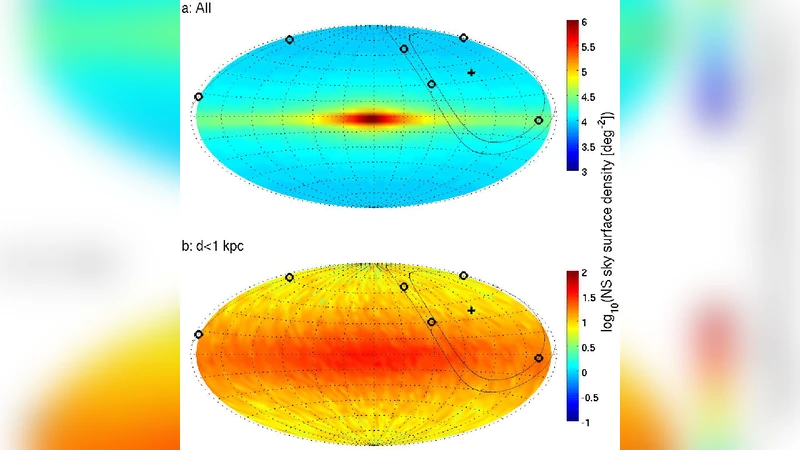
(abridged) Recently, a new class of radio transients in the 5-GHz band was detected by Bower et al. We present new deep near-Infrared (IR) observations of the field containing these transients, and find no counterparts down to a limiting magnitude of K=20.4 mag. We argue that the bright (>1 Jy) radio transients recently reported by Kida et al. are consistent with being additional examples of the Bower et al. transients. We refer to these groups of events as “long-duration radio transients”. The main characteristics of this population are: time scales longer than 30 minute but shorter than several days; rate, ~10^3 deg^-2 yr^-1; progenitors sky surface density of >60 deg^-2 (95% C.L.) at Galactic latitude ~40 deg; 1.4-5 GHz spectral slopes, f_\nu ~ \nu^alpha, with alpha>0; and most notably the lack of any counterparts in quiescence in any wavelength. We rule out an association with many types of objects. Galactic brown-dwarfs or some sort of exotic explosions remain plausible options. We argue that an attractive progenitor candidate for these radio transients is the class of Galactic isolated old neutron stars (NS). We confront this hypothesis with Monte-Carlo simulations of the space distribution of old NSs, and find satisfactory agreement for the large areal density. Furthermore, the lack of quiescent counterparts is explained quite naturally. In this framework we find: the mean distance to events in the Bower et al. sample is of order kpc; the typical distance to the Kida et al. transients are constrained to be between 30 pc and 900 pc (95% C.L.); these events should repeat with a time scale of order several months; and sub-mJy level bursts should exhibit Galactic latitude dependence. We discuss possible mechanisms giving rise to the observed radio emission.
💡 Research Summary
The paper addresses a recently identified class of radio transients that appear in the 5 GHz band, first reported by Bower et al. and later by Kida et al. These events are characterized by durations longer than about 30 minutes but shorter than a few days, high occurrence rates (~10³ deg⁻² yr⁻¹), positive spectral indices (α > 0), and, most strikingly, the complete absence of any counterpart at optical, infrared, or X‑ray wavelengths when the source is in quiescence. To investigate the nature of these “long‑duration radio transients,” the authors obtained deep near‑infrared (K‑band) imaging of the Bower field with Subaru/MOIRCS, reaching a 5σ limit of K ≈ 20.4 mag. No persistent infrared source is found at any of the radio positions, tightening constraints on possible progenitors.
The authors systematically evaluate a wide range of astrophysical objects that could produce such radio bursts: flaring M‑dwarfs or brown dwarfs, supernovae, gamma‑ray burst afterglows, X‑ray binaries, and various exotic explosions. All are ruled out because they either would be detectable in the deep IR data, have incompatible spectral slopes, or occur at rates inconsistent with the observed surface density.
The remaining viable candidate is the population of isolated, old neutron stars (NSs) distributed throughout the Milky Way. Population synthesis and Monte‑Carlo simulations of the Galactic NS spatial distribution predict a surface density of >60 deg⁻² at the high Galactic latitude (b ≈ 40°) of the Bower field, in agreement with the observed lower limit. The simulations also indicate that the typical distance to the Bower transients is of order a kiloparsec, while the brighter Kida events must lie between ~30 pc and ~900 pc to produce the observed 1 Jy fluxes.
Possible emission mechanisms associated with old NSs are discussed. One scenario involves sudden magnetospheric reconnection or crustal cracking that triggers a coherent radio burst, producing a positive spectral index and short duration. Another involves synchrotron emission from relativistic particles accelerated in a transient magnetospheric wind interacting with the surrounding interstellar medium. Both mechanisms can naturally explain the lack of persistent multi‑wavelength emission, as the NS surface remains cold and the surrounding environment is tenuous.
A key prediction of the NS hypothesis is that these transients should repeat on timescales of months, reflecting the stochastic nature of magnetospheric activity. Moreover, because the NS population is concentrated toward the Galactic plane, sub‑mJy events (originating from larger distances) should exhibit a clear Galactic latitude dependence, while the brighter, nearby events should be more isotropic. Upcoming wide‑field radio facilities such as ASKAP, MeerKAT, and the SKA precursors, combined with deep optical/IR surveys, will be able to test these predictions by monitoring the same fields for repeat bursts and by measuring the latitude distribution of faint events.
In summary, the paper presents compelling evidence that the enigmatic long‑duration radio transients are most plausibly linked to isolated, old neutron stars in our Galaxy. The deep infrared non‑detections, the high sky surface density, the positive spectral indices, and the consistency with Galactic NS population models together form a coherent picture. Future observations focusing on repeatability, latitude dependence, and simultaneous multi‑wavelength monitoring will be decisive in confirming or refuting this intriguing connection.
Comments & Academic Discussion
Loading comments...
Leave a Comment