Radiative transfer models of mid-infrared H2O lines in the Planet-forming Region of Circumstellar Disks
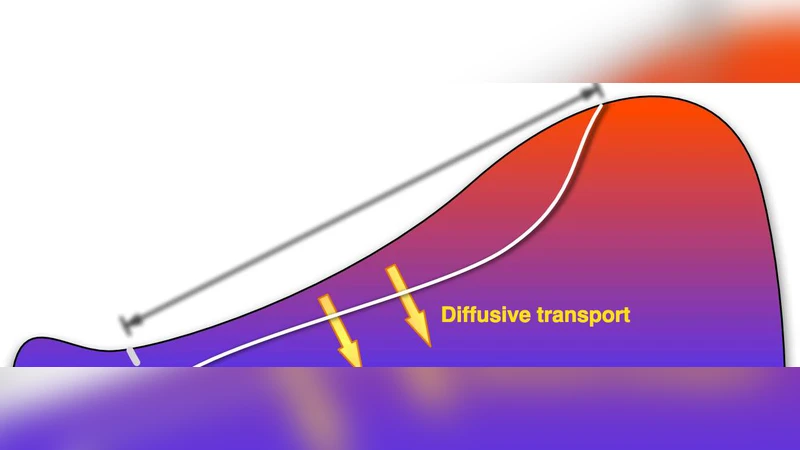
The study of warm molecular gas in the inner regions of protoplanetary disks is of key importance for the study of planet formation and especially for the transport of H2O and organic molecules to the surfaces of rocky planets/satellites. Recent Spitzer observations have shown that the mid-infrared spectra of protoplanetary disks are covered in emission lines due to water and other molecules. Here, we present a non-LTE 2D radiative transfer model of water lines in the 10-36 mum range that can be used to constrain the abundance structure of water vapor, given an observed spectrum, and show that an assumption of local thermodynamic equilibrium (LTE) does not accurately estimate the physical conditions of the water vapor emission zones. By applying the model to published Spitzer spectra we find that: 1) most water lines are subthermally excited, 2) the gas-to-dust ratio must be one to two orders of magnitude higher than the canonical interstellar medium ratio of 100-200, and 3) the gas temperature must be higher than the dust temperature, and 4) the water vapor abundance in the disk surface must be truncated beyond ~ 1 AU. A low efficiency of water formation below ~ 300 K may naturally result in a lower water abundance beyond a certain radius. However, we find that chemistry, may not be sufficient to produce an abundance drop of many orders of magnitude and speculate that the depletion may also be caused by vertical turbulent diffusion of water vapor from the superheated surface to regions below the snow line, where the water can freeze out and be transported to the midplane as part of the general dust settling. Such a vertical cold finger effect is likely to be efficient due to the lack of a replenishment mechanism of large, water-ice coated dust grains to the disk surface.
💡 Research Summary
The paper presents a comprehensive non‑LTE two‑dimensional radiative transfer model designed to interpret the rich forest of mid‑infrared water emission lines (10–36 µm) observed in the inner few astronomical units of protoplanetary disks. Recognizing that the assumption of local thermodynamic equilibrium (LTE) can lead to substantial mis‑interpretations of line strengths, excitation conditions, and molecular abundances, the authors construct a physically motivated disk structure that includes radial and vertical gradients in gas temperature, dust temperature, gas‑to‑dust mass ratio, and water vapor abundance. Molecular data (energy levels, Einstein A coefficients, collisional rate coefficients) are taken from up‑to‑date spectroscopic databases, and the radiative transfer is solved using a hybrid Monte‑Carlo / Accelerated Lambda Iteration scheme that treats line opacity, scattering, and continuum absorption self‑consistently.
Applying the model to a set of published Spitzer IRS spectra, the authors derive several robust conclusions:
-
Sub‑thermal excitation dominates – Most of the observed water lines arise from regions where the gas density (10⁸–10¹⁰ cm⁻³) is well below the critical density required for LTE. Consequently, LTE models over‑predict line fluxes and underestimate the required water column densities.
-
Elevated gas‑to‑dust ratios – To reproduce the observed line intensities, the model requires gas‑to‑dust mass ratios that are 10–100 times higher than the canonical interstellar medium value of 100–200. This suggests that dust grains in the disk surface have already grown and settled, leaving a relatively dust‑poor, gas‑rich layer where the water emission originates.
-
Gas hotter than dust – The best‑fit solutions demand gas temperatures of 500–800 K while the dust remains at 200–300 K. This temperature decoupling is consistent with strong stellar irradiation, X‑ray/UV heating, and inefficient gas‑dust thermal coupling in the tenuous surface layers.
-
Sharp water vapor truncation beyond ~1 AU – The water abundance must drop by several orders of magnitude at radii larger than about 1 AU. Pure chemical considerations (e.g., reduced formation efficiency below ~300 K) can account for a modest decline but cannot explain the observed steep gradient.
-
Vertical “cold‑finger” transport – The authors propose that turbulent vertical diffusion carries water vapor from the super‑heated surface down to regions just below the snow line, where it rapidly freezes onto grains. Because there is little mechanism to loft large, ice‑coated grains back to the surface, the water vapor is effectively removed from the emitting layer. This vertical cold‑finger effect provides a plausible physical explanation for the observed abundance drop.
The study demonstrates that non‑LTE modeling is essential for extracting reliable physical parameters from mid‑infrared molecular spectra of disks. It also highlights the importance of gas‑dust decoupling, enhanced gas‑to‑dust ratios, and vertical mixing processes in shaping the observable water distribution. The authors suggest that upcoming facilities such as JWST/MIRI and ELT/METIS, with higher spectral resolution and spatial discrimination, will be able to test the predicted temperature structure, gas‑to‑dust ratios, and the vertical transport scenario. Extending the non‑LTE framework to other key molecules (CO, HCN, C₂H₂) will further illuminate the chemical evolution of planet‑forming regions and the delivery of volatiles to nascent terrestrial worlds.
Comments & Academic Discussion
Loading comments...
Leave a Comment