Emission Lines as a Tool in Search for Supermassive Black Hole Binaries and Recoiling Black Holes
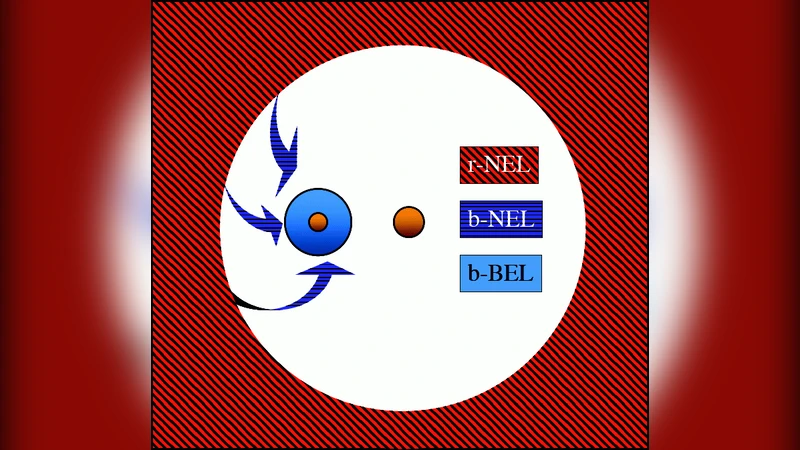
Detection of electromagnetic (EM) counterparts of pre-coalescence binaries has very important implications for our understanding of the evolution of these systems as well as the associated accretion physics. In addition, a combination of EM and gravitational wave signatures observed from coalescing supermassive black hole binaries (SBHBs) would provide independent measurements of redshift and luminosity distance, thus allowing for high precision cosmological measurements. However, a statistically significant sample of these objects is yet to be attained and finding them observationally has proven to be a difficult task. Here we discuss existing observational evidence and how further advancements in the theoretical understanding of observational signatures of SBHBs before and after the coalescence can help in future searches.
💡 Research Summary
**
The paper provides a comprehensive review of how emission‑line spectroscopy can be employed to identify and characterize supermassive black‑hole binaries (SBHBs) and recoiling black holes, emphasizing the synergy with forthcoming low‑frequency gravitational‑wave (GW) observatories such as LISA. It begins by outlining the astrophysical context: SBHBs are a natural outcome of galaxy mergers, and their inspiral phase can produce both GW radiation and distinctive electromagnetic (EM) signatures. Detecting EM counterparts before coalescence would not only illuminate accretion physics in a dynamically evolving potential but also enable joint GW–EM measurements of redshift and luminosity distance, thereby offering an independent probe of cosmology.
The core of the analysis focuses on the spectroscopic fingerprints expected at different evolutionary stages. In the early, wide‑separation regime each black hole retains its own broad‑line region (BLR). Consequently, the composite spectrum exhibits double‑peaked broad lines (e.g., Hα, Hβ, Mg II, C IV) with velocity separations of several thousand to tens of thousands km s⁻¹. The authors argue that such double‑peaked profiles must be distinguished from single‑black‑hole disk emitters by searching for (1) periodic modulation of the peak separation on the binary orbital timescale (years to decades) and (2) non‑linear changes in line shape correlated with the orbital phase. Long‑term monitoring campaigns, ideally spanning multiple orbital periods, are therefore essential.
As the binary hardens, the individual BLRs begin to interact, merge, or become disrupted. The resulting spectra may show unusually broad, asymmetric lines or transient “shoulders” rather than clean double peaks. Reverberation mapping becomes a powerful diagnostic in this regime: by measuring the time lag between continuum variations and the response of each BLR component, one can infer the relative distances of the two emitters from the observer, constrain the mass ratio, and estimate the orbital eccentricity. The paper outlines a practical methodology that combines cross‑correlation functions with dynamical spectral modeling to extract these parameters from multi‑epoch data.
The discussion then shifts to the post‑merger, recoiling‑black‑hole phase. Anisotropic GW emission can impart a kick of up to several thousand km s⁻¹, displacing the newly formed black hole from the galactic nucleus. The displaced AGN drags its narrow‑line region (NLR) along, producing a systematic blueshift or redshift of narrow forbidden lines such as