The new model of fitting the spectral energy distributions of Mkn 421 and Mkn 501
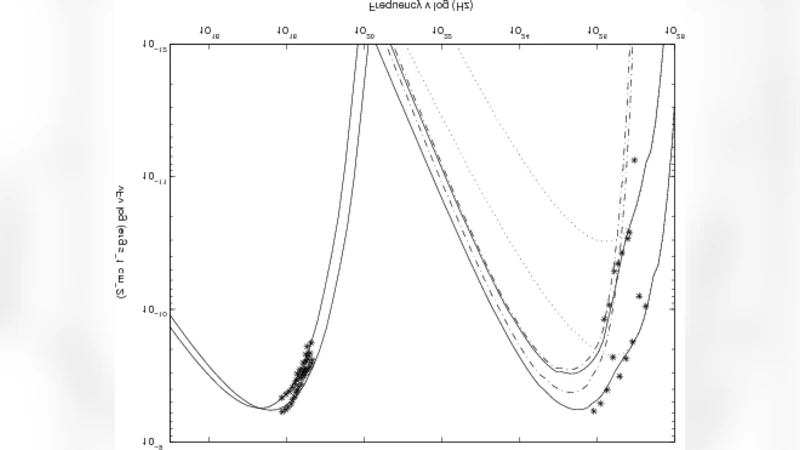
The spectral energy distribution (SED) of TeV blazars has a double-humped shape that is usually interpreted as Synchrotron Self Compton (SSC) model. The one zone SSC model is used broadly but cannot fit the high energy tail of SED very well. It need bulk Lorentz factor which is conflict with the observation. Furthermore one zone SSC model can not explain the entire spectrum. In the paper, we propose a new model that the high energy emission is produced by the accelerated protons in the blob with a small size and high magnetic field, the low energy radiation comes from the electrons in the expanded blob. Because the high and low energy photons are not produced at the same time, the requirement of large Doppler factor from pair production is relaxed. We present the fitting results of the SEDs for Mkn 501 during April 1997 and Mkn 421 during March 2001 respectively.
💡 Research Summary
The paper addresses a long‑standing problem in modeling the broadband spectral energy distributions (SEDs) of TeV blazars such as Markarian 421 and Markarian 501. The conventional one‑zone synchrotron self‑Compton (SSC) framework reproduces the low‑energy synchrotron hump well but consistently fails to fit the high‑energy γ‑ray tail. To avoid severe internal γ‑γ absorption, the one‑zone model must invoke a very large Doppler factor (δ ≈ 50–100), which contradicts VLBI measurements that suggest bulk Lorentz factors of only a few tens. Moreover, a single homogeneous electron population cannot simultaneously account for the shape and flux level of both humps across many orders of magnitude in frequency.
In response, the authors propose a two‑zone “small‑blob plus expanded‑blob” scenario. The first zone is a compact region (radius R₁ ≈ 10¹⁵ cm) with a strong magnetic field (B₁ ≈ 10–100 G) moving with a modest Doppler factor (δ₁ ≈ 10–15). Within this zone, protons are accelerated to ultra‑high energies (Eₚ, max ≈ 10¹⁹ eV). These protons radiate either via synchrotron emission in the intense magnetic field or through photohadronic (pγ) interactions, producing γ‑rays in the 10 GeV–10 TeV band. Because the proton‑induced γ‑rays are generated in a region that is spatially and temporally distinct from the low‑energy photon field, the probability of internal γ‑γ pair production is dramatically reduced. Consequently, the stringent requirement for an extreme Doppler factor disappears, and the model can operate with δ values compatible with VLBI constraints.
The second zone emerges as the compact blob expands. Its radius grows to R₂ ≈ 10¹⁶ cm, the magnetic field drops to B₂ ≈ 0.1–1 G, and the Doppler factor remains comparable (δ₂ ≈ δ₁). In this expanded region, relativistic electrons dominate the radiative output, producing the synchrotron hump that spans radio to X‑ray frequencies. The electron energy distribution is modeled with a broken power‑law, and cooling is governed by synchrotron losses in the weaker magnetic field, reproducing the observed low‑energy spectral slope and peak frequency.
The authors apply this framework to two well‑studied flaring episodes: Mkn 501 in April 1997 and Mkn 421 in March 2001. For Mkn 501, the best‑fit parameters are R₁ ≈ 8 × 10¹⁴ cm, B₁ ≈ 30 G, δ₁ ≈ 12, and Eₚ, max ≈ 5 × 10¹⁸ eV for the proton zone; the electron zone has R₂ ≈ 1.2 × 10¹⁶ cm, B₂ ≈ 0.5 G, δ₂ ≈ 12. This configuration reproduces the sharp rise of the TeV spectrum and the simultaneous X‑ray synchrotron peak. For Mkn 421, a slightly weaker magnetic field (B₁ ≈ 15 G) and a lower proton maximum energy (Eₚ, max ≈ 2 × 10¹⁸ eV) are required, reflecting the softer γ‑ray tail observed during that flare. The electron zone parameters (R₂ ≈ 1.5 × 10¹⁶ cm, B₂ ≈ 0.3 G, δ₂ ≈ 10) successfully match the lower‑energy hump.
Crucially, the two‑zone model resolves the Doppler‑factor tension: the γ‑ray emitting region does not coexist with the dense synchrotron photon field, so internal absorption is negligible even with δ ≈ 10–15. This aligns the model with independent measurements of jet speed and opening angle. Moreover, the inclusion of a proton component provides a natural explanation for the high‑energy tail that SSC alone cannot generate without invoking unrealistically high electron energies or extreme beaming.
The paper concludes by emphasizing that the proposed scheme is not limited to Mkn 421 and Mkn 501; it can be generalized to other TeV blazars exhibiting similar SED discrepancies. The authors suggest that future multi‑messenger observations—particularly high‑energy neutrinos and ultra‑high‑energy cosmic rays—could test the presence of a hadronic component in blazar jets. They also advocate for time‑dependent modeling to capture the evolution of the two zones during flares, which would further constrain particle acceleration mechanisms and magnetic field dynamics in relativistic jets.
Comments & Academic Discussion
Loading comments...
Leave a Comment