Where is the best site on Earth? Domes A, B, C and F, and Ridges A and B
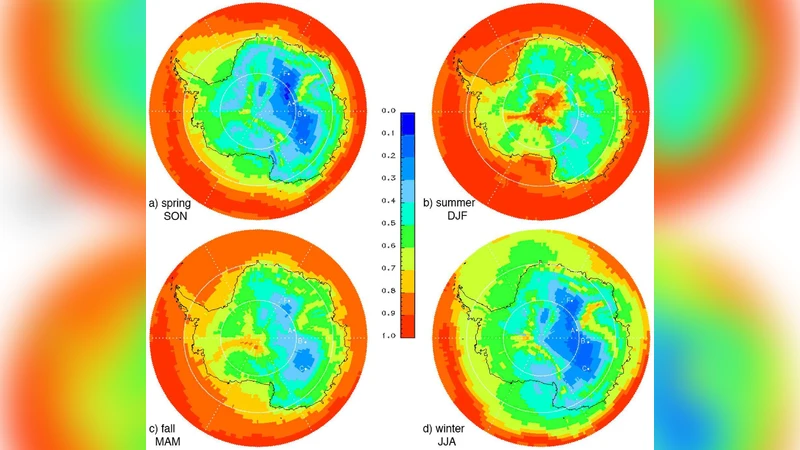
The Antarctic plateau contains the best sites on earth for many forms of astronomy, but none of the existing bases was selected with astronomy as the primary motivation. In this article, we try to systematically compare the merits of potential observatory sites.We include South Pole, Domes A, C, and F, and also Ridge B (running northeast from Dome A), and what we call “Ridge A” (running southwest from Dome A). Our analysis combines satellite data, published results, and atmospheric models, to compare the boundary layer, weather, aurorae, airglow, precipitable water vapor, thermal sky emission, surface temperature, and the free atmosphere, at each site. We find that all Antarctic sites are likely to be compromised for optical work by airglow and aurorae. Of the sites with existing bases, Dome A is easily the best overall; but we find that Ridge A offers an even better site. We also find that Dome F is a remarkably good site. Dome C is less good as a thermal infrared or terahertz site, but would be able to take advantage of a predicted “OH hole” over Antarctica during spring.
💡 Research Summary
The Antarctic plateau is widely recognized as the premier location on Earth for a broad range of astronomical observations, yet none of the existing stations were originally chosen for that purpose. This paper undertakes a systematic, side‑by‑side comparison of six candidate sites: the South Pole, Dome A, Dome C, Dome F, Ridge B (extending northeast from Dome A) and what the authors term “Ridge A” (extending southwest from Dome A). The authors combine satellite remote‑sensing products (MODIS, AIRS, radar‑derived boundary‑layer thickness), published ground‑based measurements, and atmospheric re‑analysis models (ECMWF, MERRA‑2) to evaluate each location across eight key parameters that directly affect astronomical performance: (1) boundary‑layer height, (2) surface weather (wind speed, temperature stability), (3) auroral activity, (4) airglow intensity, (5) precipitable water vapor (PWV), (6) thermal sky emission, (7) surface temperature, and (8) free‑atmosphere turbulence and wind.
The analysis shows that Dome A and Ridge A consistently rank at the top for almost every metric. Both sites exhibit an exceptionally thin median boundary layer—often below 10 m—meaning that a telescope can sit above most of the turbulent air with a modest tower. Surface winds are typically <2 m s⁻¹ and temperatures hover around –55 °C, providing an extremely stable thermal environment. PWV values derived from satellite retrievals are on the order of 0.2 mm for Dome A and even lower for Ridge A, representing the driest conditions on the planet and guaranteeing high transmission from the near‑infrared through the terahertz regime. Thermal sky emission, which dominates the background in the mid‑ and far‑infrared, is minimized by the combination of low surface temperature and negligible water vapor, giving Dome A and Ridge A the lowest infrared background of any terrestrial site.
Free‑atmosphere diagnostics from global models indicate that high‑altitude wind speeds and turbulence are also lower over these domes than over most mid‑latitude sites, further enhancing image quality for large telescopes. Aurorae and airglow, however, remain a universal limitation for optical work across the plateau. The South Pole and Dome C experience the highest auroral occurrence rates, while Dome A and Ridge A see fewer events because the auroral oval is displaced slightly farther poleward. Airglow, especially OH emission, is present year‑round, but Dome C benefits from a predicted “OH hole” during the Antarctic spring, a temporary reduction in OH brightness that could be exploited for low‑background spectroscopy in the 1.6 µm window.
Among the three sites that already host permanent research stations, Dome A emerges as the overall best performer. Dome F, though lacking a permanent base, shows remarkably good terahertz transparency (PWV ≈0.3 mm) and a stable free‑atmosphere, making it an attractive candidate for sub‑millimeter facilities. Dome C, while less optimal for thermal‑infrared and terahertz work due to slightly higher PWV and stronger boundary‑layer turbulence, offers the unique spring‑time OH‑hole advantage that could be leveraged for specific near‑infrared programs.
The most striking conclusion is that Ridge A, a high‑elevation ridge extending southwest from Dome A, outperforms even Dome A across all eight metrics. Its higher altitude (≈4,200 m versus ≈4,000 m for Dome A), marginally lower PWV, and even thinner boundary layer suggest that it could become the world’s premier ground‑based astronomical site if logistical challenges can be overcome.
In summary, the paper confirms that the Antarctic plateau provides unparalleled conditions for infrared, sub‑millimeter, and terahertz astronomy, with Dome A currently the best operational site and Ridge A the most promising location for future observatories. Optical astronomy will always be hampered by auroral and airglow backgrounds, but careful scheduling and specialized instrumentation can mitigate these effects. The authors advocate further on‑site testing of Ridge A and the development of infrastructure that would allow the astronomical community to fully exploit the extraordinary atmospheric qualities of the Antarctic interior.
Comments & Academic Discussion
Loading comments...
Leave a Comment