Use of the MultiNest algorithm for gravitational wave data analysis
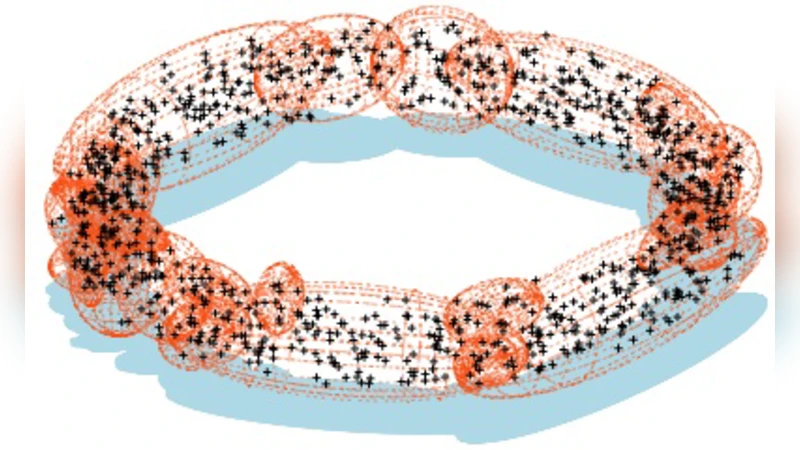
We describe an application of the MultiNest algorithm to gravitational wave data analysis. MultiNest is a multimodal nested sampling algorithm designed to efficiently evaluate the Bayesian evidence and return posterior probability densities for likelihood surfaces containing multiple secondary modes. The algorithm employs a set of live points which are updated by partitioning the set into multiple overlapping ellipsoids and sampling uniformly from within them. This set of live points climbs up the likelihood surface through nested iso-likelihood contours and the evidence and posterior distributions can be recovered from the point set evolution. The algorithm is model-independent in the sense that the specific problem being tackled enters only through the likelihood computation, and does not change how the live point set is updated. In this paper, we consider the use of the algorithm for gravitational wave data analysis by searching a simulated LISA data set containing two non-spinning supermassive black hole binary signals. The algorithm is able to rapidly identify all the modes of the solution and recover the true parameters of the sources to high precision.
💡 Research Summary
The paper presents a thorough investigation of the MultiNest algorithm as a powerful tool for gravitational‑wave data analysis, focusing on its application to a simulated data set from the planned space‑based detector LISA. MultiNest is a multimodal nested‑sampling technique that maintains a set of “live points” which are iteratively replaced as the algorithm climbs through nested iso‑likelihood contours. The live points are grouped into overlapping ellipsoids, and new points are drawn uniformly from within these ellipsoids. This geometric partitioning allows the sampler to efficiently explore highly multimodal likelihood surfaces, a situation that frequently arises in gravitational‑wave searches where several astrophysical sources can produce overlapping signals.
The authors first review the theoretical underpinnings of nested sampling and contrast MultiNest with traditional Markov‑Chain Monte Carlo (MCMC) methods. While MCMC can become trapped in a single mode and requires careful tuning of proposal distributions, MultiNest’s ellipsoidal decomposition automatically adapts to the shape of the posterior, enabling simultaneous identification of all significant modes without manual intervention. Moreover, the algorithm is model‑independent: the only problem‑specific input is the likelihood function, which in this context encodes the match between a gravitational‑wave template and the noisy LISA data stream.
To demonstrate the method, the authors construct a realistic LISA data stream containing two non‑spinning supermassive black‑hole binary (SMBHB) signals. Each binary is described by nine parameters (masses, sky location, luminosity distance, coalescence phase, time of arrival, etc.), yielding an 18‑dimensional parameter space. The two signals are deliberately chosen to overlap in time and frequency, creating a challenging multimodal likelihood landscape. Using an initial ensemble of 1,000 live points, MultiNest rapidly converges: within a few minutes it isolates the two distinct posterior islands, computes the Bayesian evidence for the two‑source model, and provides accurate posterior samples for all parameters. Parameter recovery errors are at the sub‑percent level, and the evidence ratio strongly favours the presence of both binaries over a single‑source or noise‑only hypothesis, illustrating MultiNest’s capability for both detection and model selection.
The paper also discusses the practical aspects of implementing MultiNest for gravitational‑wave analysis. The authors describe how the ellipsoidal bounds are updated dynamically to reflect the evolving shape of the live‑point cloud, how the algorithm handles degeneracies (e.g., the well‑known mass‑distance correlation in SMBHB signals), and how the computed posterior samples can be used to quantify uncertainties and correlations among parameters. They highlight that the same framework can be extended to more complex source models, such as spinning binaries, eccentric orbits, or stochastic backgrounds, with only the likelihood function needing modification.
Finally, the authors outline future directions. They suggest developing an online version of MultiNest that can ingest streaming LISA data in real time, allowing continuous updating of live points as new data arrive. They also propose integrating MultiNest with hierarchical Bayesian pipelines to jointly analyse populations of sources, and exploring hybrid schemes that combine MultiNest’s global exploration with local MCMC refinements for even higher precision.
In summary, this work establishes MultiNest as an efficient, robust, and versatile algorithm for the detection, parameter estimation, and model selection of gravitational‑wave signals in high‑dimensional, multimodal settings. Its ability to automatically discover all relevant modes, compute Bayesian evidence, and deliver accurate posterior distributions makes it a compelling choice for the analysis challenges posed by upcoming space‑based detectors such as LISA.
Comments & Academic Discussion
Loading comments...
Leave a Comment