Discovery of a Wide Binary Brown Dwarf Born in Isolation
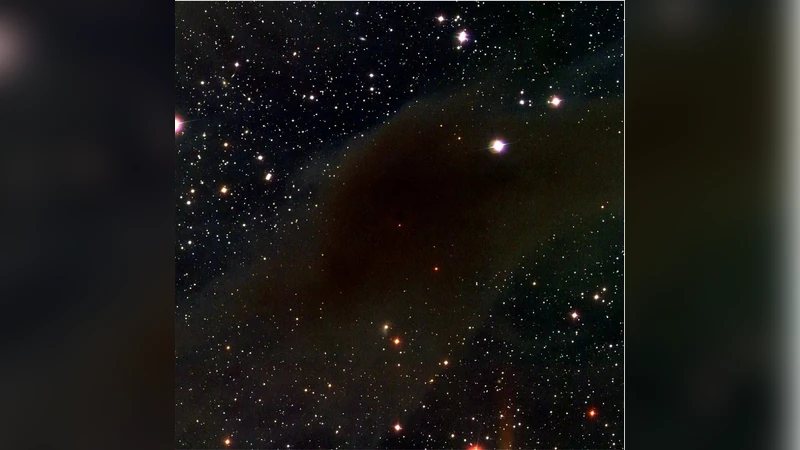
During a survey for stars with disks in the Taurus star-forming region using the Spitzer Space Telescope, we have discovered a pair of young brown dwarfs, FU Tau A and B, in the Barnard 215 dark cloud. They have a projected angular separation of 5.7", corresponding to 800 AU at the distance of Taurus. To assess the nature of these two objects, we have obtained spectra of them and have constructed their spectral energy distributions. Both sources are young (~1 Myr) according to their Halpha emission, gravity-sensitive spectral features, and mid-IR excess emission. The proper motion of FU Tau A provides additional evidence of its membership in Taurus. We measure spectral types of M7.25 and M9.25 for FU Tau A and B, respectively, which correspond to masses of ~0.05 and ~0.015 M\cdot according to the evolutionary models of Chabrier and Baraffe. FU Tau A is significantly overluminous relative to an isochrone passing through FU Tau B and relative to other members of Taurus near its spectral type, which may indicate that it is an unresolved binary. FU Tau A and B are likely to be components of a binary system based on the low probability (~3x10^-4) that Taurus would produce two unrelated brown dwarfs with a projected separation of a </- 6". Barnard 215 contains only one other young star and is in a remote area of Taurus, making FU Tau A and B the first spectroscopically-confirmed brown dwarfs discovered forming in isolation rather than in a stellar cluster or aggregate. Because they were born in isolation and comprise a weakly bound binary, dynamical interactions with stars could not have played a role in their formation, and thus are not essential for the birth of brown dwarfs. ERRATUM: The K-band magnitude for FU Tau B in Table 1 is incorrect and should be 13.33. The bolometric luminosity of FU Tau B in Table 3 and Figure 5 is incorrect because of that mistake and a separate arithmetic error. The correct value of the luminosity is 0.0039 Lsun. FU Tau A and B exhibited different isochronal ages in the original Hertzsprung-Russell diagram in Figure 5, which was unexpected for members of a binary system. This discrepancy is reduced in the corrected version of Figure 5 since both objects are now above the isochrone for 1 Myr. Given the large uncertainties in model isochrones at such young ages, the positions of FU Tau A and B in Figure 5 could be roughly consistent with coevality.
💡 Research Summary
The authors report the discovery of a wide binary brown‑dwarf system, FU Tau A and B, located in the Barnard 215 dark cloud within the Taurus star‑forming region. The pair was identified during a Spitzer Space Telescope survey for disk‑bearing objects. They are separated by 5.7 arcseconds, corresponding to a projected physical distance of roughly 800 AU, making this one of the widest brown‑dwarf binaries known.
Optical and near‑infrared spectroscopy obtained with Keck/HIRES and Gemini/NIRI confirms that both components are very young (≈1 Myr). Youth indicators include strong Hα emission (equivalent width ≈ −150 Å for the primary), low‑gravity spectral features (weak Na I and K I lines), and mid‑infrared excesses consistent with circum‑substellar disks. Spectral classification yields types M7.25 for FU Tau A and M9.25 for FU Tau B. Using the evolutionary models of Chabrier & Baraffe (2000), the inferred masses are ≈ 0.05 M☉ for the primary and ≈ 0.015 M☉ for the secondary.
Proper‑motion measurements of FU Tau A match the mean motion of Taurus members, providing kinematic confirmation of membership. The probability that two unrelated brown dwarfs would appear within 6″ of each other by chance is estimated at ~3 × 10⁻⁴ from Monte‑Carlo simulations based on the surface density of Taurus brown dwarfs, strongly supporting a physical binary association.
An erratum corrects the K‑band magnitude of FU Tau B (now 13.33 mag) and the derived bolometric luminosity (now 0.0039 L☉). With these corrections both objects lie above the 1 Myr isochrone in the Hertzsprung–Russell diagram, reducing the apparent age discrepancy that originally suggested non‑coevality. The primary still appears overluminous relative to the isochrone, hinting at a possible unresolved companion.
Barnard 215 is an isolated cloud with essentially no other young stars nearby; the only other known member is LkHα 332 A/B. Consequently, the FU Tau system formed in a region devoid of the dense stellar clustering that characterizes most star‑forming environments. This isolation implies that dynamical interactions with neighboring stars—central to many brown‑dwarf formation scenarios such as ejection from unstable multiple systems—were not required for the creation of these objects. Instead, the results favor formation mechanisms that operate in low‑density environments, such as direct collapse of low‑mass prestellar cores or gravitational instability within a massive circum‑substellar disk.
The discovery of a wide, weakly bound brown‑dwarf binary formed in isolation provides a critical test of brown‑dwarf formation theories. It demonstrates that dynamical ejection is not a necessary condition, and that brown dwarfs can arise through processes analogous to those that produce low‑mass stars, even in the absence of strong external perturbations. Future high‑resolution imaging and long‑baseline astrometric monitoring will be essential to resolve the potential inner binary nature of FU Tau A, to refine orbital parameters, and to search for additional wide brown‑dwarf pairs in similarly quiescent environments, thereby further constraining the initial mass function at the substellar limit.
Comments & Academic Discussion
Loading comments...
Leave a Comment