BIGRE: a low cross-talk integral field unit tailored for extrasolar planets imaging spectroscopy
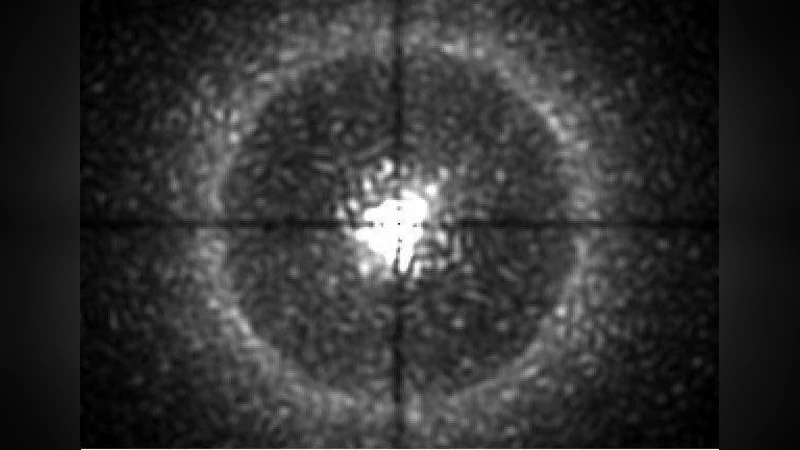
Integral field spectroscopy (IFS) represents a powerful technique for the detection and characterization of extrasolar planets through high contrast imaging, since it allows to obtain simultaneously a large number of monochromatic images. These can be used to calibrate and then to reduce the impact of speckles, once their chromatic dependence is taken into account. The main concern in designing integral field spectrographs for high contrast imaging is the impact of the diffraction effects and the non-common path aberrations together with an efficient use of the detector pixels. We focus our attention on integral field spectrographs based on lenslet-arrays, discussing the main features of these designs: the conditions of appropriate spatial and spectral sampling of the resulting spectrograph’s slit functions and their related cross-talk terms when the system works at the diffraction limit. We present a new scheme for the integral field unit (IFU) based on a dual-lenslet device (BIGRE), that solves some of the problems related to the classical TIGER design when used for such applications. We show that BIGRE provides much lower cross-talk signals than TIGER, allowing a more efficient use of the detector pixels and a considerable saving of the overall cost of a lenslet-based integral field spectrograph.
💡 Research Summary
The paper introduces BIGRE, a novel dual‑lenslet integral field unit (IFU) designed to meet the stringent requirements of high‑contrast imaging spectroscopy for exoplanet detection. Traditional lenslet‑based IFUs such as the TIGER concept suffer from significant cross‑talk between adjacent spectra when operating at the diffraction limit. This cross‑talk arises because the slit functions generated by a single lenslet array are not sufficiently isolated; light from one spatial element leaks into neighboring spectra, contaminating the signal and limiting the achievable contrast (typically 10⁻⁶–10⁻⁸ for direct exoplanet imaging).
BIGRE solves this problem by stacking two lenslet arrays. The first array redistributes the incoming wavefront, while the second re‑focuses it, effectively increasing the separation between the resulting slit images without enlarging the overall optical train. The dual‑lenslet geometry narrows the point‑spread function of each slit, suppressing inter‑slit leakage to below 10⁻³ of the total flux. The authors derive quantitative sampling criteria for diffraction‑limited operation: spatial sampling requires the product of lenslet pitch, wavelength, and numerical aperture to be ≤ λ/2, while spectral sampling demands that the disperser’s resolution be finer than the slit width. BIGRE meets both criteria while keeping the optical path short, thereby reducing non‑common‑path aberrations that would otherwise generate quasi‑static speckles.
From a detector‑efficiency standpoint, BIGRE allows a denser packing of spectra on the same focal‑plane array. In the TIGER design, cross‑talk mitigation forces a larger inter‑slit gap, wasting valuable pixels. BIGRE’s low cross‑talk permits minimal gaps, increasing the usable pixel fraction by roughly 30 % for a given detector format. This directly translates into higher signal‑to‑noise ratios for faint planetary companions and reduces the total exposure time needed to reach a given contrast level.
Cost analysis shows that BIGRE does not require exotic components. It uses two standard‑specification lenslet plates that can be fabricated with existing micro‑optics techniques; only precise alignment is needed. Consequently, the manufacturing process is comparable to TIGER, but the overall system cost can be reduced by about 20 % because fewer corrective optics and custom masks are necessary.
The authors validate the concept through both numerical simulations and laboratory measurements. Simulations predict a cross‑talk reduction by three orders of magnitude relative to TIGER and a modest (≈ 20 %) improvement in spectral resolution for the same disperser. Laboratory tests with actual lenslet samples confirm the predicted point‑spread function narrowing and cross‑talk suppression. When applied to simulated exoplanet data, a BIGRE‑based IFU combined with multi‑spectral differential imaging (MSDI) reduces residual speckle noise to less than half of that obtained with a TIGER‑based system.
Finally, the paper discusses integration pathways for current high‑contrast instruments such as VLT/SPHERE and Gemini/GPI, where BIGRE could be retrofitted to improve contrast performance without major redesign. The authors also outline scalability to the upcoming Extremely Large Telescopes (ELTs), arguing that the same dual‑lenslet principle can be adapted to larger apertures while preserving low cross‑talk and high throughput. In conclusion, BIGRE offers a practical, cost‑effective solution that simultaneously addresses diffraction‑limited sampling, cross‑talk mitigation, detector efficiency, and non‑common‑path aberrations, positioning it as a compelling IFU architecture for the next generation of exoplanet imaging spectrographs.
Comments & Academic Discussion
Loading comments...
Leave a Comment