Solar and planetary dynamos: comparison and recent developments
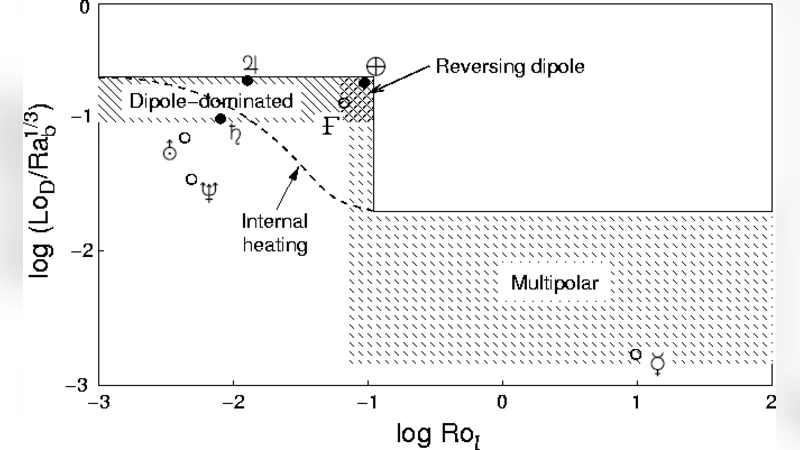
While obviously having a common root, solar and planetary dynamo theory have taken increasingly divergent routes in the last two or three decades, and there are probably few experts now who can claim to be equally versed in both. Characteristically, even in the fine and comprehensive book “The magnetic Universe” (Rudiger & Hollerbach 2004), the chapters on planets and on the Sun were written by different authors. Separate reviews written on the two topics include Petrovay (2000}, Charbonneau (2005), Choudhuri (2008) on the solar dynamo and Glatzmaier (2002), Stevenson (2003) on the planetary dynamo. In the following I will try to make a systematic comparison between solar and planetary dynamos, presenting analogies and differences, and highlighting some interesting recent results.
💡 Research Summary
The paper presents a systematic comparison between solar and planetary dynamos, highlighting both their shared physical foundations and the divergent research paths they have followed over the past two to three decades. It begins by noting that, despite a common origin in magnetohydrodynamics (MHD)—the generation of magnetic fields by the motion of electrically conducting fluids—solar and planetary dynamo studies have become increasingly specialized. The solar dynamo is dominated by high‑temperature plasma where radiative transfer and convection coexist, leading to models that emphasize the α‑Ω mechanism, flux‑transport processes, and nonlinear saturation of the α‑effect. Recent advances include the integration of high‑resolution observations from space missions such as SDO and SOHO with three‑dimensional MHD simulations, which together reproduce the 11‑year sunspot cycle, magnetic polarity reversals, and the so‑called magnetic “quasi‑periodic” behavior.
In contrast, planetary dynamos operate in metallic liquid cores (e.g., Earth’s liquid iron outer core, Jupiter’s metallic hydrogen layer) where radiative transport is negligible and rapid rotation imposes a strong Coriolis force. This results in thin Ekman boundary layers, vigorous columnar convection, and a predominance of toroidal currents. Classical models distinguish between reversal dynamos (as in Earth, where geomagnetic polarity flips irregularly) and steady dynamos (as in Jupiter, which maintains a strong, persistent field). Recent work has pushed planetary dynamo modeling into fully three‑dimensional, high‑resolution simulations that resolve the interplay among thermal, compositional, and magnetic diffusivities, thereby quantifying how variations in the magnetic Reynolds number, Prandtl number, and Ekman number control reversal frequency and field intensity. Laboratory experiments with liquid metals and high‑pressure metallic hydrogen analogues have begun to test these numerical predictions.
Despite these differences, the author identifies several unifying themes. First, nonlinear feedback—whether through α‑quenching in the Sun or magnetic back‑reaction in planetary cores—plays a decisive role in limiting field growth and shaping cyclic behavior. Second, multi‑scale interactions are essential: small‑scale turbulence regenerates large‑scale magnetic structures, while the large‑scale field in turn modulates the turbulence. Third, a “unified dynamo framework” is emerging that maps both solar and planetary systems onto a common set of non‑dimensional parameters (magnetic Reynolds number, Rossby number, Prandtl number, etc.). By varying these parameters, one can smoothly transition from a radiative‑convection‑dominated solar regime to a rotation‑dominated planetary regime, offering a coherent way to study cross‑phenomena such as the influence of solar wind variability on planetary magnetospheres.
The paper concludes with a forward‑looking agenda: (1) tighter coupling of observational data and high‑performance simulations through data assimilation techniques; (2) expanded laboratory experiments that replicate key aspects of both plasma and metallic fluid dynamos; (3) application of the unified framework to model Sun‑planet interactions, including how solar cycle variations modulate magnetospheric dynamics and space weather at Earth, Jupiter, and beyond. By articulating these commonalities and recent breakthroughs, the author argues that solar and planetary dynamo research, once largely separate, is converging toward an integrated dynamo science that can address both astrophysical and geophysical magnetic phenomena.
Comments & Academic Discussion
Loading comments...
Leave a Comment