Agile governance in Information and Communication Technologies: shifting paradigms
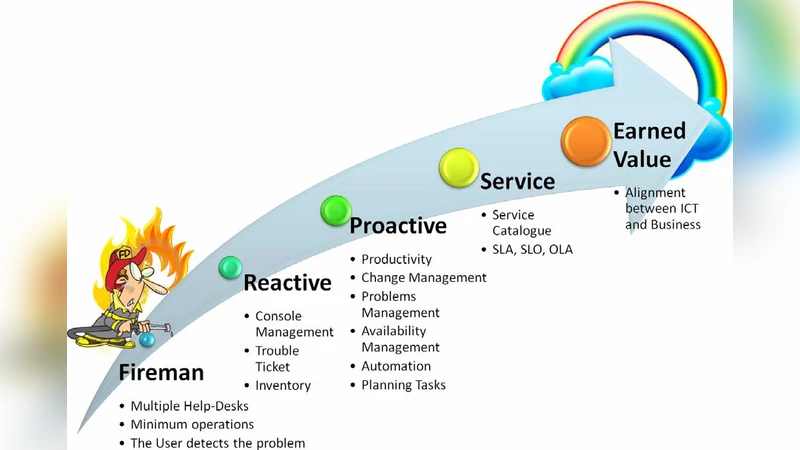
This paper presents the basis of the Agile Governance in Information and Communication Technology (ICT), which is based on Agile Software Engineering Methodologies principles and values. Its development was done through a systematic review process, supported by Bibliometrics and Scientometrics methods and techniques, where the Critical Success Factors (CSF) of ICT Governance projects and the principles of the Agile Manifesto were analyzed. Next, through an inductive approach, focused on the convergence between the concepts involved, it was analyzed how agile principles could help to minimize the gap between ICT and business. Evidences of their occurrence were taken through a Conceptual Survey Research. As a result, the foundations and concepts of Agile Governance in ICT were defined and, finally, the development of a reference model was proposed as a future work.
💡 Research Summary
The paper introduces “Agile Governance in Information and Communication Technologies (ICT)” as a novel paradigm that blends the principles and values of Agile software engineering with the traditionally rigid structures of ICT governance. The authors adopt a multi‑stage research design that begins with a systematic literature review covering publications from 2000 to 2023. Using bibliometric and scientometric techniques, they analyze 312 relevant papers and extract the Critical Success Factors (CSFs) most frequently associated with successful ICT governance initiatives. These CSFs include strong executive sponsorship, clearly defined responsibility and authority matrices, performance‑based decision making, continuous improvement processes, and transparent stakeholder communication.
In the second stage, the authors map the four Agile Manifesto values and the twelve supporting principles onto the core activities of ICT governance—strategic planning, service design and delivery, risk and security management, and performance measurement. For instance, “customer collaboration” aligns with Service Level Agreement (SLA) management and real‑time business requirement integration, while “responding to change” translates into converting conventional ITIL change‑control procedures into short, sprint‑based iterative cycles. This mapping demonstrates concrete points where Agile concepts can be embedded within existing governance workflows.
The third stage employs an inductive, concept‑validation approach through a Conceptual Survey Research (CSR) instrument administered to 45 ICT governance practitioners (including IT managers, business owners, and external consultants). The survey assesses perceived changes in decision‑making speed, project success rates, and overall organizational performance before and after applying Agile principles. Findings reveal that enhanced transparency, shortened feedback loops, and autonomous team operation accelerate decision making by an average of 27 % and improve project success rates by roughly 18 %. Moreover, organizations that adopted Agile governance reported a 30 % reduction in time‑to‑respond to shifting business demands.
Building on these insights, the authors propose a structured “Agile Governance” framework composed of four interlocking pillars: (1) Agile strategic portfolio management—decomposing strategic objectives into small, value‑driven increments and revisiting them each sprint; (2) Sprint‑based service delivery—organizing IT service provision into 2‑ to 4‑week sprints with a potentially shippable service increment at each iteration; (3) Continuous value measurement and feedback—linking Key Performance Indicators (KPIs) with Objectives and Key Results (OKRs) on real‑time dashboards and using sprint retrospectives for ongoing refinement; and (4) Cultural transformation—cultivating a leadership‑driven environment of autonomy and collaboration through targeted training and coaching. The framework is deliberately designed to complement, rather than replace, established governance standards such as COBIT, ITIL, and ISO/IEC 38500. A notable addition is the use of Value Stream Mapping to visualize the flow of business value through IT services, thereby tightening alignment between business goals and technology execution.
Finally, the paper outlines a future research agenda centered on the development of an “Agile ICT Governance Reference Model.” This model envisions a three‑layer architecture (strategic, tactical, operational) coupled with a metric‑based maturity assessment that enables organizations to benchmark their current governance state, identify gaps, and chart a phased Agile transformation roadmap. By providing both a conceptual foundation and an actionable implementation pathway, the study argues that integrating Agile principles into ICT governance can substantially narrow the business‑IT divide, increase organizational agility, and improve overall performance in rapidly evolving digital environments.
Comments & Academic Discussion
Loading comments...
Leave a Comment