Interactive Digital Learning Materials for Kindergarten Students in Bangladesh
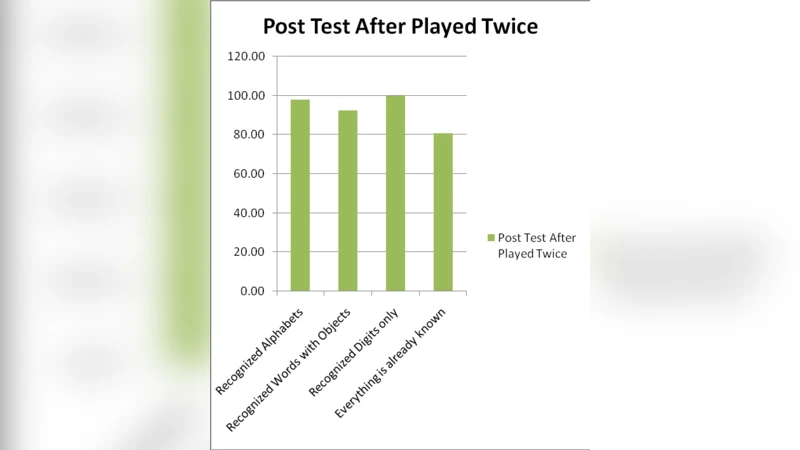
The pedagogy of teaching and learning has changed with the proliferation of communication technology and it is necessary to develop interactive learning materials for children that may improve their learning, catching, and memorizing capabilities. Perhaps, one of the most important innovations in the age of technology is multimedia and its application. It is imperative to create high quality and realistic learning environment for children. Interactive learning materials can be easier to understand and deal with their first learning. We developed some interactive learning materials in the form of a video for Playgroup using multimedia application tools. This study investigated the impact of students’ abilities to acquire new knowledge or skills through interactive learning materials. We visited one kindergartens (Nursery schools), interviewed class teachers about their teaching methods and level of students’ ability of recognizing English alphabets, pictures, etc. The course teachers were provided interactive learning materials to show their playgroups for a number of sessions. The video included English alphabets with related words and pictures, and motivational fun. We noticed that almost all children were very interested to interact with their leaning video. The students were assessed individually and asked to recognize the alphabets, and pictures. The students adapted with their first alphabets very quickly. However, there were individual differences in their cognitive development. This interactive multimedia can be an alternative to traditional pedagogy for teaching playgroups.
💡 Research Summary
The paper investigates the impact of a multimedia‑based interactive video on kindergarten‑level learners in Bangladesh. Recognizing that traditional teaching methods—primarily flashcards and oral instruction—often fail to sustain young children’s attention, the authors designed a short (approximately five‑minute) video that integrates visual, auditory, and animated elements. Each English alphabet letter is presented alongside its pronunciation, a related English word (e.g., “A – Apple”), and a corresponding picture, with colorful animations and upbeat background music intended to increase motivation.
The study was conducted in a single nursery school. Prior to the intervention, the researchers interviewed three class teachers to document existing pedagogical practices and to gauge the children’s baseline ability to recognize letters and associated images. The teachers reported reliance on static teaching aids and noted frequent disengagement among pupils. Using multimedia authoring tools (such as Adobe Animate and Audacity), the research team produced the interactive video and supplied it to the teachers for classroom use.
During the experimental phase, the video was shown to the whole class in an initial session, followed by two to three repeat viewings in subsequent sessions. After each viewing, teachers posed simple probing questions (“What letter is this?” “What picture does this word represent?”) to assess immediate comprehension. After the final viewing, each child was individually tested on three tasks: (1) letter identification, (2) matching the letter to its English word, and (3) matching the picture to the word.
Out of 30 participants, 27 correctly identified the letters, and the majority achieved over 90 % accuracy after an average of 2.3 viewings per letter. The rapid acquisition suggests that the multimodal presentation effectively supports short‑term memory encoding and retrieval. However, three children displayed persistent confusion between letters and images, highlighting individual differences in cognitive development and the need for differentiated support.
The authors argue that interactive digital media can serve as a viable alternative to conventional pedagogy, especially in low‑resource settings where teacher‑centered instruction dominates. The study aligns with prior research indicating that multisensory stimulation and repeated exposure enhance early literacy outcomes. Nonetheless, the authors acknowledge several limitations: the sample size is confined to a single institution, there is no control group using traditional materials, and pre‑ and post‑intervention assessments are absent, limiting the ability to quantify effect size. Additionally, the study does not control for teacher mediation or classroom environment variables that could influence results.
In conclusion, the research demonstrates that a modestly produced, curriculum‑aligned video can capture young learners’ interest and accelerate alphabet acquisition in a Bangladeshi kindergarten context. The authors recommend scaling the approach across multiple schools, incorporating longitudinal tracking, and employing randomized controlled designs to strengthen evidence of efficacy. They also suggest extending multimedia interventions to other subject areas such as numeracy and basic science, thereby leveraging digital tools to improve overall educational quality in developing‑country early childhood settings.
Comments & Academic Discussion
Loading comments...
Leave a Comment