State of the Art of Agile Governance: A Systematic Review
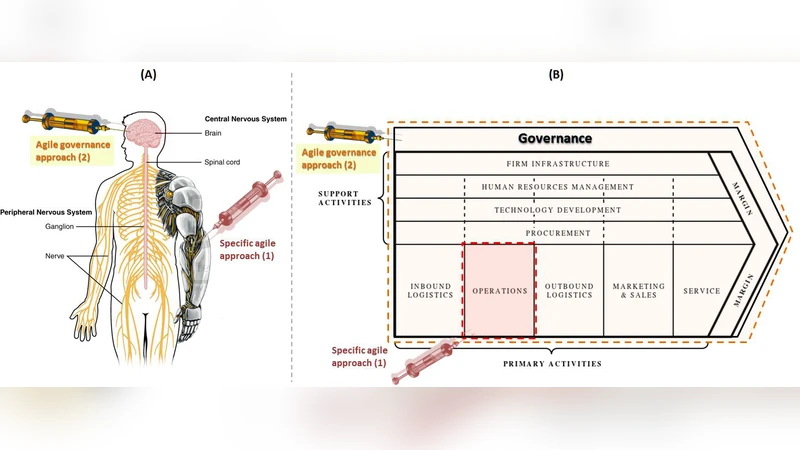
Context: Agility at the business level requires Information Technology (IT) environment flexible and customizable, as well as effective and responsive governance in order to deliver value faster, better, and cheaper to the business. Objective: To understand better this context, our paper seeks to investigate how the domain of agile governance has evolved, as well as to derive implications for research and practice. Method: We conducted a systematic review about the state of art of the agile governance up to and including 2013. Our search strategy identified 1992 studies in 10 databases, of which 167 had the potential to answer our research questions. Results: We organized the studies into four major groups: software engineering, enterprise, manufacturing and multidisciplinary; classifying them into 16 emerging categories. As a result, the review provides a convergent definition for agile governance, six meta- principles, and a map of findings organized by topic and classified by relevance and convergence. Conclusion: The found evidence lead us to believe that agile governance is a relatively new, wide and multidisciplinary area focused on organizational performance and competitiveness that needs to be more intensively studied. Finally, we made improvements and additions to the methodological approach for systematic reviews and qualitative studies.
💡 Research Summary
The paper conducts a systematic review of the emerging field of agile governance, covering literature up to and including 2013. Starting with a broad search across ten major academic databases, the authors identified 1,992 records and, after applying predefined inclusion and exclusion criteria, retained 167 primary studies for detailed analysis. These studies were first grouped by domain—software engineering, enterprise, manufacturing, and multidisciplinary—then further classified into sixteen emerging categories such as Scrum‑based governance, Lean‑manufacturing integration, ITIL/COBIT‑Agile hybrids, cloud service governance, and agile portfolio management.
Through a rigorous qualitative coding process augmented with topic‑modeling techniques, the authors derived a convergent definition of agile governance: a management system that continuously aligns IT and business processes with strategic objectives by maintaining flexible, rapid adjustments, and by optimizing decision‑making structures and accountability mechanisms. This definition explicitly merges the control‑oriented perspective of traditional IT governance with the change‑responsive, team‑autonomy focus of agile methods, emphasizing value streams and feedback loops as core mechanisms.
The review also identifies six meta‑principles that underpin successful agile governance implementations: (1) value‑centric decision making, (2) continuous learning and improvement, (3) transparent information sharing, (4) balanced autonomy and responsibility, (5) timely restructuring of governance structures, and (6) strengthened stakeholder collaboration. Empirical evidence from the surveyed literature shows the strongest performance correlations for transparent information sharing and the balance between autonomy and responsibility.
Methodologically, the authors extend conventional systematic‑review protocols by integrating qualitative coding with quantitative topic modeling, enabling a visual “map of findings” that displays research density, citation impact, and temporal relevance for each identified topic. This map highlights a pronounced imbalance: software engineering accounts for roughly 55 % of the studies, while manufacturing and enterprise domains are under‑represented, indicating a need for domain‑specific agile governance frameworks.
The authors conclude that agile governance is a relatively new, multidisciplinary area focused on enhancing organizational performance and competitiveness. However, the body of evidence remains thin, with a scarcity of longitudinal, outcome‑oriented studies and a lack of standardized tools or metrics. They recommend future research directions including long‑term empirical investigations of performance impacts, development of industry‑specific governance models, incorporation of automation and AI for metric collection and decision support, and deeper exploration of cultural and organizational change required to balance autonomy with accountability.
In summary, the paper provides a comprehensive synthesis of the state of agile governance up to 2013, offers a clear definition and a set of guiding principles, proposes an enhanced systematic‑review methodology, and outlines a research agenda aimed at advancing both scholarly understanding and practical adoption of agile governance.