Experimental Investigation of Distant Cellular Interaction among Adipose Derived Stem-Cells
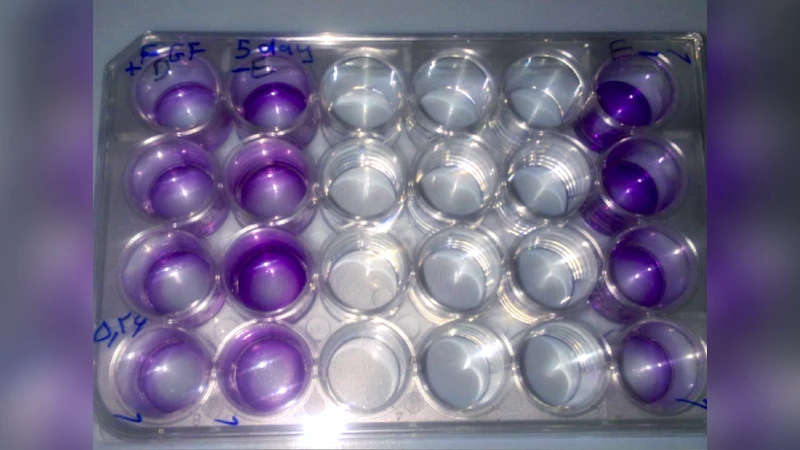
In addition to chemical and mechanical interactions between cells electromagnetic field produced by cells has been considered as another form of signaling for cell-cell communication. The aim of this study is evaluation of electromagnetic effects on viability of Adipose-derived stem cells (ADSCs) without co-culturing. In this study, stem cells were isolated from human adipose tissue enzymatically and proliferated in monolayer culture. Then, 5.(10^4) adipose-derived stem cells were cultured in each well of the test plate. In the first row (4 wells), ADSCs as inducer cells were cultured in DMEM1 with 10 ng/ml Fibroblast growth factor (FGF). In adjacent and the last rows, ADSCs were cultured without FGF (as detector cells). After the three and five days the viability of cells were evaluated. Moreover, ADSCs were cultured in the same conditions but the inducer cells were placed once in the UV-filter tube and once in the quartz tube to see whether there is electromagnetic interaction among cells. Inducer cells caused significant cell proliferation in adjacent row cells (p- value<0.01) in the fifth day. However, using the UV-filter tube and quartz tube both reduced the effect of inducer cells on adjacent cells significantly. As a conclusion, we could detect distant cellular interaction (DCI) among adipose derived stem cells (ADSCs), but it was not electromagnetic signaling. Our results show that ADSCs affect each other via volatile signaling as a chemical distant cellular interaction (CDCI).
💡 Research Summary
The present study investigated whether human adipose‑derived stem cells (ADSCs) can communicate over a distance without direct cell‑to‑cell contact, and if such communication involves electromagnetic (EM) fields or volatile chemical signals. ADSCs were isolated enzymatically from human adipose tissue, expanded in monolayer culture, and seeded at 5 × 10⁴ cells per well in a 96‑well plate. The experimental layout placed “inducer” cells in the first row of four wells, cultured in DMEM supplemented with 10 ng/mL fibroblast growth factor (FGF), while “detector” cells in the second and last rows received the same basal medium without FGF. This arrangement ensured that any observed effect on detector cells would have to arise from a non‑contact signal emitted by the inducer cells.
Cell viability and proliferation were assessed on day 3 and day 5 using a colorimetric assay (e.g., MTT or CCK‑8). No significant differences were detected at day 3, but by day 5 the detector cells adjacent to the inducer row showed a statistically significant increase in viability (p < 0.01) compared with control wells lacking an inducer. This result indicated that the inducer cells released a factor capable of stimulating proliferation at a distance.
To test whether the factor was electromagnetic in nature, two additional conditions were introduced. In one set, the inducer cells were enclosed in a UV‑filter tube that blocks ultraviolet radiation while allowing visible and infrared light to pass. In a second set, the inducer cells were placed inside a quartz tube, which is highly transmissive to a broad spectrum of EM radiation, including UV. In both cases the proliferative effect on adjacent detector cells was markedly reduced, with the UV‑filter condition showing the greatest attenuation. Because both tubes physically isolate the inducer cells from the detector cells, the loss of effect could be due either to blocking EM waves or to limiting the diffusion of volatile compounds. The authors interpreted the data as evidence that the signal is not electromagnetic but rather a volatile chemical cue.
The manuscript concludes that ADSCs are capable of distant cellular interaction (DCI) and that this interaction is mediated by chemical, not electromagnetic, signaling—specifically, a form of chemical distant cellular interaction (CDCI) involving volatile substances. The authors cite previous reports of ATP, acetylcholine, and other volatile organic compounds acting as long‑range messengers in various cell types, suggesting that similar molecules may be responsible here.
Critical appraisal reveals several strengths and limitations. The experimental design is straightforward, using a clear spatial separation and a defined growth factor stimulus to create a signal source. The use of identical cell numbers and identical culture conditions across wells enhances reproducibility. However, the statistical methodology is insufficiently described; the specific test (t‑test, ANOVA, etc.) and the number of replicates are not reported, making it difficult to assess the robustness of the p‑value. Moreover, the UV‑filter and quartz tubes differ not only in EM transmissivity but also in physical dimensions and material properties, which could affect the diffusion rate of volatile molecules. Consequently, the conclusion that “the effect is not electromagnetic” is plausible but not definitively proven.
A more rigorous demonstration of chemical signaling would involve direct measurement of volatile compounds in the headspace above the cultures, for example by gas chromatography‑mass spectrometry (GC‑MS), or the use of chemical scavengers (e.g., activated charcoal filters) to selectively remove volatile molecules while leaving EM fields unchanged. Additionally, testing a broader time course (including intermediate and later time points) and varying the distance between inducer and detector wells would clarify the kinetics and range of the signal.
In summary, this work provides experimental evidence that ADSCs can influence each other over a distance in vitro, and it suggests that volatile chemical messengers, rather than electromagnetic fields, mediate this effect. The findings have implications for stem‑cell‑based tissue engineering and regenerative medicine, where the accumulation or removal of volatile metabolites in culture systems could unintentionally modulate cell behavior. Future studies should aim to identify the specific volatile agents involved and to disentangle the contributions of physical barriers versus chemical diffusion in such distant cellular interactions.
Comments & Academic Discussion
Loading comments...
Leave a Comment