Constraining the Bulk Lorentz Factor of GRB Outflow in the Magnetic-dominated Jet Model
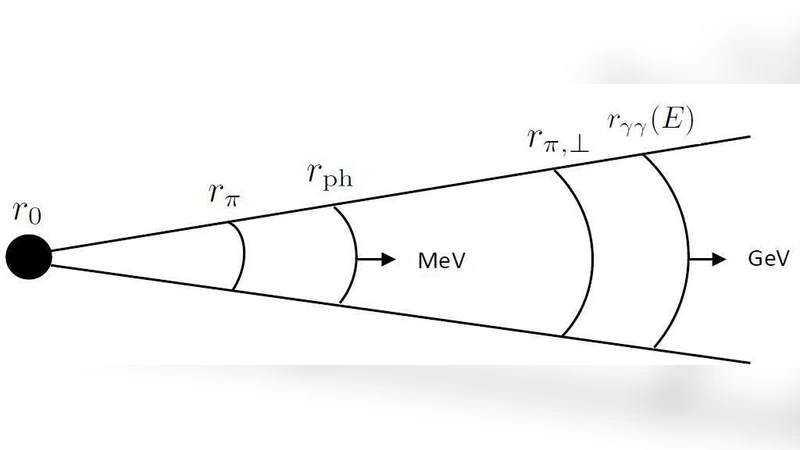
Recent observations by the Fermi-LAT showed that there are delayed arrivals of GeV photons relative to the onset of MeV photons in some GRBs. In order to avoid a large optical depth, the minimal value of the Lorentz factor has been estimated to be higher than 1000 in some brightest bursts. In this paper, we present a detailed calculation of the time delay between the MeV and GeV photons in the framework of the magnetic-dominated jet model. We find that the time delay strongly depends on the saturated bulk Lorentz factor of the jet. Inspired by this fact, we use this model to calculate the Lorentz factors of the four brightest Fermi bursts. The results indicate that the Lorentz factors are much smaller than that obtained from the “single-zone” scenario. The short GRB 090510 has a minimal Lorentz factor 385, while the three long bursts GRB 080916c, GRB090902b and GRB 090926 have almost the same Lorentz factors, with an average value near 260. Another interesting result is that, for long bursts, GeV photons are emitted after the bulk Lorentz factor saturates. For the short GRB, however, MeV and GeV photons are emitted at the same phase, i.e., either at the expansion phase or at the coast phase.
💡 Research Summary
The paper addresses a puzzling feature revealed by the Fermi Large Area Telescope (LAT): in several bright gamma‑ray bursts (GRBs) the arrival of high‑energy (GeV) photons is delayed by a few seconds relative to the onset of the lower‑energy (MeV) emission. In the conventional “single‑zone” picture, this delay forces the bulk Lorentz factor (Γ) of the outflow to be extremely large (Γ ≳ 10³) in order to keep the γ‑γ pair‑production optical depth low enough for GeV photons to escape. Such high Γ values, however, are difficult to reconcile with other observational constraints and with realistic jet dynamics.
To resolve this tension, the authors adopt a magnetic‑dominated jet model, in which the outflow is initially Poynting‑flux dominated and accelerates by converting magnetic energy into kinetic energy. The acceleration proceeds as Γ ∝ r^{1/3} (r being the radial distance from the central engine) until a saturation radius r_sat is reached; beyond r_sat the flow coasts with a constant Lorentz factor Γ_sat. The key insight is that MeV photons are produced early, during the acceleration phase, while GeV photons are generated later, when the flow has already saturated and the γ‑γ opacity has dropped dramatically.
The authors derive a simple expression for the observed time lag Δt between the MeV and GeV components: \