The Barolo Palace: medieval astronomy in the streets of Buenos Aires
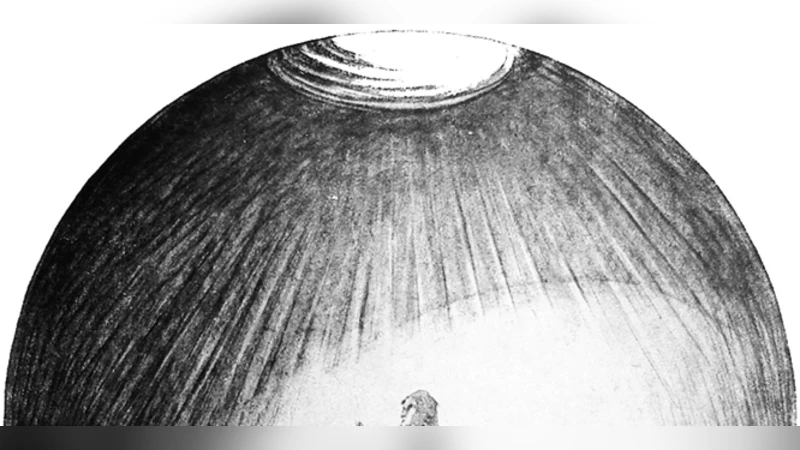
Cultural heritage relating to the sky in the form of sundials, old observatories and the like, are commonly found in many cities in the Old World, but rarely in the New. This paper examines astronomical heritage embodied in the Barolo Palace in Buenos Aires. While references to Dante Alighieri and his poetry are scattered in streets, buildings and monuments around the Western world, in the city of Buenos Aires, the only street carrying Dante’s name is less than three blocks long and, appropriately, is a continuation of Virgilio street. A couple of Italian immigrants -a wealthy businessman, Luis Barolo, and an imaginative architect, Mario Palanti- foresaw this situation nearly a century ago, and did not save any efforts or money with the aim of getting Dante and his cosmology an appropriate monumental recognition, in reinforced concrete. The Barolo Palace is a unique combination of both astronomy and the worldview displayed in the Divine Comedy, Dante’s poetic masterpiece. It is known that the Palace’s design was inspired by the great poet, but the details are not recorded; this paper relies on Dante’s text to consider whether it may add to our understanding of the building. Although the links of the Palace’s main architectural structure with the three realms of the Comedy have been studied in the past, its unique astronomical flavor has not been sufficiently emphasized. The word of God, as interpreted by the Fathers of the Church in Sacred Scripture, Aristotle’s physics and Ptolemy’s astronomy, all beautifully converge in Dante’s verses, and the Barolo Palace reflects this.
💡 Research Summary
The paper investigates the Barolo Palace in Buenos Aires as a unique embodiment of medieval cosmology, Dante’s Divine Comedy, and early‑20th‑century architectural innovation. While sundials, observatories and other sky‑related heritage are common in European cities, they are rare in the New World. In Buenos Aires the only street named after Dante is a short stretch that continues Virgilio Street, highlighting a cultural vacuum concerning the poet. The authors trace how two Italian immigrants—wealthy businessman Luis Barolo and visionary architect Mario Palanti—recognized this gap nearly a century ago and deliberately commissioned a monumental concrete edifice to honor Dante’s worldview.
The study first outlines the historical context: the diffusion of Dante’s influence across the Western world, the scarcity of Dante‑related monuments in Argentina, and the socio‑economic conditions that allowed Barolo and Palanti to fund an ambitious project during the 1910s‑1920s. It then moves to a detailed architectural analysis. The Palace rises 22 stories, a number that mirrors the three cantiche (Inferno, Purgatorio, Paradiso) and the numeric structure of the poem (9 circles of Hell, 9 terraces of Purgatory, 4 celestial spheres of Paradise). The lower nine floors are interpreted as the Inferno, featuring angular forms, dark stone cladding, and flame‑like lighting that evoke the poem’s descriptions of suffering. Floors 10‑13 correspond to Purgatory; their design softens, with lighter materials, curved balustrades, and ascending motifs that suggest purification. The upper nine floors (14‑22) represent Paradise, each level dedicated to a specific celestial sphere. The authors identify astronomical symbols—star‑shaped ceiling panels, zodiacal motifs, and a series of twelve staircases that correspond to the twelve signs of the zodiac—integrated into the façade and interior.
A central claim of the paper is that the building’s orientation and structural geometry were deliberately aligned with medieval astronomical concepts. The foundation was laid to coincide with the Southern Hemisphere’s equator, symbolically merging the Earth’s equatorial plane with the celestial equator described in Ptolemaic astronomy. The façade bears the Latin inscription “In principio erat verbum,” linking Scripture, Aristotelian physics, and Ptolemaic cosmology—precisely the synthesis Dante presents in his verses. The authors argue that the use of reinforced concrete, a cutting‑edge material at the time, reflects Dante’s vision of a universal knowledge that unites ancient science and Christian theology.
From a historiographical perspective, the paper situates the Barolo Palace within the broader tradition of “astronomical architecture,” comparing it to medieval cathedrals that encoded cosmological knowledge in stone, as well as to modern examples such as the Planetarium in Berlin. However, the Barolo remains singular because it transposes a literary cosmology into a vertical, urban monument, rather than a horizontal, ecclesiastical plan. The authors note that the building’s vertical progression—narrowing floor plates, lighter structural loads, and increasingly luminous interiors—physically enacts the soul’s ascent from darkness to divine light, mirroring the narrative arc of the Divine Comedy.
The paper also addresses the cultural heritage implications. It argues that the Palace is not merely a tourist attraction but a living textbook of medieval cosmology, capable of educating the public about the interplay of literature, astronomy, and theology. Preservation efforts should therefore prioritize both the material integrity of the concrete structure and the interpretive signage that explains the astronomical symbolism. The authors recommend interdisciplinary collaborations among architects, historians of science, literary scholars, and museum curators to develop immersive experiences—such as guided “celestial tours” that align with the building’s zodiacal staircases.
In conclusion, the Barolo Palace stands as a rare New‑World example of a built environment that deliberately fuses Dante’s poetic vision with medieval astronomical knowledge, executed through modern construction techniques. Its design demonstrates a sophisticated understanding of the Divine Comedy’s structural symbolism, Ptolemaic cosmology, and the theological synthesis of the Middle Ages. The paper calls for further scholarly attention to this monument, suggesting that it can serve as a model for integrating cultural, scientific, and architectural heritage in urban contexts worldwide.
Comments & Academic Discussion
Loading comments...
Leave a Comment