A Conversation with Donald B. Rubin
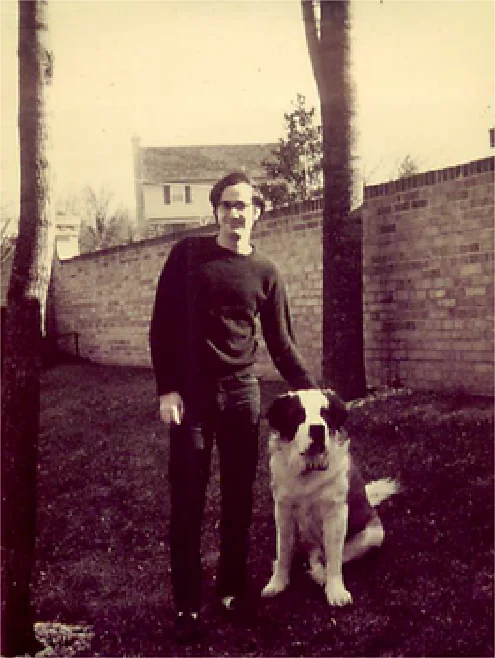
Donald Bruce Rubin is John L. Loeb Professor of Statistics at Harvard University. He has made fundamental contributions to statistical methods for missing data, causal inference, survey sampling, Bayesian inference, computing and applications to a wide range of disciplines, including psychology, education, policy, law, economics, epidemiology, public health and other social and biomedical sciences.
💡 Research Summary
The article “A Conversation with Donald B. Rubin” is a transcript of an extensive interview conducted in 2013, shortly after Rubin’s 70th birthday, with the eminent statistician Donald B. Rubin, John L. Loeb Professor of Statistics at Harvard University. The interview, led by Fan Li and Fabrizia Mealli, explores Rubin’s personal background, educational trajectory, pivotal influences, and the evolution of his research agenda, providing a rich narrative that intertwines biographical anecdotes with reflections on the development of modern statistical methodology.
Rubin was born in Washington, D.C., in 1943 to a family of lawyers. He recounts how lively debates among his father’s brothers, especially his uncle Seymour Rubin, a senior partner at a law firm, fostered an early appreciation for rigorous argumentation and the importance of evidence—principles that later guided his application of statistics to legal issues such as the death penalty, affirmative action, and tobacco litigation. A second formative influence came from his mother’s brother, a dentist who introduced him to gambling at baseball games and horse races. Observing odds and betting outcomes sparked Rubin’s intuitive grasp of probability and Bayesian thinking, which later became central to his work on missing data and causal inference.
During high school in Evanston, Illinois, Rubin’s physics teacher, Robert Anspaugh, encouraged him to think like a scientist and to use mathematics as a tool for understanding the natural world. This early exposure to scientific reasoning, combined with his family’s legal culture, produced a unique interdisciplinary mindset. In 1961 he entered Princeton University intending to major in physics, attracted by John Wheeler’s ambitious Ph.D. program. However, after two years he switched to psychology, drawn by a personality‑theory course taught by Silvan Tomkins. While at Princeton he taught himself FORTRAN and contributed to early statistical software packages such as PSTAT, gaining valuable programming experience that was rare among his peers.
Rubin’s graduate studies began in the Department of Social Relations at Harvard, where he initially pursued a Ph.D. in psychology. The department’s chair, a sociologist, rejected his transcript for lacking formal statistics coursework, prompting Rubin to seek alternatives. He secured an NSF graduate fellowship and moved to Harvard’s Division of Engineering and Applied Sciences, enrolling in a Master’s program in Computer Science (1966). There he worked on projects ranging from automatic language translation (a Cold‑War funded effort involving ARPA/DARPA) to 4‑dimensional graphics on a DEC PDP‑1, experiences that left him dissatisfied with purely computational work.
A turning point arrived in the summer of 1966 when Rubin took a consulting job for a Princeton sociology professor, Robert Althauser, writing programs for matched sampling and racial disparity analysis. Althauser suggested Rubin contact Fred Mosteller, a leading figure in Harvard’s nascent statistics department (founded 1957). After meeting Mosteller, Rubin enrolled in several statistics courses, performed well, and was accepted into the department. He describes the department’s senior faculty—Bill Cochran, Art Dempster, and the younger scholars Paul Holland, Jay Goldman, and Shulamith Gross—as intellectually stimulating mentors. Cochran, in particular, impressed Rubin with his focus on “statistical problems that matter,” steering Rubin toward applied problems rather than abstract theory.
Rubin’s Ph.D. dissertation on matching laid the groundwork for his lifelong interest in causal inference. He emphasizes that early work with Althauser highlighted the distinction between descriptive association and genuine causal explanation—a theme that would dominate his later research on potential outcomes, propensity scores, and the Rubin Causal Model. Throughout his career, Rubin held positions at the Educational Testing Service (ETS), visiting appointments at Princeton, UC Berkeley, the University of Texas at Austin, and the University of Wisconsin–Madison, before returning to Harvard in 1984. He served as department chair (1985‑1994, 2000‑2004), advised over 50 Ph.D. students, authored or edited twelve books, and published nearly 400 articles. His contributions span missing‑data theory (multiple imputation), causal inference (potential outcomes framework), Bayesian computation (MCMC), and the development of software tools that have become standard in social and biomedical sciences.
The interview also touches on Rubin’s personal interests—classical cars, audiophile music, and a love of sports—humanizing a figure whose scholarly impact is immense. By the end of the conversation, Rubin reflects on the central lesson of his career: statistics is a set of tools, and the purpose to which those tools are applied determines their value. This philosophy underlies his advocacy for rigorous, policy‑relevant research and explains why his work continues to shape statistical practice across disciplines.
Comments & Academic Discussion
Loading comments...
Leave a Comment