Onboard Dynamic Rail Track Safety Monitoring System
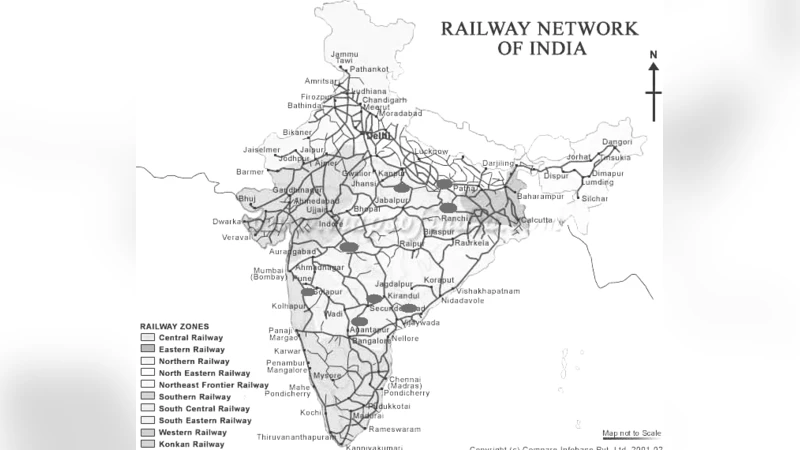
This proposal aims at solving one of the long prevailing problems in the Indian Railways. This simple method of continuous monitoring and assessment of the condition of the rail tracks can prevent major disasters and save precious human lives. Our method is capable of alerting the train in case of any dislocations in the track or change in strength of the soil. Also it can avert the collisions of the train with other or with the vehicles trying to move across the unmanned level crossings.
💡 Research Summary
The paper proposes an Onboard Dynamic Rail Track Safety Monitoring System aimed at addressing persistent safety challenges in Indian Railways. The core idea is to equip each train with a suite of sensors that continuously monitor the physical condition of the rail and the underlying soil, process the data in real time, and issue immediate alerts to both the train’s braking system and the central control center when anomalies are detected. The sensor package includes strain gauges, accelerometers, and vibration sensors mounted on the rail, as well as pressure and electrical conductivity probes placed in the ballast to gauge soil strength and moisture changes. Data from these sensors are sampled at high frequency, filtered, and compressed on a local microcontroller‑FPGA hybrid before being fed into a machine‑learning based anomaly‑detection algorithm. This algorithm has been trained on normal operation profiles and can recognize sudden strain spikes, abnormal vibration spectra, or rapid drops in soil conductivity—signatures of track displacement, soil settlement, or impending rail failure.
When a risk level exceeds a predefined threshold, the onboard unit triggers an immediate brake command to the train and simultaneously transmits a warning via 5G/LTE or existing rail wireless channels to the control center. The control center, in turn, can activate automated level‑crossing barriers and other protective devices to prevent collisions with road vehicles, especially at unmanned crossings. By integrating track‑state monitoring with train‑control actions, the system offers a proactive safety layer that complements traditional signaling methods such as track circuits and axle counters, which only detect train presence and cannot sense structural degradation.
The authors highlight several technical advantages: direct measurement of track and soil conditions enables early detection of failures that conventional systems miss; onboard processing minimizes communication latency, allowing rapid response even at high speeds; and the system’s modular design permits scaling across the extensive Indian network. They also discuss implementation challenges, including sensor durability under high‑speed vibration and harsh climatic conditions, power management to keep consumption low, bandwidth and security considerations for wireless data transmission, and the need to fine‑tune the detection algorithms to reduce false positives and false negatives. Cost analysis suggests that while initial deployment and maintenance require investment, the potential reduction in catastrophic accidents, loss of life, and associated economic damages justifies the expense.
The paper situates the solution within the specific context of Indian Railways, where diverse terrain, variable soil types, and a large number of unmanned level crossings increase vulnerability. Real‑time soil‑strength monitoring is especially valuable in regions prone to erosion or flooding due to climate change. The authors propose future work that expands the sensor network to a distributed rail‑wide architecture, integrates cloud‑based big‑data analytics for predictive maintenance, and ensures compatibility with international standards such as ETCS and IEC 61375 to facilitate broader adoption. In summary, the study presents a practical, technology‑driven approach that combines onboard sensing, edge computing, and rapid communication to significantly enhance rail track safety and prevent both derailments and level‑crossing collisions.