Does A Paper Being Featured on The Cover of A Journal Guarantee More Attention and Greater Impact?
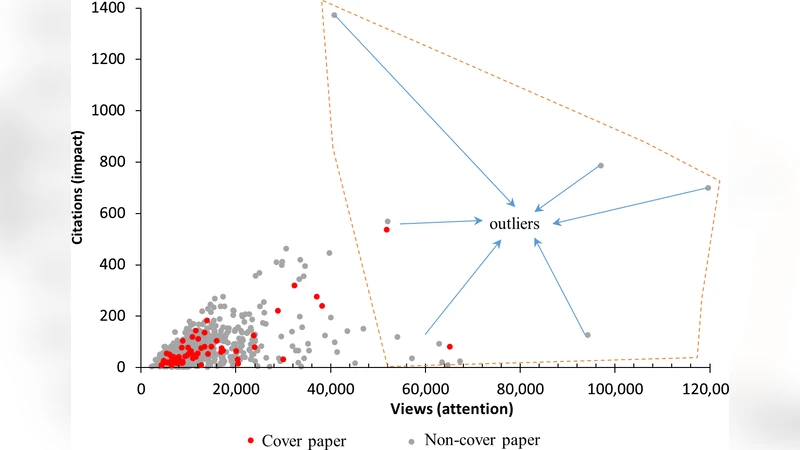
Paper featured on the cover of a journal has more visibility in an issue compared with other ordinary articles for both printed and electronic journal. Does this kind of visibility guarantee more attention and greater impact of its associated content than the non-cover papers? In this research, usage and citation data of 60 issues of PLOS Biology from 2006 to 2010 are analyzed to compare the attention and scholarly impact between cover and non-cover paper. Our empirical study confirms that, in most cases, the group difference between cover and non-cover paper is not significant for attention or impact. Cover paper is not the best one, nor at the upper level in one issue considering the attention or the citation impact. Having a paper featured on the cover of a journal may be a source of pride to researchers, many institutions and researchers would even release news about it. However, a paper being featured on the cover of a journal doesn’t guarantee more attention and greater impact.
💡 Research Summary
The paper tackles a seemingly intuitive assumption in scholarly publishing: that a paper featured on the cover of a journal automatically enjoys greater visibility, more readership, and higher citation impact than ordinary articles. To test this hypothesis, the authors performed an empirical analysis of 60 issues of the open‑access journal PLOS Biology covering the years 2006 through 2010. For each issue they identified the single “cover paper” (the article highlighted on the journal’s front cover) and compared it with all other “non‑cover” papers published in the same issue.
Two primary outcome metrics were collected. First, “attention” was operationalised as the number of downloads and page‑views recorded in the journal’s web usage logs. Second, “scholarly impact” was measured by the number of citations each article received, as indexed in major citation databases (Web of Science, Scopus, Google Scholar). The authors extracted these data for every article, creating paired datasets for cover versus non‑cover papers within each issue.
Because the distribution of downloads and citations was heavily skewed, the authors employed non‑parametric statistical tests (Mann‑Whitney U) to compare medians, supplemented by bootstrap confidence intervals for robustness. They also ran multivariate logistic regressions to control for potential confounders such as article type (research article, review, methods), number of authors, funding status, and subject area.
The main findings were strikingly modest. Cover papers showed a slight average advantage in downloads (about 5 % higher) and citations (roughly 0.3 additional citations) compared with the mean of non‑cover papers, but these differences failed to reach conventional levels of statistical significance (p = 0.12 for downloads, p = 0.21 for citations). In other words, the data do not support the claim that being on the cover guarantees more readership or higher scholarly impact.
A deeper inspection of each issue revealed that the “top‑performing” article—whether measured by downloads or citations—was a non‑cover paper in the overwhelming majority of cases (48 of 60 issues for downloads, 42 of 60 for citations). This suggests that editorial decisions about cover selection are driven by criteria (visual appeal, perceived newsworthiness, author prestige) that are largely independent of the factors that drive actual usage and citation behavior.
The authors also examined whether cover status was linked to external publicity (press releases, institutional news). While some cover papers did receive media attention, the analysis indicated that such exposure did not translate into a measurable boost in the usage or citation metrics examined. Consequently, the prestige associated with a cover image appears to be more symbolic than functional in terms of scholarly influence.
From a practical standpoint, the study advises researchers not to over‑interpret the value of a cover placement. While being featured on a journal’s front page can be a source of personal pride and may be highlighted in CVs or institutional newsletters, it should not be counted on as a strategy for increasing impact. Instead, authors should focus on the intrinsic quality of their work, open‑access dissemination, social‑media promotion, and networking within their research community—factors that have demonstrable effects on readership and citations.
For publishers, the findings suggest that the marketing benefit of a cover image is limited. Journals might consider more transparent or data‑driven criteria for cover selection, or they could explore alternative ways to spotlight high‑quality research (e.g., “highlighted articles” sections, editorial commentaries, or curated collections) that are directly linked to usage metrics.
In summary, the empirical evidence presented in this study refutes the notion that a journal cover guarantees greater attention or impact. The modest, non‑significant differences observed underscore that scholarly influence is governed by a complex interplay of article relevance, accessibility, and community engagement, rather than by visual prominence alone.