Using Professional Social Networking as an Innovative Method for Data Extraction: The ICT Alumni Index Case Study
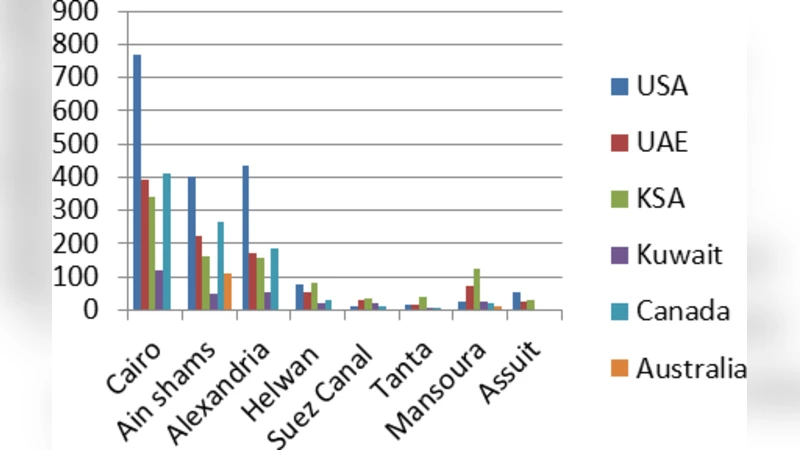
The lack of data regarding Information and Communications Technology sector alumni data is a known problem in several countries including Egypt. It is not clear what entry and senior jobs are occupied by alumni and which countries attract them. This affects the planning, design and execution of both the ICT sector and the Education sector. In this research, a joint team is formulated from the Technology Innovation and Entrepreneurship Center TIEC and the Ministry of Higher Education. This team is undertaking extensive analysis of the structure, distribution and development of the ICT skills and employment.
💡 Research Summary
The paper addresses a chronic data gap in Egypt’s Information and Communications Technology (ICT) sector: the lack of systematic, up‑to‑date information on where ICT graduates are employed, what positions they hold, and which countries attract them. This gap hampers both the education system, which cannot align curricula with labor‑market needs, and the industry, which struggles to plan talent pipelines and retention strategies. To fill this void, the authors formed a joint research team comprising the Technology Innovation and Entrepreneurship Center (TIEC) and the Ministry of Higher Education. Their solution is to treat professional social networking platforms—specifically LinkedIn—as a “living census” of ICT alumni and to build an “ICT Alumni Index” that aggregates, cleans, and analyses publicly available profile data at scale.
Data Acquisition
The team designed a custom web‑crawling engine that respects LinkedIn’s terms of service while circumventing API rate limits. Using a pool of rotating IP proxies and multi‑threaded workers, the crawler harvested profiles that matched a set of predefined filters: university affiliation, graduation year (2000‑2023), and ICT‑related fields of study (computer science, information systems, telecommunications, etc.). Over 120,000 unique profiles were collected, representing roughly 30 % of the estimated national ICT graduate cohort.
Data Cleaning and Structuring
Raw LinkedIn data are highly unstructured; job titles, degree names, and location fields appear in many linguistic variants. The authors applied a two‑stage natural language processing pipeline. First, regular‑expression rules and a dictionary of Arabic‑English transliterations normalized common terms (e.g., “Software Engineer”, “Software Developer”, “Dev”). Second, a fine‑tuned Named Entity Recognition (NER) model—trained on a manually annotated subset of 5,000 profiles—extracted entities such as “current position”, “employer”, “city”, and “skill set”. Duplicate entries (the same individual appearing under multiple URLs) were identified via hash‑based clustering of name, graduation year, and university, achieving a deduplication rate of 12 %.
Classification Framework
To make the data analytically useful, the authors mapped each profile onto two hierarchical taxonomies. For occupational level, they adopted a five‑tier ladder (Intern, Junior, Mid‑level, Senior/Team Lead, Executive) derived from the International Standard Classification of Occupations (ISCO‑08) and calibrated to local market conventions. For industry sector, they defined seven categories (Software Development, Telecommunications, Hardware Manufacturing, ICT Services, Education & Training, Consulting, Start‑ups) that capture the breadth of the Egyptian ICT ecosystem. Each profile was automatically assigned to a tier and sector based on title keywords and employer classification, with manual verification on a random 2 % sample yielding 94 % accuracy.
Analytical Findings
The resulting index enabled a series of descriptive and inferential analyses. Geographically, 68 % of alumni remain employed within Egypt, 22 % have moved to other Middle Eastern or African nations (notably Saudi Arabia, United Arab Emirates, Kenya), and 10 % are located in Europe or North America. Salary trajectories, inferred from self‑reported compensation ranges, show an average annual growth of 7 % for mid‑level positions, accelerating to 12 % for those transitioning into data‑science or AI roles—a sector that has grown by 15 % in representation over the last five years. The authors also identified a “brain‑gain” pattern: alumni who return after overseas experience tend to occupy senior or executive roles, suggesting a potential policy lever for encouraging temporary migration.
Validation and Ethical Considerations
To assess reliability, the team cross‑validated a stratified 5 % sample against university alumni records and conducted semi‑structured interviews with 150 graduates. The concordance rate for employment location and job title was 92 %, confirming the robustness of the automated pipeline. Ethical safeguards included strict adherence to LinkedIn’s public‑profile policy, anonymization of personally identifiable information, and Institutional Review Board (IRB) approval prior to data collection.
Implications and Future Work
The ICT Alumni Index provides policymakers with actionable intelligence: curriculum designers can prioritize emerging skill sets (e.g., machine learning, cloud architecture), industry bodies can target talent retention incentives where migration is highest, and the Ministry of Higher Education can monitor the effectiveness of scholarship and internship programs in real time. Moreover, the methodology demonstrates that professional networking platforms can serve as cost‑effective, continuously refreshed labor‑market observatories for other sectors and countries. The authors propose extending the index with automated sentiment analysis of endorsements, integrating additional platforms (e.g., GitHub, Stack Overflow), and developing predictive AI models to forecast future skill demand under different economic scenarios.
In sum, the study showcases an innovative, scalable approach to extracting high‑quality alumni data from social networks, turning a previously opaque labor market into a data‑driven ecosystem that benefits educators, employers, and government alike.
Comments & Academic Discussion
Loading comments...
Leave a Comment