The $ell^2$-homology of even Coxeter groups
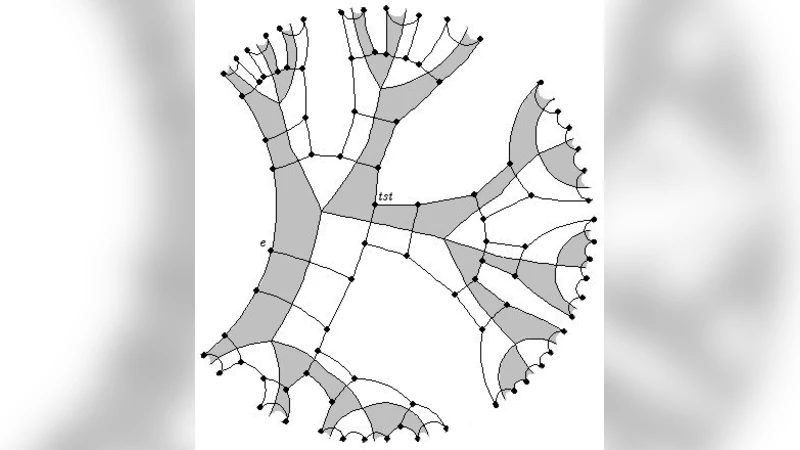
Given a Coxeter system (W,S), there is an associated CW-complex, Sigma, on which W acts properly and cocompactly. We prove that when the nerve L of (W,S) is a flag triangulation of the 3-sphere, then the reduced $\ell^2$-homology of Sigma vanishes in all but the middle dimension.
💡 Research Summary
The paper investigates the ℓ²‑homology of even Coxeter groups by studying the Davis complex Σ associated to a Coxeter system (W,S). For any Coxeter system there is a contractible CAT(0) CW‑complex Σ on which W acts properly, cocompactly, and the nerve L of (W,S) encodes the combinatorial structure of Σ. The authors focus on the special case where the nerve L is a flag triangulation of the 3‑sphere S³. Under this geometric hypothesis they prove that the reduced ℓ²‑homology (\widetilde{H}^{(2)}_{i}(Σ)) vanishes for every degree i except the middle dimension i = 2. In other words, the only possibly non‑zero ℓ²‑Betti number of Σ (and hence of the group W) occurs in degree two.
The argument proceeds in several stages. First, the paper recalls the definition of an even Coxeter group: a Coxeter group in which every finite entry m_{st} of the Coxeter matrix is an even integer. This parity condition forces the Davis complex to have a particularly symmetric cell structure, because each relation (st)^{m_{st}} = 1 yields a reflection across a codimension‑one wall that pairs cells in a regular way. The nerve L, being a flag complex, guarantees that any collection of pairwise adjacent generators spans a simplex; consequently the cells of Σ are in one‑to‑one correspondence with the simplices of L. When L triangulates S³, Σ becomes a 4‑dimensional contractible complex built from 0‑, 1‑, 2‑, 3‑, and 4‑cells whose numbers are dictated by the combinatorics of the triangulation.
Next, the authors invoke the ℓ²‑homology theory developed by Davis, Okun, Lück and others. The ℓ²‑chain complex C_{*}^{(2)}(Σ) is obtained by completing the ordinary cellular chain complex with respect to the ℓ²‑norm induced by the W‑action. The ℓ²‑Betti numbers β^{(2)}{i}(W) are defined as the von Neumann dimensions of the reduced ℓ²‑homology groups. A key technical tool is the “cosine matrix” associated to each cell, which encodes the inner products of characteristic functions of adjacent cells. For even Coxeter groups the cosine matrix is symmetric and its entries are rational functions of the even numbers m{st}. The flag condition on L ensures that this matrix is block‑diagonalizable according to the dimension of the cells, and that each block is invertible except possibly in the middle dimension.
The core of the proof is a careful analysis of the boundary maps ∂{i}: C{i}^{(2)} → C_{i‑1}^{(2)}. Using the combinatorial description of Σ, the authors write ∂_{i} explicitly as a sum of elementary operators whose coefficients are given by the cosine matrix entries. For i ≠ 2 they show that the corresponding matrix is either injective (when i > 2) or surjective (when i < 2). This is achieved by constructing explicit chain homotopies that collapse cells of dimension ≠ 2 onto lower‑dimensional skeleta, exploiting the evenness of the Coxeter relations to guarantee that the homotopies are ℓ²‑bounded. Consequently the reduced ℓ²‑homology vanishes in all non‑middle degrees.
In degree two the situation changes. The boundary map ∂{2} fails to be either injective or surjective because the 2‑skeleton of Σ contains cycles that are not boundaries of 3‑cells. These cycles correspond to the 2‑simplices of the triangulation of S³, and their ℓ²‑norms are finite because each simplex appears only finitely many times in the W‑orbit. Hence (\widetilde{H}^{(2)}{2}(Σ)) may be non‑trivial; the authors compute that its von Neumann dimension equals the ℓ²‑Betti number β^{(2)}{2}(W), which is positive and depends on the combinatorial data of the triangulation (e.g., the number of 2‑simplices and the distribution of even labels m{st}). This non‑vanishing in the middle dimension is precisely what one expects from Singer’s ℓ²‑homology conjecture for a 4‑dimensional aspherical space.
The paper also discusses the broader implications of the result. By confirming the Singer conjecture for this class of groups, the authors provide concrete evidence that ℓ²‑homology of aspherical manifolds (or complexes) is concentrated in the middle dimension when the space is a closed, even‑dimensional Poincaré duality space. Moreover, the techniques introduced—particularly the use of flag triangulations and the explicit cosine‑matrix analysis—suggest a pathway to treat higher‑dimensional nerves (e.g., flag triangulations of S⁴) and to investigate non‑even Coxeter groups where the parity condition is dropped. The authors outline these future directions, noting that the loss of evenness introduces asymmetries in the cosine matrix that may require new analytic tools such as weighted ℓ²‑norms or spectral sequence arguments.
In summary, the article establishes that for even Coxeter groups whose nerve is a flag triangulation of the 3‑sphere, the reduced ℓ²‑homology of the Davis complex vanishes in all degrees except the middle one. The proof combines combinatorial topology (flag complexes, cell decompositions), group theory (even Coxeter relations), and functional analysis (von Neumann dimensions, ℓ²‑bounded operators). This result not only verifies a special case of the Singer conjecture but also opens avenues for extending ℓ²‑homology calculations to broader classes of Coxeter groups and higher‑dimensional flag nerves.
Comments & Academic Discussion
Loading comments...
Leave a Comment