Mitigation of Delayed Management Costs in Transaction-Oriented Systems
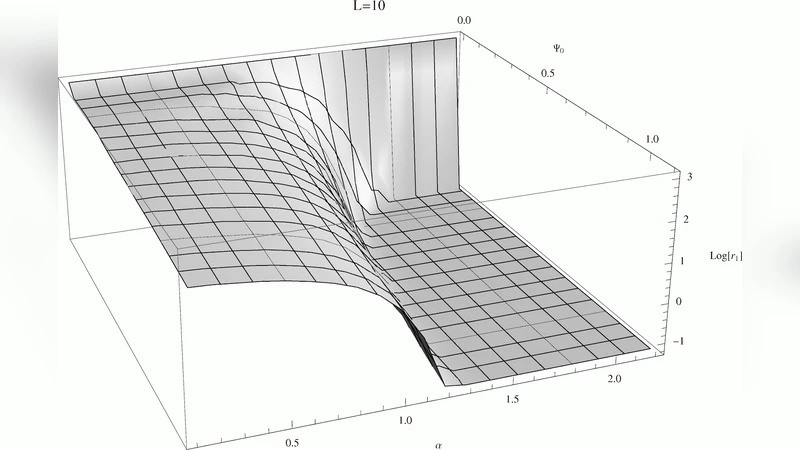
Abundant examples of complex transaction-oriented networks (TONs) can be found in a variety of disciplines, including information and communication technology, finances, commodity trading, and real estate. A transaction in a TON is executed as a sequence of subtransactions associated with the network nodes, and is committed if every subtransaction is committed. A subtransaction incurs a two-fold overhead on the host node: the fixed transient operational cost and the cost of long-term management (e.g. archiving and support) that potentially grows exponentially with the transaction length. If the overall cost exceeds the node capacity, the node fails and all subtransaction incident to the node, and their parent distributed transactions, are aborted. A TON resilience can be measured in terms of either external workloads or intrinsic node fault rates that cause the TON to partially or fully choke. We demonstrate that under certain conditions, these two measures are equivalent. We further show that the exponential growth of the long-term management costs can be mitigated by adjusting the effective operational cost: in other words, that the future maintenance costs could be absorbed into the transient operational costs.
💡 Research Summary
The paper investigates the cost dynamics and resilience of Transaction‑Oriented Networks (TONs), where each distributed transaction is decomposed into a sequence of sub‑transactions executed on network nodes. Two cost components are identified for every sub‑transaction: a fixed transient operational cost (TOC) that reflects immediate resource consumption (CPU, memory, bandwidth) and a long‑term management cost (LMC) associated with archiving, support, compliance, and other post‑execution activities. The authors model LMC as growing exponentially with the transaction length L, i.e., LMC = α·e^{βL}, where α and β capture system‑specific characteristics.
A node fails when the sum of its incurred TOC and LMC exceeds a predefined capacity C. Failure triggers the abort of all sub‑transactions incident to that node and, consequently, the abort of their parent distributed transactions, potentially leading to cascading shutdowns. Resilience is quantified in two ways: (1) the maximum external workload W* that the system can sustain without total collapse, and (2) the maximum intrinsic node fault rate λ* that can be tolerated. Using Markov chain analysis and critical‑phenomena theory, the authors prove a “resilience equivalence theorem”: under certain bounds on C, α, and β, the thresholds W* and λ* coincide, indicating that external load pressure and internal fault pressure are interchangeable in determining system stability.
The central contribution is a mitigation strategy that absorbs part of the exponential LMC into the transient cost. By redefining the effective operational cost as TOC’ = TOC + γ·LMC, with a tunable coefficient γ∈