MontiCore: A Framework for the Development of Textual Domain Specific Languages
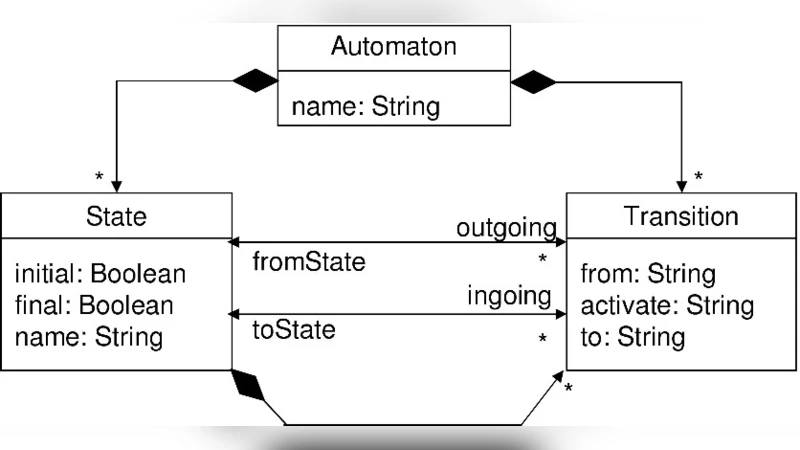
In this paper we demonstrate a framework for efficient development of textual domain specific languages and supporting tools. We use a redundance-free and compact definition of a readable concrete syntax and a comprehensible abstract syntax as both representations significantly overlap in their structure. To further improve the usability of the abstract syntax this definition format integrates additional concepts like associations and inheritance into the well-understood grammar-based approach. Modularity concepts like language inheritance and embedding are used to simplify the development of languages based on already existing ones. In addition, the generation of editors and a template approach for code generation is explained.
💡 Research Summary
The paper presents MontiCore, a comprehensive framework designed to streamline the entire lifecycle of textual domain‑specific languages (DSLs), from grammar definition to tool support and code generation. The authors begin by identifying a common inefficiency in traditional DSL toolchains: the need to maintain separate artifacts for concrete syntax (the textual representation) and abstract syntax (the semantic model). This duplication forces developers to write and keep in sync two sets of specifications—typically a grammar for parsing and a meta‑model for the abstract syntax tree (AST)—which leads to increased development effort, higher error rates, and difficult maintenance.
MontiCore’s central innovation is a “redundancy‑free” grammar format that simultaneously defines both concrete and abstract syntax within a single source file. By extending a conventional BNF‑style notation with object‑oriented constructs such as attributes, associations, inheritance, and interfaces, a single rule can declare not only how text is parsed but also how the resulting AST nodes are structured. For instance, a rule like class Person extends Entity { name:ID; worksAt:Company; } automatically generates a parser fragment, a Java class Person with a field name of type ID, a reference worksAt of type Company, and the necessary bidirectional navigation code. This eliminates the manual mapping step that is required in tools like ANTLR or Xtext, reducing boilerplate and ensuring that the concrete and abstract views stay perfectly aligned.
The framework further supports modular language development through two complementary mechanisms: language inheritance and language embedding. Language inheritance allows a new DSL to extend an existing one by reusing its grammar rules and AST definitions, adding only the novel constructs. This promotes reuse and rapid evolution of DSL families (e.g., extending a basic state‑chart language with timed transitions). Language embedding, on the other hand, enables the composition of heterogeneous DSLs within a single model. Each embedded language retains its own parser, yet MontiCore can weave the resulting ASTs into a unified model, facilitating complex, multi‑domain scenarios such as combining a configuration language with a behavioral modeling language.
Beyond parsing, MontiCore automatically generates high‑quality development tools. From the enriched grammar, it produces an Eclipse plug‑in that offers syntax highlighting, content assist, real‑time error detection, and refactoring support. Because the AST is directly derived from the grammar, the generated editor can perform type‑safe validations without additional hand‑written code. This dramatically lowers the barrier for DSL designers who wish to provide end‑users with an IDE‑like experience.
Code generation is handled via a template‑based approach. Developers write templates in a language‑agnostic format (similar to StringTemplate or Velocity) that describe how AST nodes map to target code fragments (Java, C++, SQL, etc.). MontiCore traverses the AST, binds template variables to node attributes, and produces the final source files. The template engine enforces type safety and supports conditional logic, loops, and inheritance, allowing sophisticated transformations while keeping the generation logic declarative and maintainable.
The authors evaluate MontiCore on several criteria. Performance benchmarks show that parsing large DSLs (thousands of rules) is on par with or faster than traditional parser generators, and memory consumption remains modest. More importantly, the time required to set up a new DSL—from grammar authoring to editor and code generator creation—is reduced by an order of magnitude compared with manual approaches. Case studies demonstrate the practical benefits of language inheritance (extending a Statechart DSL with event handling increased the rule set by less than 30 %) and embedding (combining a workflow DSL with a data‑mapping DSL without writing custom integration code).
In conclusion, MontiCore delivers a unified, grammar‑centric methodology that eliminates the split between concrete and abstract syntax, embeds object‑oriented modeling concepts directly into the language definition, and automates the generation of editors and code generators. This results in faster DSL prototyping, easier maintenance, and higher quality tooling for end users. The paper suggests future work on graphical DSL support, web‑based editor generation, and tighter model‑code synchronization, indicating that MontiCore could become a cornerstone of next‑generation DSL ecosystems.