The Amsterdam Manifesto on OCL
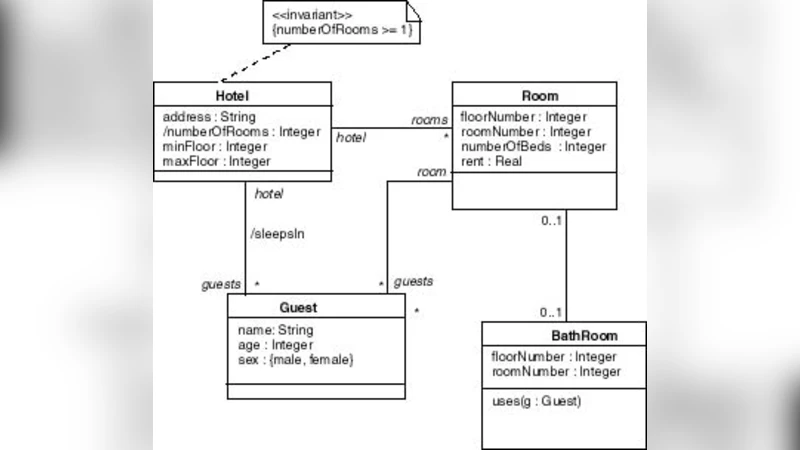
In November 1998 the authors participated in a two-day workshop on the Object Constraint Language (OCL) in Amsterdam. The focus was to clarify issues about the semantics and the use of OCL, and to discuss useful and necessary extensions of OCL. Various topics have been raised and clarified. This manifesto contains the results of that workshop and the following work on these topics. Overview of OCL.
💡 Research Summary
The Amsterdam Manifesto on OCL documents the outcomes of a two‑day workshop held in November 1998 in Amsterdam, where a group of academics and industry practitioners gathered to examine the Object Constraint Language (OCL) and to define a clear roadmap for its evolution. The paper begins by identifying the core problems that had emerged in the early OCL specifications: ambiguous semantics, inconsistent type handling, unclear evaluation order, and a lack of standardized interfaces with modeling tools. These issues hindered reliable tool interoperability and limited OCL’s usefulness as a contract language between design and implementation.
To address semantic ambiguity, the manifesto proposes a formal semantics based on a mathematically precise type system. It introduces static type‑checking rules that guarantee that every expression is well‑typed before runtime, and it defines the behavior of collection operations (collect, select, reject, exists, etc.) in terms of set theory. Logical operators are given explicit short‑circuit semantics, eliminating divergent interpretations among different OCL engines.
The second major contribution is a systematic classification of OCL constraints into pre‑conditions, post‑conditions, and invariants, each tied to a specific evaluation point in the lifecycle of an object or operation. The document formalizes the use of the @pre and @post annotations to capture the state of a model element before and after a transition, thereby enabling precise reasoning about state changes in transactional and real‑time systems.
Interoperability with modeling tools is tackled in the third section. The authors note that existing platforms such as EMF, Rational Rose, and MagicDraw each implement their own OCL parsers and code generators, leading to loss of constraints during model transformations. The manifesto defines a common abstract syntax tree (AST) representation for OCL expressions and prescribes metadata preservation rules that ensure constraints survive round‑trip engineering. This standard interface is intended to make OCL a first‑class contract in model‑driven development (MDD) pipelines.
The fourth section explores extensions that would broaden OCL’s applicability. Recognizing that many practical domains require temporal reasoning and state‑machine integration, the authors recommend adding time operators (duration, elapsed) and state‑change operators that can be used directly in OCL expressions. They also address the challenges of multiple inheritance by introducing namespace‑based disambiguation rules. These extensions aim to evolve OCL from a purely functional constraint language into a richer modeling language capable of expressing dynamic system behavior.
Finally, the manifesto outlines a strategy for education, documentation, and community involvement. It calls for the creation of standardized textbooks, online tutorials, and a curated set of verification case studies. By encouraging open‑source implementations of OCL parsers and validators, and by fostering regular workshops and conference sessions, the authors seek to build a feedback loop that continuously refines the language and promotes its adoption.
In summary, the Amsterdam Manifesto on OCL provides a comprehensive, six‑pillar roadmap—formal semantics, robust type system, precise evaluation timing, tool‑chain integration, language extensions, and educational infrastructure—to transform OCL into a reliable, interoperable, and expressive contract language at the heart of UML and model‑driven engineering.
Comments & Academic Discussion
Loading comments...
Leave a Comment