E-Business Experiences with Online Auctions
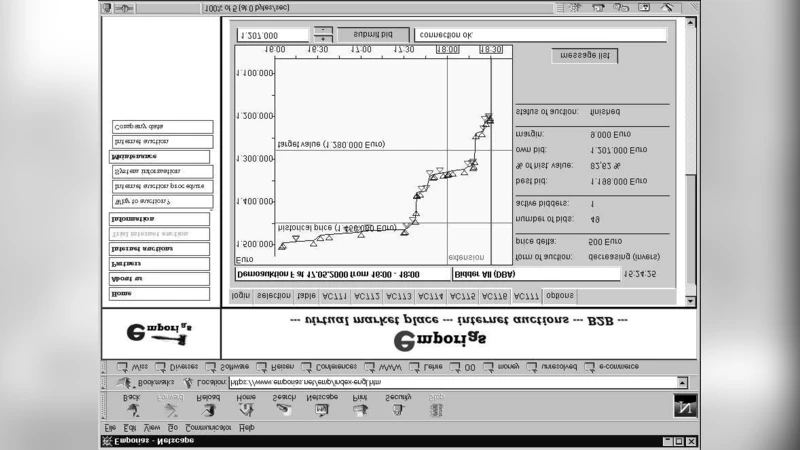
Online auctions are among the most influential e-business applications. Their impact on trading for businesses, as well as consumers, is both remarkable and inevitable. There have been considerable efforts in setting up market places, but, with respects to market volume, online trading is still in its early stages. This chapter discusses the benefits of the concept of Internet marketplaces, with the highest impact on pricing strategies, namely, the conduction of online business auctions. We discuss their benefits, problems and possible solutions. In addition, we sketch actions for suppliers to achieve a better strategic position in the upcoming Internet market places.
💡 Research Summary
The chapter “E‑Business Experiences with Online Auctions” examines how Internet‑based auction platforms are reshaping both B2B and B2C commerce. It begins by positioning online auctions as a mature e‑business application that nevertheless remains in an early‑stage market volume, implying substantial growth potential. The authors differentiate between forward (seller‑driven) and reverse (buyer‑driven) auction formats, describing key mechanisms such as time‑limited bidding windows, proxy‑bidding agents, and real‑time price feedback. These mechanisms collectively increase price transparency, compress transaction cycles, and enable buyers to aggregate demand across multiple suppliers while allowing sellers to expose their offers to a broader audience without geographic constraints.
The paper outlines several concrete benefits. First, the competitive pressure of an auction drives market prices toward economic efficiency, reducing the need for lengthy negotiations. Second, the consolidation of many suppliers on a single platform simplifies supplier selection and comparison, thereby lowering procurement overhead. Third, the digital traceability of bids creates a rich data set that can be mined for demand forecasting, inventory optimization, and strategic pricing. Fourth, the elimination of physical trade shows or face‑to‑face meetings cuts logistics and personnel costs, making it feasible for small and medium‑sized enterprises to participate in global sourcing.
Despite these advantages, the authors identify four major challenges. Trust and credibility remain fragile; the anonymity of online participants can foster fraud, bid‑rigging, or non‑delivery. Complex bidding rules and unintuitive user interfaces raise the barrier to entry for less‑tech‑savvy users. Data security and privacy concerns arise from the large volumes of transactional information stored on auction servers. Finally, divergent legal regimes—varying electronic contract statutes, tax treatments, and consumer‑protection laws—create regulatory uncertainty for cross‑border auctions.
To mitigate these risks, the chapter proposes a set of technical and governance solutions. A robust certification and rating system should be implemented to provide objective trust scores for buyers and sellers. User‑experience improvements, such as guided bidding workflows and automated bidding agents, can lower the learning curve. Strong encryption (TLS/SSL), multi‑factor authentication, and regular security audits are recommended to protect data integrity and confidentiality. Alignment with international standards (e.g., ISO/IEC 27001) and the development of clear, platform‑level compliance policies can help participants navigate the regulatory landscape.
From the supplier’s perspective, the authors argue that success will depend on moving beyond pure price competition. Suppliers should develop differentiated value propositions that include superior quality, rapid delivery, sustainability certifications, and post‑sale support. Comprehensive proposals that combine price with these non‑price attributes can capture buyer attention in a crowded auction environment. Continuous market monitoring—leveraging bid‑history analytics to detect competitor strategies and demand shifts—allows suppliers to fine‑tune their pricing models in real time. Forming strategic alliances or consortiums for joint bidding can generate economies of scale, increase win rates, and foster long‑term relationships with key buyers.
In conclusion, while online auctions are still in a nascent phase regarding overall market volume, the paper predicts that with appropriate technical safeguards, trust mechanisms, and strategic supplier behavior, auction‑based e‑business will become a cornerstone of future electronic marketplaces. The authors envision a landscape where price discovery is rapid, transaction costs are minimized, and both buyers and sellers gain unprecedented visibility into market dynamics, ultimately driving greater efficiency and innovation across the global supply chain.
Comments & Academic Discussion
Loading comments...
Leave a Comment