Investigation of commuting Hamiltonian in quantum Markov network
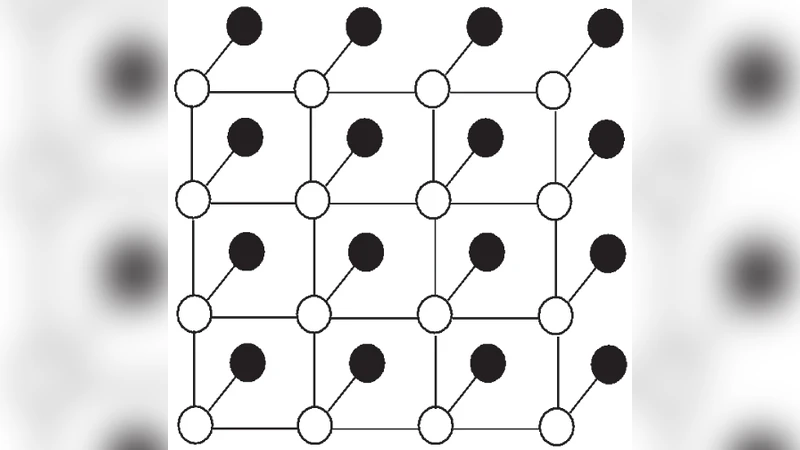
Graphical Models have various applications in science and engineering which include physics, bioinformatics, telecommunication and etc. Usage of graphical models needs complex computations in order to evaluation of marginal functions,so there are some powerful methods including mean field approximation, belief propagation algorithm and etc. Quantum graphical models have been recently developed in context of quantum information and computation, and quantum statistical physics, which is possible by generalization of classical probability theory to quantum theory. The main goal of this paper is preparing a primary generalization of Markov network, as a type of graphical models, to quantum case and applying in quantum statistical physics.We have investigated the Markov network and the role of commuting Hamiltonian terms in conditional independence with simple examples of quantum statistical physics.
💡 Research Summary
The paper sets out to bridge classical Markov random fields (MRFs) and belief‑propagation methods with quantum statistical mechanics by defining a quantum analogue of a Markov network. After a brief historical overview of graphical models, belief‑propagation, and their applications, the authors introduce the classical concepts of conditional independence, the Hammersley‑Clifford theorem, and the factorisation of probability distributions over cliques. They then translate these ideas into the quantum domain: random variables become quantum subsystems (spins, qubits, etc.), probability distributions become density matrices, and Shannon entropy is replaced by the von‑Neumann entropy. Conditional mutual information (CMI) is defined as I(A:C|B)=S(AB)+S(BC)−S(ABC)−S(B), where S denotes von‑Neumann entropy. A quantum Markov network (QMN) is said to exist when, for any partition of the vertex set into three disjoint subsets A, B, C with B separating A from C in the graph, the CMI vanishes (I(A:C|B)=0).
Two central theorems are presented. Theorem 1 (Leifer & Poulin, 2008) states that if a pair (ρ,G) forms a positive quantum Markov network, then the corresponding Gibbs state ρ can be written as ρ∝exp(H) where H is a sum of Hermitian operators h_Q each acting on a clique Q of the graph. Theorem 2 (Poulin & Hastings, 2011) provides the converse under a strong commutativity condition: if the Hamiltonian H can be decomposed as a sum of clique operators that all mutually commute, then the Gibbs state ρ∝exp(−βH) is a quantum Markov network. The authors stress that the commutativity requirement is sufficient but not necessary; the direction “if the state is a QMN then the Hamiltonian must be a sum of commuting clique operators” does not hold in general.
To illustrate these abstract statements, the authors construct a concrete five‑spin chain. The Hamiltonian consists of nearest‑neighbour XX interactions (S_x⊗S_x) and local Z‑field terms h_i S_z. Explicitly, h₁₂ = S_x⊗S_x⊗I⊗I⊗I + h₁ S_z⊗I⊗I⊗I⊗I, h₂₃ = I⊗S_x⊗S_x⊗I⊗I + (h₂/2) I⊗I⊗S_z⊗I⊗I, h₃₄ = I⊗I⊗S_x⊗S_x⊗I + (h₂/2) I⊗I⊗S_z⊗I⊗I, h₄₅ = I⊗I⊗I⊗S_x⊗S_x + h₃ I⊗I⊗I⊗I⊗S_z, with the total Hamiltonian H = h₁₂ + h₂₃ + h₃₄ + h₄₅. The authors examine two scenarios: (i) all local fields h₁, h₂, h₃ are set to 2, making the four two‑body terms non‑commuting; (ii) h₂ is set to zero, rendering all terms mutually commuting. They compute the conditional mutual information I(A:C|B) where A={spins 1,2}, B={spin 3}, and C={spins 4,5}, as a function of inverse temperature β. In case (i) the CMI is non‑zero for any β>0, confirming that the state is not a quantum Markov network. In case (ii) the CMI vanishes for all β, demonstrating that the commuting Hamiltonian yields a genuine QMN, exactly as predicted by Theorem 2.
The authors interpret these results as evidence that commutativity of Hamiltonian terms is a key ingredient for quantum conditional independence and thus for the applicability of belief‑propagation‑type inference algorithms in quantum many‑body systems. They argue that once a quantum system can be identified as a QMN, one could import classical message‑passing techniques to compute marginal reduced density matrices, correlations, or expectation values, potentially simplifying otherwise intractable quantum inference problems.
In the concluding section the authors acknowledge that their work is primarily exploratory. They pose open questions such as: under what precise conditions does a quantum distribution together with a graph constitute a strong quantum Markov network? Is commutativity a necessary condition, or can weaker forms of compatibility suffice? They suggest that answering these questions could open a new research direction where quantum graphical models become a practical tool for quantum statistical physics, quantum error‑correction, and quantum machine learning.
Overall, the paper contributes a clear pedagogical bridge between classical Markov networks and their quantum counterparts, highlights the pivotal role of commuting Hamiltonians, and provides a concrete numerical illustration. However, the manuscript suffers from typographical errors, limited discussion of related work beyond the two cited foundational papers, and a lack of scalability analysis. Future work should aim to (1) formalise necessary and sufficient conditions for quantum Markovness beyond the commuting case, (2) develop efficient algorithms for evaluating quantum CMI in larger systems, and (3) demonstrate practical quantum inference tasks (e.g., ground‑state property estimation) that benefit from the proposed framework.
Comments & Academic Discussion
Loading comments...
Leave a Comment