The Role of Emotions in Propagating Brands in Social Networks
A key aspect of word of mouth marketing are emotions. Emotions in texts help propagating messages in conventional advertising. In word of mouth scenarios, emotions help to engage consumers and incite to propagate the message further. While the function of emotions in offline marketing in general and word of mouth marketing in particular is rather well understood, online marketing can only offer a limited view on the function of emotions. In this contribution we seek to close this gap. We therefore investigate how emotions function in social media. To do so, we collected more than 30,000 brand marketing messages from the Google+ social networking site. Using state of the art computational linguistics classifiers, we compute the sentiment of these messages. Starting out with Poisson regression-based baseline models, we seek to replicate earlier findings using this large data set. We extend upon earlier research by computing multi-level mixed effects models that compare the function of emotions across different industries. We find that while the well known notion of activating emotions propagating messages holds in general for our data as well. But there are significant differences between the observed industries.
💡 Research Summary
The paper investigates how emotions embedded in brand‑related posts influence their propagation on a social networking site, using Google+ as a case study. The authors collected a large corpus of 32,409 posts from 156 internationally‑focused brands spanning seven industry categories (Apparel, Automotive, Cosmetics, Electronics, Food & Beverages, Sports, and Other). Brands were selected based on the presence of a .com domain, a Google+ profile, and a minimum of 250 “+1” reactions, ensuring that the sample consisted of active, digitally‑engaged companies.
For each post, sentiment analysis was performed with the open‑source “sentiment” package, which applies a Naïve Bayes classifier trained on keyword dictionaries. The analysis yielded a polarity score (positive‑negative ratio) and six basic emotion scores: Anger, Disgust, Fear, Joy, Sadness, and Surprise. Although the authors acknowledge the limitations of a keyword‑based approach (e.g., cultural nuance, sarcasm, and classifier accuracy), it enables scalable processing of tens of thousands of messages.
The statistical investigation proceeds in two stages. First, the authors fit a series of Poisson generalized linear models (GLMs) to predict the number of reshares (the online analogue of word‑of‑mouth propagation). The baseline model (m0) contains only an intercept. Subsequent models incrementally add control variables (message length, time of day), engagement metrics (comment count, +1 count), and finally the sentiment variables (polarity and the six emotions). Model comparison using Akaike Information Criterion (AIC) and likelihood‑ratio tests shows a dramatic improvement when sentiment variables are introduced (AIC drops from 926,202.56 in the empty model to 786,504.72 in the full model, p < 2 × 10⁻¹⁶). This confirms that emotional content carries significant explanatory power for resharing behavior.
To explore heterogeneity across industries, the authors extend the analysis with multilevel mixed‑effects models. Posts are nested within industries, and both brand and industry are treated as random effects. Fixed effects remain identical to the full Poisson model (m4), while random slopes are allowed for each emotion. Likelihood‑ratio tests indicate that random‑slope specifications improve model fit for all seven sentiment variables, justifying the inclusion of industry‑specific variability.
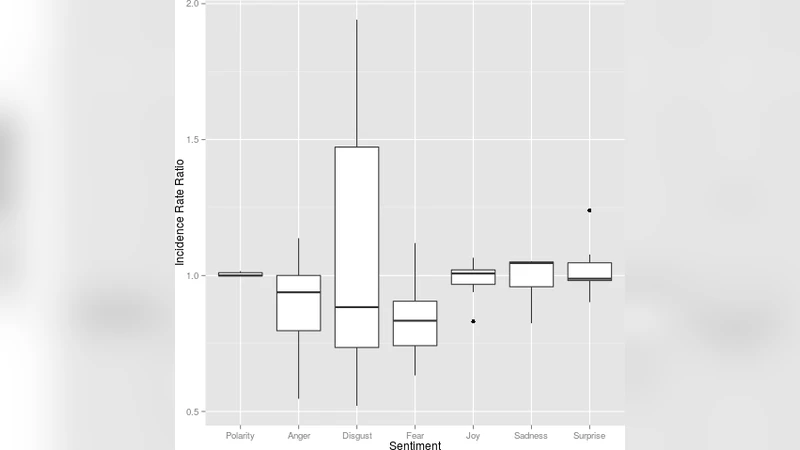
Table 3 presents incidence rate ratios (IRRs) for each emotion by industry, together with the standard deviation (σ) of the random effects, which quantifies cross‑industry heterogeneity. The key findings are:
- Polarity consistently yields IRRs close to 1.00–1.02 across all sectors, confirming that a generally positive tone modestly boosts resharing regardless of industry.
- Anger shows a positive effect in the Automotive sector (IRR = 1.14) but a suppressive effect in Electronics (IRR = 0.55).
- Disgust dramatically increases resharing in Sports (IRR = 1.94) and Food/Beverage (IRR = 1.20) but reduces it in the “Other” category (IRR = 0.52).
- Fear generally has a dampening influence, with IRRs ranging from 0.63 (Apparel) to 1.12 (Automotive).
- Joy and Surprise exhibit modest, sector‑specific variations; for instance, Joy slightly lifts resharing in Cosmetics (IRR = 1.02) and Food/Beverage (IRR = 1.00), while Surprise is most effective in Cosmetics (IRR = 1.08) and Food/Beverage (IRR = 1.24).
These patterns demonstrate that high‑arousal emotions do not uniformly drive virality; instead, their impact is contingent on the cultural and functional expectations of each industry. For example, anger may resonate with automotive enthusiasts who associate excitement and power with cars, whereas the same emotion may be off‑putting for electronics consumers seeking reliability.
The authors discuss several methodological constraints. The sentiment classifier relies on a static keyword dictionary, which may miss nuanced expressions or domain‑specific slang. Google+ itself is a platform with a distinct user base and limited multimedia features, raising questions about the generalizability of findings to other networks such as Facebook, Instagram, or TikTok. Moreover, the analysis assumes a constant follower count for each brand page (used as an offset term), ignoring potential growth or decay over the observation window.
Despite these limitations, the study contributes valuable empirical evidence to the literature on emotion‑driven online word‑of‑mouth. It confirms that sentiment, especially polarity, is a robust predictor of message diffusion, while also revealing that the efficacy of specific emotions varies markedly across industry contexts. Practically, marketers should not adopt a one‑size‑fits‑all emotional strategy; instead, they ought to conduct pre‑campaign sentiment profiling tailored to their sector. For instance, a cosmetics brand might emphasize joy and surprise to align with aspirational consumer narratives, whereas an automotive brand could leverage controlled expressions of anger or excitement to stimulate sharing.
Future research directions suggested include: (1) employing deep‑learning‑based sentiment models that capture contextual nuance, (2) extending the analysis to multiple contemporary platforms to test cross‑platform consistency, and (3) integrating dynamic exposure metrics (e.g., real‑time follower growth, algorithmic feed placement) to refine the offset structure. Such extensions would enhance external validity and provide a more granular understanding of how emotions shape digital brand propagation in an ever‑evolving social media ecosystem.
Comments & Academic Discussion
Loading comments...
Leave a Comment