Generalizations of Sch"{o}bis Tetrahedral Dissection
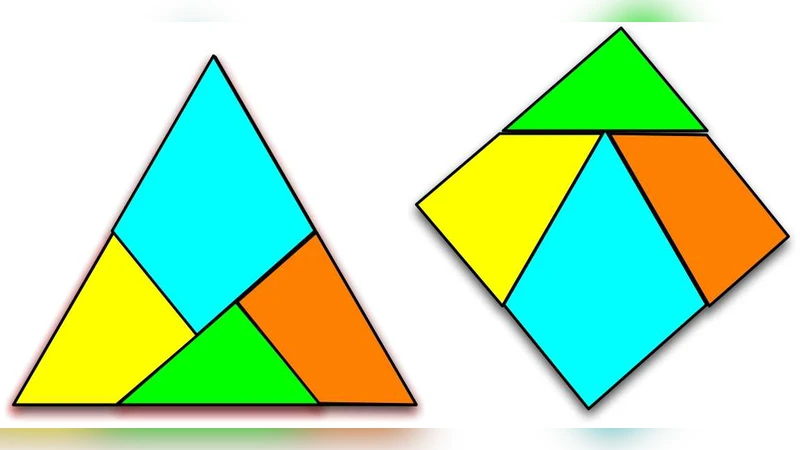
Let v_1, …, v_n be unit vectors in R^n such that v_i . v_j = -w for i != j, where -1 <w < 1/(n-1). The points Sum_{i=1..n} lambda_i v_i, where 1 >= lambda_1 >= … >= lambda_n >= 0, form a Hill-simplex of the first type'', denoted by Q_n(w). It was shown by Hadwiger in 1951 that Q_n(w) is equidissectable with a cube. In 1985, Sch\"{o}bi gave a three-piece dissection of Q_3(w) into a triangular prism c Q_2(1/2) X I, where I denotes an interval and c = sqrt{2(w+1)/3}. The present paper generalizes Sch\"{o}bi's dissection to an n-piece dissection of Q_n(w) into a prism c Q_{n-1}(1/(n-1)) X I, where c = sqrt{(n-1)(w+1)/n}. Iterating this process leads to a dissection of Q_n(w) into an n-dimensional rectangular parallelepiped (or brick’’) using at most n! pieces. The complexity of computing the map from Q_n(w) to the brick is O(n^2). A second generalization of Sch"{o}bi’s dissection is given which applies specifically in R^4. The results have applications to source coding and to constant-weight binary codes.
💡 Research Summary
The paper investigates a family of convex polytopes, called Hill‑simplexes of the first type, denoted Qₙ(w). These are defined by a set of n unit vectors v₁,…,vₙ in ℝⁿ with mutual inner product –w (where –1 < w < 1/(n‑1)) and by points of the form Σ_{i=1}^n λ_i v_i with ordered coefficients 1 ≥ λ₁ ≥ … ≥ λₙ ≥ 0. Hadwiger (1951) proved that each Qₙ(w) is equidissectable with a hyper‑cube, but his proof was non‑constructive. In 1985 Schöbi gave an explicit three‑piece dissection of Q₃(w) into a triangular prism c·Q₂(½) × I, where c = √
Comments & Academic Discussion
Loading comments...
Leave a Comment