Multi-scale Orderless Pooling of Deep Convolutional Activation Features
Deep convolutional neural networks (CNN) have shown their promise as a universal representation for recognition. However, global CNN activations lack geometric invariance, which limits their robustness for classification and matching of highly variable scenes. To improve the invariance of CNN activations without degrading their discriminative power, this paper presents a simple but effective scheme called multi-scale orderless pooling (MOP-CNN). This scheme extracts CNN activations for local patches at multiple scale levels, performs orderless VLAD pooling of these activations at each level separately, and concatenates the result. The resulting MOP-CNN representation can be used as a generic feature for either supervised or unsupervised recognition tasks, from image classification to instance-level retrieval; it consistently outperforms global CNN activations without requiring any joint training of prediction layers for a particular target dataset. In absolute terms, it achieves state-of-the-art results on the challenging SUN397 and MIT Indoor Scenes classification datasets, and competitive results on ILSVRC2012/2013 classification and INRIA Holidays retrieval datasets.
💡 Research Summary
The paper addresses a fundamental limitation of deep convolutional neural networks (CNNs) when used as generic image descriptors: global activations from the fully‑connected layers retain a large amount of spatial information, which makes them highly sensitive to geometric transformations such as translation, scaling, and rotation. While this spatial detail is beneficial for certain tasks, it harms robustness in scenarios where the scene may appear at different positions, sizes, or orientations. To mitigate this problem without sacrificing the discriminative power of CNN features, the authors propose a simple yet effective framework called Multi‑scale Orderless Pooling for CNN (MOP‑CNN).
The core idea is to treat the global CNN representation as the coarsest scale and to complement it with orderless pooled representations derived from local patches at finer scales. Specifically, an input image is resized to 256 × 256 pixels. Three scales are defined: (1) the whole image (256 × 256), (2) patches of size 128 × 128 sampled with a stride of 32 pixels, and (3) patches of size 64 × 64 sampled with the same stride. For each patch, the authors extract the 4096‑dimensional activation vector from the seventh fully‑connected layer of a pre‑trained Caffe network (ReLU‑activated). To keep the subsequent VLAD encoding tractable, each activation is reduced to 500 dimensions by PCA.
At each of the two finer scales, a separate k‑means codebook with k = 100 centroids is learned. The authors then apply the soft‑assignment version of VLAD: each patch is assigned to its five nearest centroids (r = 5) with Gaussian weights (σ = 10), and the residuals (patch − centroid) are accumulated. The resulting VLAD vectors have dimensionality 500 × 100 = 50 000. Power‑law (α = 0.5) and L2 normalizations are applied, after which a second PCA reduces each VLAD vector to 4096 dimensions. Finally, the three 4096‑dimensional vectors (global CNN + two VLAD‑PCA descriptors) are L2‑normalized and concatenated, yielding a 12 288‑dimensional image representation.
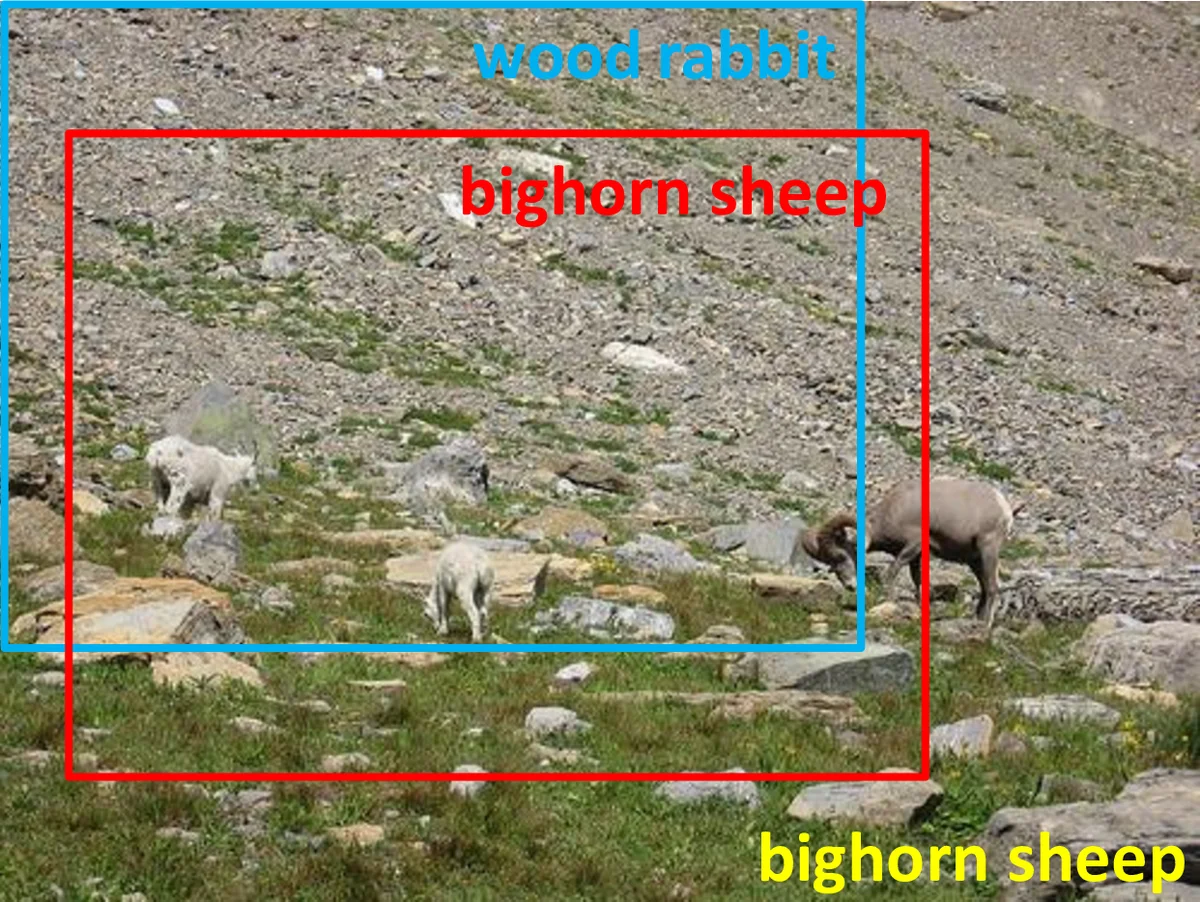
The authors conduct a thorough invariance analysis. By training one‑vs‑all linear SVMs on the SUN397 dataset using both the global CNN and the MOP‑CNN features, they evaluate classification accuracy under controlled transformations: translations up to ±40 pixels, scalings from 0.9× to 1.25×, rotations between –20° and +20°, and horizontal flips. Global CNN accuracy degrades sharply as transformation magnitude increases, whereas MOP‑CNN remains relatively stable and consistently outperforms the baseline across all transformation types. Visual examples further illustrate that a single global CNN prediction can change dramatically with small window shifts, while local patches pooled in MOP‑CNN provide more reliable cues.
Extensive experiments on four benchmarks confirm the practical benefits. On SUN397, MOP‑CNN achieves 66.7 % accuracy versus 58.2 % for the plain global CNN, setting a new state‑of‑the‑art at the time. On MIT Indoor Scenes, it improves from 68.9 % to 71.3 %. For ImageNet ILSVRC‑2012/2013 classification, a “center+corner+flip” multi‑window test with MOP‑CNN reaches 56.30 % top‑1 accuracy, surpassing the 54.34 % obtained by the same multi‑window strategy on raw global CNN features. In the retrieval domain, using the Holidays dataset, the VLAD‑based components of MOP‑CNN yield higher mean average precision than a single global CNN descriptor.
A notable aspect of the work is its simplicity: the method requires no fine‑tuning of the CNN on target datasets, no additional training of new layers, and only modest computational overhead (patch extraction, PCA, VLAD encoding). The authors also compare several baseline pooling strategies (average, max, VLAD without multi‑scale concatenation) and demonstrate that the combination of multi‑scale extraction and orderless VLAD pooling is essential for the observed gains.
In conclusion, MOP‑CNN bridges the gap between the powerful semantic encoding of deep networks and the transformation invariance traditionally offered by bag‑of‑features models. By aggregating local deep descriptors in an orderless fashion across multiple scales, it produces a robust, high‑dimensional representation that excels in both supervised classification and unsupervised retrieval tasks. Future directions suggested include exploring additional scales, integrating more sophisticated encoding schemes such as NetVLAD or Fisher Vectors, and applying dimensionality‑reduction techniques (e.g., product quantization) to enable large‑scale deployment.
Comments & Academic Discussion
Loading comments...
Leave a Comment