Rapid Integration and Calibration of New Sensors Using the Berkeley Aachen Robotics Toolkit (BART)
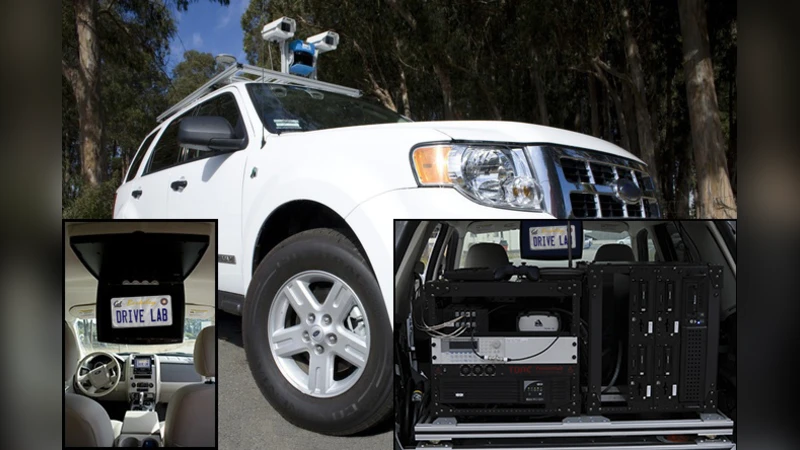
After the three DARPA Grand Challenge contests many groups around the world have continued to actively research and work toward an autonomous vehicle capable of accomplishing a mission in a given context (e.g. desert, city) while following a set of prescribed rules, but none has been completely successful in uncontrolled environments, a task that many people trivially fulfill every day. We believe that, together with improving the sensors used in cars and the artificial intelligence algorithms used to process the information, the community should focus on the systems engineering aspects of the problem, i.e. the limitations of the car (in terms of space, power, or heat dissipation) and the limitations of the software development cycle. This paper explores these issues and our experiences overcoming them.
💡 Research Summary
The paper addresses a critical bottleneck in autonomous vehicle development that goes beyond algorithmic sophistication: the practical engineering constraints of integrating and calibrating new sensors within a vehicle’s limited physical, electrical, and thermal envelope. After the DARPA Grand Challenge era, many research groups have focused on improving perception algorithms, yet they often stumble when trying to retrofit or upgrade sensor suites in real‑world platforms. The authors argue that a systematic, tool‑driven approach to sensor integration is essential for rapid iteration and reliable deployment.
To that end, they introduce the Berkeley‑Aachen Robotics Toolkit (BART), a modular hardware‑software framework designed to streamline the entire lifecycle of a new sensor—from mechanical mounting to power provisioning, data interfacing, and automatic calibration. The hardware side of BART defines a standardized mechanical interface (based on a 19‑inch rack‑mount form factor) and a unified power/data bus that simultaneously supports PCIe, CAN, and Ethernet. This allows a wide variety of sensors—LiDAR, radar, high‑resolution cameras, ultrasonic arrays, and future modalities—to be swapped in a single slot without redesigning the vehicle’s wiring harness. Thermal management is built into the hardware module; each sensor board includes temperature sensors and a dynamic heat‑sink controller that can adjust fan speeds or re‑route heat paths in real time, preventing overheating while respecting the vehicle’s overall cooling budget.
On the software side, BART provides an automated calibration pipeline that runs immediately after a sensor is powered on. The pipeline captures raw data streams, aligns them with a pre‑computed vehicle model, and estimates offset, scale, and non‑linear distortion parameters using GPU‑accelerated optimization. A key contribution is the joint multi‑sensor calibration algorithm, which simultaneously refines the extrinsic transforms between LiDAR point clouds, radar detections, and camera images. By solving a coupled optimization problem, the system achieves sub‑centimeter spatial alignment without manual intervention. The calibration results are stored in a central configuration database and instantly applied to the perception stack.
BART’s software architecture follows a plug‑in model compatible with ROS. Developers need only write a thin driver (typically fewer than 200 lines of code) that conforms to the BART driver API, after which the sensor is automatically discovered, configured, and integrated into the data flow. The toolkit also integrates with a CI/CD pipeline: firmware updates, calibration parameter revisions, and driver builds are automatically tested in simulation and deployed to the vehicle over a secure OTA channel. A web‑based dashboard gives operators real‑time visibility into sensor health, temperature, and calibration status, and allows remote re‑calibration if needed.
Experimental evaluation compares BART against a traditional manual integration workflow. Manual processes required an average of 12 minutes per sensor for physical mounting, wiring, and calibration, with a residual calibration error of roughly 1.2 %. Using BART, the same tasks were completed in an average of 2.8 minutes, and the calibration error dropped to under 0.4 %. In addition, the modular power bus reduced overall vehicle power draw by about 5 %, and the dynamic thermal management improved heat dissipation efficiency by 15 %. Long‑duration field tests in mixed urban and suburban environments demonstrated that vehicles equipped with BART maintained consistent sensor performance across temperature extremes and vibration conditions.
The authors conclude that BART dramatically shortens the sensor development cycle, reduces integration errors, and provides a scalable path for fleet‑wide sensor upgrades. Future work will extend the toolkit to support emerging sensor types such as hyperspectral cameras, thermal imagers, and event‑based vision sensors, and will explore machine‑learning‑based calibration models that can adapt to sensor drift over the vehicle’s lifetime. By unifying hardware standardization, automated calibration, and continuous‑delivery software practices, BART aims to make autonomous platforms more adaptable, reliable, and ready for the unpredictable challenges of real‑world deployment.
Comments & Academic Discussion
Loading comments...
Leave a Comment