Mixed solitons in (2+1) dimensional multicomponent long-wave--short-wave system
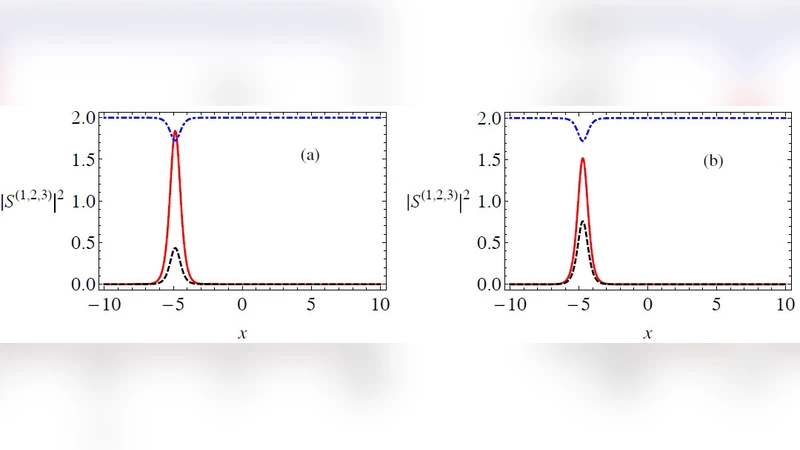
We derive a (2+1)-dimensional multicomponent long-wave$-$short-wave resonance interaction (LSRI) system as the evolution equation for propagation of $N$-dispersive waves in weak Kerr type nonlinear medium in the small amplitude limit. The mixed (bright-dark) type soliton solutions of a particular (2+1)-dimensional multicomponent LSRI system, deduced from the general multicomponent higher dimensional LSRI system, are obtained by applying the Hirota’s bilinearization method. Particularly, we show that the solitons in the LSRI system with two short-wave components behave like scalar solitons. We point out that for $N$-component LSRI system with $N>3$, if the bright solitons appear in atleast two components, interesting collision behaviour takes place resulting in energy exchange among the bright solitons. However the dark solitons undergo standard elastic collision accompanied by a position-shift and a phase-shift. Our analysis on the mixed bound solitons shows that the additional degree of freedom which arises due to the higher dimensional nature of the system results in a wide range of parameters for which the soliton collision can take place.
💡 Research Summary
The paper presents a systematic derivation and analysis of a (2+1)-dimensional multicomponent long‑wave–short‑wave resonance interaction (LSRI) system, which models the evolution of N dispersive waves propagating in a weak Kerr‑type nonlinear medium under the small‑amplitude approximation. Starting from the coupled nonlinear Schrödinger‑type equations for the electric field components, the authors employ a multiple‑scale expansion to separate a slowly varying long‑wave (LW) envelope u(x,y,t) from N short‑wave (SW) envelopes ψ_j(x,y,t). The resonance condition between the LW and each SW leads to a set of coupled equations in which the LW is driven by the intensity |ψ_j|² of the SWs, while each ψ_j experiences a linear dispersion term and a nonlinear coupling proportional to uψ_j.
To obtain explicit soliton solutions, the Hirota bilinear method is applied. By introducing the dependent variable transformations ψ_j = g_j/f and u = 2∂_x² ln f, the original system is cast into a bilinear form involving Hirota’s D‑operators. The authors then construct one‑soliton and two‑soliton solutions for a particular case of the general system, focusing on mixed bright‑dark (bright‑dark) solitons: some SW components are taken as bright (sech‑type) while the remaining components are dark (tanh‑type). The LW component acquires a logarithmic profile that couples the SWs.
For the case of two SW components (N=2), the mixed soliton behaves exactly like a scalar soliton; the bright and dark parts propagate without influencing each other’s shape, and the LW simply mediates a phase shift. When the number of components exceeds three (N>3) and at least two SW components are bright, the interaction matrix acquires non‑diagonal elements that enable energy exchange between bright solitons during collisions. Numerical simulations reveal that bright solitons undergo inelastic collisions: their amplitudes are partially transferred, leading to a redistribution of energy while preserving the total power. In contrast, dark solitons always exhibit elastic collisions, characterized only by a position shift and a constant phase shift, irrespective of the presence of bright counterparts.
The (2+1) dimensional nature of the model introduces an additional transverse degree of freedom (the y‑direction). This freedom dramatically widens the parameter space for bound‑state (or “breather‑like”) soliton interactions. By tuning the relative velocities, initial phase differences, and amplitude ratios, the authors demonstrate the existence of stable bound pairs that either oscillate around a fixed separation or travel together as a rigid composite. The extra dimension also allows the bound solitons to experience transverse steering, which is absent in purely (1+1)‑dimensional LSRI models.
Overall, the study provides a comprehensive analytical framework for mixed bright‑dark solitons in higher‑dimensional multicomponent LSRI systems, highlights the distinct collision dynamics of bright versus dark components, and shows how the extra spatial dimension enriches the variety of possible soliton interactions. These results have direct implications for the design of multi‑channel optical communication schemes, plasma wave manipulation, and other nonlinear wave‑guiding technologies where simultaneous propagation of several wave packets in two spatial dimensions is required. Future work may involve experimental verification in photorefractive crystals or planar waveguides, as well as extensions to include higher‑order nonlinearities, gain/loss mechanisms, or external potentials.