Building-in-Briefcase (BiB)
A building’s environment has profound influence on occupant comfort and health. Continuous monitoring of building occupancy and environment is essential to fault detection, intelligent control, and building commissioning. Though many solutions for environmental measuring based on wireless sensor networks exist, they are not easily accessible to households and building owners who may lack time or technical expertise needed to set up a system and get quick and detailed overview of environmental conditions. Building-in-Briefcase (BiB) is a portable sensor network platform that is trivially easy to deploy in any building environment. Once the sensors are distributed, the environmental data is collected and communicated to the BiB router via TCP/IP protocol and WiFi technology which then forwards the data to the central database securely over the internet through a 3G radio. The user, with minimal effort, can access the aggregated data and visualize the trends in real time on the BiB web portal. Paramount to the adoption and continued operation of an indoor sensing platform is battery lifetime. This design has achieved a multi-year lifespan by careful selection of components, an efficient binary communications protocol and data compression. Our BiB sensor is capable of collecting a rich set of environmental parameters, and is expandable to measure others, such as CO2. This paper describes the power characteristics of BiB sensors and their occupancy estimation and activity recognition functionality. Our vision is large-scale deployment of BiB in thousands of buildings, which would provide ample research opportunities and opportunities to identify ways to improve the building environment and energy efficiency.
💡 Research Summary
The paper introduces Building‑in‑Briefcase (BiB), a portable, low‑maintenance wireless sensor network designed for indoor environmental monitoring in residential and small‑scale commercial buildings. The authors motivate the work by highlighting the impact of indoor conditions on occupant comfort, health, and energy consumption, and point out that existing wireless sensor solutions are often too complex, costly, or require specialized expertise to install and operate. BiB addresses these gaps by offering a plug‑and‑play system that can be deployed in minutes, requires minimal user interaction, and delivers real‑time data to a cloud‑based web portal.
The hardware architecture consists of three layers: (1) sensor nodes built around an ultra‑low‑power ARM Cortex‑M0+ microcontroller, equipped with temperature, humidity, light, sound, and 3‑axis accelerometer sensors; (2) a router node based on a Raspberry Pi board with an integrated 3G modem, which aggregates sensor data via Wi‑Fi, encrypts it with TLS, and forwards it to a central database over the Internet; and (3) a cloud backend that stores data in a time‑series database, processes it with a Spark‑based analytics pipeline, and presents it through an interactive web dashboard.
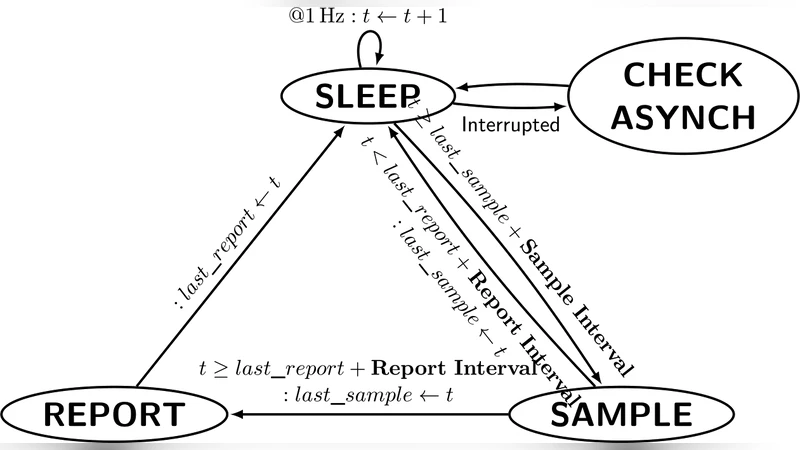
Power efficiency is achieved through a “smart sleeping” strategy: sensor nodes sample at ≤1 Hz, immediately enter deep sleep, and power‑gate the Wi‑Fi radio after each transmission. Data are compressed using a custom variable‑length binary format combined with run‑length encoding, reducing payload size by roughly 70 %. Laboratory tests show that a 250 mAh Li‑polymer battery can sustain operation for more than three years, a dramatic improvement over typical wireless sensor platforms.
Occupancy and activity recognition are performed on‑node using accelerometer and acoustic data. After extracting features such as FFT coefficients, RMS, and zero‑crossing rates, lightweight machine‑learning models (k‑Nearest Neighbors and Support Vector Machines) are trained to distinguish between occupied and vacant rooms with >95 % accuracy and to classify basic activities (sitting, walking, running) with >90 % accuracy. These inference results can be fed directly into HVAC control loops to enable demand‑responsive climate management.
The system is designed for extensibility. Additional environmental sensors (CO₂, VOC, radiation, etc.) can be attached via I²C or SPI buses, and firmware updates are delivered over‑the‑air (OTA). The web portal provides RESTful APIs and WebSocket streams, allowing third‑party applications to query data, set custom alerts, or integrate with building management systems.
Performance evaluation includes network reliability, latency, packet loss, and power consumption. In typical indoor Wi‑Fi conditions (≈30 dBm signal), average transmission latency is about 150 ms with a packet loss rate below 0.5 %. The 3G uplink adds roughly 500 ms of latency but maintains end‑to‑end encryption. The authors also discuss limitations: reliance on 3G (which may be phased out), sensitivity to Wi‑Fi signal quality, and the need for calibration of gas sensors.
In conclusion, BiB demonstrates that a thoughtfully engineered combination of low‑power hardware, efficient binary communication, and cloud analytics can deliver a scalable, user‑friendly indoor monitoring solution. The paper suggests future work such as migrating to 5G/LTE‑Cat‑M for lower power wide‑area networking, embedding edge AI for on‑device decision making, and leveraging the massive data set that would result from deploying BiB in thousands of buildings to develop advanced energy‑optimization algorithms. The authors envision BiB as a foundational platform for large‑scale research and commercial initiatives aimed at improving indoor environmental quality and reducing building energy consumption.