Autonomous Driving - 5 Years after the Urban Challenge: The Anticipatory Vehicle as a Cyber-Physical System
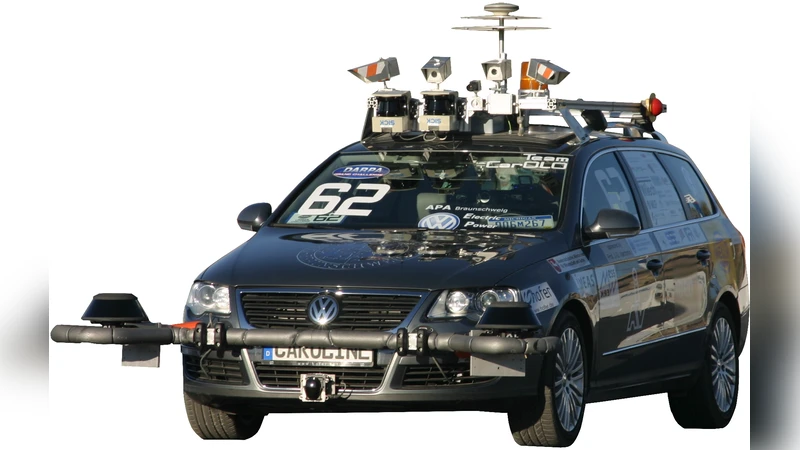
In November 2007 the international competition DARPA Urban Challenge took place on the former George Airforce Base in Victorville, California to significantly promote the research and development on autonomously driving vehicles for urban environments. In the final race only eleven out of initially 89 competitors participated and “Boss” from Carnegie Mellon University succeeded. This paper summarizes results of the research carried out by all finalists within the last five years after the competition and provides an outlook where further investigation especially for software engineering is now necessary to achieve the goal of driving safely and reliably through urban environments with an anticipatory vehicle for the mass-market.
💡 Research Summary
The paper opens by recalling the 2007 DARPA Urban Challenge, which served as a catalyst for intensive research into autonomous driving in urban settings. Out of the original 89 entrants, only eleven teams reached the final race, and Carnegie Mellon’s “Boss” emerged victorious. The authors then trace the subsequent five‑year research trajectories of all eleven finalists, organizing the discussion around the classic autonomous‑vehicle pipeline: perception, prediction‑based planning, control, system integration, and verification. In perception, the teams moved beyond single‑sensor solutions to tightly coupled multi‑sensor fusion architectures that combine lidar point clouds, radar range measurements, high‑resolution cameras, and GPS/IMU data. Graph‑based SLAM and deep‑learning object detectors became standard, delivering centimeter‑level localization even in cluttered city streets. Planning shifted from deterministic graph search (A*/D*) to probabilistic decision‑making frameworks such as Markov Decision Processes and reinforcement‑learning policies. These approaches explicitly model the future trajectories of surrounding traffic participants, enabling the “anticipatory vehicle” concept: the car predicts the actions of other agents and proactively adjusts its own path to avoid conflicts. Control strategies evolved to incorporate nonlinear Model Predictive Control (MPC) together with adaptive feedback loops, providing robust handling of varying road friction, vehicle load, and aggressive acceleration or braking maneuvers. On the integration side, middleware platforms like ROS and OpenDDS were adopted to enforce modular interfaces, time‑synchronization, and scalable data exchange. Container‑based deployment pipelines automated the build‑test‑deploy cycle, facilitating rapid iteration. Verification and safety assurance received particular emphasis: formal methods, extensive simulation, and hardware‑in‑the‑loop (HIL) testing were employed to prove functional correctness. Runtime monitoring using temporal logic checks enables immediate detection of anomalies and safe‑mode transitions. Despite these advances, the authors identify several critical gaps that must be addressed before mass‑market deployment. First, there is a lack of large‑scale urban testbeds that faithfully reproduce the complexity of real city traffic, limiting the ability to validate systems under realistic conditions. Second, legal and ethical frameworks remain underdeveloped, raising questions about liability, data privacy, and societal acceptance. Third, the cost of high‑performance sensors and compute platforms is still prohibitive for consumer vehicles, necessitating research into affordable hardware and efficient algorithms. Finally, continuous software updates and robust cybersecurity mechanisms are essential for long‑term operation. The paper concludes with a roadmap that calls for interdisciplinary collaboration, standardized verification frameworks, and scalable testing infrastructures to realize autonomous urban driving as a reliable cyber‑physical system.